Port of London Authority

Steering Towards Innovation: Insights from Steven Clapperton on Marine Operations and Sustainability at the Port of London

Join us as we engage in an insightful conversation with Steven Clapperton, Director of Marine Operations at the Port of London Authority (PLA). With an extensive background in marine operations, Steven shares his vision for the future of the UK’s largest port by tonnage, exploring key initiatives like the Marine Centre Transformation Programme and workforce development strategies. Additionally, Grace Rawnsley, Director of Sustainability, provides her perspective on the PLA’s robust approach to sustainability, highlighting their efforts to decarbonise operations and promote environmental stewardship within the maritime community. Discover how the PLA is navigating the complex waters of modern maritime challenges and driving forward a sustainable future for the Thames.


Click below to access the digital brochure version

Role and Experience: With your extensive background in marine operations, how do you see your experience shaping the future direction of the Port of London?


As the largest port (by tonnage) in the UK, the Port of London Authority (PLA) has a strong vision for the future, neatly summed up in our strategy Thames Vision 2050, which we launched in 2022. Being the busiest inland waterway, with both growing trade and sporting activity on the river, we are a stakeholder-led organisation and work to keep the commercial and leisure users safe, to protect and enhance the environment, and to promote the use of the river for trade and travel.


Coming from a sea-going background (with experience in marine consultancy, pilotage, VTS, and managing operations, both directly in the shipping sector and in the oil and gas sector), there is a direct link to what I’ve done previously to our future ambitions at the PLA.


One of the fantastic things about the PLA is that it’s an organisation with employee development and lifelong learning at its heart. I’m now in a position where I can influence employee development at the PLA and start to create opportunities for the next generation of port employees, whatever they look like. For example, for those who would like a career afloat, we’ve got a very clear career path, from entry right through to Master on workboats, and this has been well-received by Trade Union representatives as well as colleagues.

Marine Centre Transformation Programme: How does the Marine Centre Transformation Programme, which includes the Vessel Traffic Services Upgrade, align with Thames Vision 2050, and what impacts do you anticipate on PLA’s operations?


We’ve got an incredibly strong growth path at the PLA and by 2050, we anticipate our cargo movements growing from 55 million tonnes to approximately 75-80 million tonnes. Passengers on the Thames and light freight activities will also double. Yet the size of the waterway will remain static. So, it’s a constrained waterway, with competing demands, and it is only going to get busier.


Therefore, a recent and ongoing upgrade of our Vessel Traffic Services (VTS) system is very much focused on the safety of navigation; we’re looking to the future of VTS to how we manage increasing constraints and competing demands on the waterways.


We did an extensive procurement process; one of the key inputs into our decision-making was to select a VTS system provider that had a strong technology roadmap, which was aligned with our long-term vision for VTS and vessel operations. We know that remote vessel operations and greater use of technology, such as Artificial Intelligence (AI), are coming, and we knew if we couldn’t be future-proofed right now, we needed to work with a provider with a similar long-term vision to ours.


Our £10 million Marine Centre Transformation Programme is the largest investment in our safety of navigation services in over a decade. Our approach to the programme has been with safety of navigation as the forefront focus. We recognized our VTS needed replacing, that our Port Control Centre building was nearing the end of its life, and the operating model, although perfectly acceptable in the ‘here and now,’ wasn’t going to be suitable to support the future growth plans that our customers have. That’s what led to the development.


The outcomes that we are looking for are focused on one port, one river. With a continued emphasis on safety in navigation, we want to build a model that can respond to continued growth of trade on the river, aligned with our Thames Vision, as well as cope with the increased passenger and cargo vessel requirements in this constrained waterway.

Challenges and Workforce Development: What are the biggest challenges currently facing marine operations at PLA, and how are you addressing them, particularly in terms of workforce development and team leadership?


One of the biggest challenges is in adopting alternative fuels. In 2023, we transitioned our extensive vessel fleet from diesel to Hydrotreated Vegetable Oil (HVO). We’re conscious that HVO is very much a transition fuel, and the supply chain will come under increasing amounts of pressure and so the cost will rise. We’re happy to absorb that cost in the short term because we recognize the importance of decarbonising our own operations. However, to maintain our fleet into the 2030s and 2040s, we are going to have to transition to something completely different.


We’ve always taken the position that we don’t plan to offset carbon emissions, so we effectively need zero-carbon propulsion fuel systems: perhaps hydrogen-based or some mix of alternative fuels. In preparation for this, between 2025 and 2028, we will operate the first Zero Emissions, hydrogen-powered, remotely operated surveying vessel, and we expect to learn a lot from that.


Another challenge is the skills and workforce we need for the future. Historically, our marine employees came from marine backgrounds, and from the communities they served. However, the world has changed quite significantly in the last 20 years, and so the marine and port sector is no longer as consistently as an attractive place as we’d like it to be. That together with the changing place of technology means that we are not entirely sure what the employees of the future will look like, or the skills that they are expected to have.


However, we are putting mechanisms in place just now to identify those individuals and create partnerships to develop skills, promoting the port sector as a great place to work. We have a graduate scheme (marine engineering, civil engineering, harbour master and hydro), and we have long had an apprenticeship scheme. This year, we’re going to be adding to our roll of apprentices.


Collaborations and Partnerships: Can you discuss any significant collaborations or partnerships PLA is currently involved in or exploring?


We have a strong and very well-established academic partnership with University College London, which works very well for both parties. Businesses partnering with academia gives rigour, strength, and, for us, we get access to some incredible people, who can then trial academic work on real-world conditions. Our latest project is a four-year PhD to develop a Port of London digital twin.

Advice for Maritime Professionals: What advice would you offer to professionals looking to advance in the maritime industry based on your experience?


I’ve been lucky enough to work with some fantastic senior leaders throughout my career, and one piece of advice that someone gave me early on was never to turn down a development opportunity, regardless of how relevant it seems to where you are now. I’m a great advocate of lifelong learning and have taken every piece of training and development opportunity that has been offered to me, and I’d encourage everyone to do the same.


Sustainability Initiatives: As a finalist/winner for the maritime UK’s Clean Maritime Operator award, how do you describe the PLA’s approach to sustainability?

Answered by Director of Sustainability, Grace Rawnsley


We approach it in three ways. Firstly, we consider it in terms of our own internal operations, making those as sustainable as they can be. That covers everything from being impeccable on our carbon footprint, to measuring all our emissions, and having a robust plan to reduce those emissions (including Scope 1, 2, and 3), to ensuring our operations don’t create negative impacts within the river. It is an internal focus in the first instance as it is an important value for our organisation: it keeps us current, future-proofed, and demonstrates that we lead by example.


The second way we approach sustainability is by looking at our wider reach; the community that is the Port of London. There are 70 different terminal operators across our 95-mile stretch of the tidal Thames, and hundreds of individual vessel operators as well. As the port authority for this community, we look at how we effectively use our influence, our relationships, and convening power to progress sustainability and drive forward positive change. We do that across a range of subject areas, including decarbonisation, biodiversity, conservation, water quality, and air quality. It is a really positive element of what we do.


The community understands that sustainability is here to stay, and they are making impactful strides on sustainability. For example, Cory has a Carbon Capture and Storage project, creating the UK’s largest single-site energy-from-waste (EfW) operation, with the potential to create the world’s largest single-site EfW decarbonisation project; London Gateway’s berth 4 is due to be operational by the end of the year and will be its first zero emissions berth; some vessel operators already have electric-powered vessels; and we’re receiving more requests from owners of river walls who are looking at implementing biodiversity projects. We’re seeing it take off, and we’re doing as much as possible with our coalition to make it as real as possible.


At the Port of London, we’re looking at how best we can help reduce the obstacles to make the decarbonisation journey faster and easier for those individual companies, such as data gathering exercises, like our Maritime Emissions Portal (MEP portal), lobbying government for changes in regulation, or hard thinking about the solutions that are needed.


Then the third way is how the port supports the sustainability transition on a wider scale for the UK. As the largest port, we’re able to take a leading role in terms of sustainability, such as how to meet the demand for future fuels, the import routes, and how we manage large-scale biodiversity initiatives. We’re looking at how we can support decarbonisation in general, such as our Hydrogen Highway, leading a new consortium aiming to develop a UK hydrogen highway network which consists of land, sea and ports. Electric Thames is another innovative project that we’re involved in; not only looking at what grid capacity is required to support the electrification of vessels, but also what can vessels do from a battery storage perspective, feeding back into the grid.


As a Trust port, we are determined to hand the tidal Thames on in a better condition to future generations, and we’re focussed on our vision for the Thames (Thames Vision 2050), supporting sustainable development and accelerating decarbonisation.


https://pla.co.uk/

Wärtsilä Marine

Wartsila

Fueling the Future: Wärtsilä’s Pioneering Path to Maritime Decarbonisation

In an era where the maritime industry stands at a crucial crossroads between tradition and the imperative drive for sustainability, Wärtsilä emerges as a leader in innovation. Guided by Roger Holm, President of Wärtsilä Marine & Executive Vice President at Wärtsilä Corporation, the company is steering the global maritime sector towards a greener horizon with groundbreaking advancements in sustainable fuels and decarbonisation technologies. In this Q&A, Roger Holm unveils the pioneering strides Wärtsilä is making with methanol and ammonia-powered engines, highlighting their pivotal role in propelling the industry towards the ambitious goal of net-zero carbon emissions by 2050. Join us as we delve into the future of marine propulsion, exploring Wärtsilä’s commitment to fuel flexibility, emission reduction, and the collaborative efforts shaping the sustainable transformation of maritime logistics.


Click below to access the digital brochure version

Innovation in Methanol Engines: With Wärtsilä’s recent introduction of four methanol engines, how do you see this innovation accelerating the marine industry’s transition to sustainable fuels?


Methanol stands out as a crucial alternative fuel choice for achieving the industry’s net-zero carbon emissions target by 2050. What makes methanol promising is its versatility and compatibility with existing shipping infrastructure: it can be produced using renewable energy sources and carbon capture technology, ensuring it’s not only sustainable, but also carbon neutral.


Wärtsilä is one of the few marine engine builders with experience in methanol engines, having converted the first of four engines on the ferry Stena Germanica, which embarked on the world’s first methanol-powered sailings in 2015. What’s more, the Wärtsilä 32 Methanol engine and MethanolPac, both launched in 2022, were amongst one of the first commercially available solutions for using methanol as a fuel in the maritime industry.


Wärtsilä’s recent introduction of four methanol engines marks a significant milestone in the marine industry’s pathway to sustainability. By expanding our methanol engine offerings across various vessel types, we are enabling shipowners to proceed with the flexibility they need to transition towards cleaner operations. Our commitment to developing engines capable of running on future fuels underscores our dedication to supporting the maritime industry’s journey towards sustainability.

Ammonia as a Marine Fuel: Wärtsilä has launched the world’s first 4-stroke engine-based ammonia solution. What challenges did you face in developing this technology, and how does it set the pace for marine decarbonisation?


Developing an ammonia-based solution for marine propulsion represents a significant leap in the industry’s drive for sustainable maritime fuels. There were, however, many important considerations taken into account during its development, particularly around fuel combustion, safety, and emissions management.


Ammonia combustion poses hurdles due to its ignition characteristics and energy density compared to conventional fuels like diesel. Ammonia has a lower volumetric efficiency, meaning larger fuel tanks and storage systems are needed for these engines than on vessels using traditional propulsion systems. The additional infrastructure, such as volume of fuel tanks, may have implications for cargo capacity such as on container vessels, or on operating ranges before the need for bunkering.


Another consideration for ammonia is handling potential nitrous oxide (N2O) emissions, which requires designing efficient aftertreatment catalysts and systems to minimise these emissions. Optimised combustion and integrated aftertreatment, as is found in the Wärtsilä 25 ammonia solution, has been shown to minimise all greenhouse gas (GHG) emissions.


With appropriate forward planning however, these considerations can be mitigated, especially for newbuilds where additional storage capacity can be more easily accounted for.


Outside of the direct energy efficiency and emissions consideration, ensuring safety in handling ammonia is critical. Ammonia’s toxicity means specialised storage and handling equipment needed to be developed, alongside the appropriate crew training to ensure those handling the fuel properly understands how to mitigate any risks effectively.


Wärtsilä’s new WARMS technology (Wärtsilä Ammonia Release Mitigation System) mitigates the risks associated with ammonia as a future maritime fuel, ensuring safety and environmental protection with minimal emissions. Accurate monitoring, controlled combustion, and preventing the release of vented ammonia into the atmosphere means WARMS offers a green and safe alternative to traditional methods of handling ammonia.


With the technology available, and growing ammonia fuel supply infrastructure around the world, viable alternative fuel options significantly contribute to the industry’s transition towards decarbonisation and cleaner energy sources.

Reducing Methane Emissions: The new version of the Wärtsilä 31DF engine significantly reduces methane emissions. Can you elaborate on the technological advancements that made this possible?


Sustainable fuels are crucial to the maritime decarbonisation journey. But, the cost, limited available quantities, and insufficient supply infrastructure of these fuels today present a challenge for ship operators. The continued expansion of the LNG fuel infrastructure is an important factor in shipping’s transition towards cleaner operations. After all, compared to fuel oil, LNG enables lower GHG emissions and reduces other harmful air pollutant emissions.


However, the main component of LNG (Liquefied Natural Gas) is methane and when you burn LNG as a fuel, a very small amount may not combust properly, leading to methane escaping into the atmosphere.


Reducing methane slip in engines running on LNG has been a crucial step in developing our decarbonisation portfolio, helping the global fleet mitigate the impact of running on this transition fuel. Through the development of new combustion technologies, our 30-year commitment to reducing methane slip has resulted in an impressive circa 90% reduction in our engines.


The Wärtsilä 31DF engine is a concrete step towards an ultra-low emission engine that can help future-proof vessels leveraging LNG as a fuel. While the standard Wärtsilä 31DF already evidenced the lowest emissions on the market, the latest modifications focus on ultra-low methane emissions and can reduce methane emissions by an additional 41%. This is all while maintaining the same high-power output and performance, and simultaneously reducing nitrous oxide (NOx) emissions by 86%.


The new version, which is applied on one of the four engines on board Wasaline’s Aurora Botnia ferry, has already helped the Finnish-Swedish ferry operator further reduce the Aurora Botnia’s methane emissions by 10 percent. As part of the EU co-funded Green Ray and SeaTech projects, Wärtsilä piloted the ultra-low emissions concept onboard the Aurora Botnia with exceptional results verified through an independent study conducted in December 2022 by VTT, the Technical Research Centre of Finland. Encouraged by the positive results, Wärtsilä launched the new ultra-low emissions version of the Wärtsilä 31DF engine to the commercial market in 2023.


As the industry advances its decarbonisation journey, it is vital to continue to focus on reducing methane emissions. Because we recognise the significant importance, Wärtsilä is committed to reducing methane emissions from its engines even further with investment in R&D and technology, as well as through more collaboration projects.

Fuel Flexibility Importance: Given the current uncertainties around fuel availability and price, how does Wärtsilä’s focus on fuel flexibility benefit your clients and the broader maritime industry?


With stringent emissions reduction targets, operators face increasing pressure to transition to cleaner fuels and technologies, with adaptability being a key solution. Wärtsilä’s investment in fuel-flexible engines and technologies enables its customers to comply with evolving regulations without the risk. Fuel flexibility ensures that vessels remain compliant with changing regulatory standards in the long term, protecting against high retrofit costs in the short term, and importantly reduces the commercial risk of noncompliant vessels.


Fuel prices and availability can fluctuate significantly due to geopolitical factors, investment in green corridors, supply chain disruptions, and market dynamics. Engines capable of operating on multiple fuel types, including traditional marine fuels alongside LNG, biofuels, methanol, and ammonia, means that Wärtsilä provides fleet operators with the flexibility to diversify against price and supply volatility in any one fuel type. This versatility allows operators to choose the most cost-effective and readily available fuel option at any given time, which is key for vessels operating on routes without consistent access to certain alternative and future fuels.


Similarly, fuel flexibility ensures that vessels remain viable and competitive long term in the face of shifting market trends and emerging technologies. As the industry transitions towards decarbonisation, the availability and cost-effectiveness of alternative fuels are expected to evolve. This empowers fleets to future-proof their investments by enabling seamless transitions to cleaner fuels as they become more economically viable and widely available. This proactive approach minimises the risk of asset devaluation and ensures that vessels remain relevant and competitive throughout their operational lifespan.


The industry is aligning towards certain future fuels, mainly the promising front runners such as methanol and ammonia, which offer low-carbon and carbon-neutral energy sources depending on the production method. By offering engines capable of utilising these fuels alongside conventional diesel, Wärtsilä facilitates industry’s efforts to reduce its environmental footprint and meet tightening decarbonisation targets. This proactive stance not only enhances environmental sustainability but also enhances the reputation and market positioning of owners and operators, who stand to be in a competitive advantage.

Collaboration with Viridis Bulk Carriers: Can you discuss the significance of Wärtsilä’s collaboration with Viridis Bulk Carriers and how it exemplifies the practical application of your ammonia solution in the industry?


Viridis Bulk Carriers have the ambition to be the world’s first zero emission shipping company, and as part of that strategy, will be the first shipowner to benefit from Wärtsilä’s new ammonia solution. The collaboration will show how ammonia solutions are practically viable and available for owners and operators planning for decarbonised solutions.


A key barrier to the wider uptake of future fuel systems is the uncertainty in which fuel will become dominant in the future, both in the commercial cost parity to conventional fuels, supply, and availability in infrastructure. Shipping companies which take the initiative and publicly commit to these new fuel systems help lead the industry into a phase of greater confidence in these solutions. It is important that more leaders and innovators across the industry adopt these solutions to boost confidence, and ultimately, take-up of technology to drive decarbonisation even faster.

Sustainable Shipping Operations: How do Wärtsilä’s innovations in methanol and ammonia-powered engines contribute to the goal of achieving net-zero carbon emissions in the maritime sector by 2050?


Wärtsilä’s latest advancements in methanol and ammonia-powered engines contribute significantly to the goal of achieving net-zero carbon emissions. Both methanol and ammonia are promising alternatives to traditional fossil fuels because they produce lower greenhouse gas emissions on a tank-to-wake basis.


Ammonia on the other hand, produces no CO2 emissions when combusted, making the fuel a key component in achieving net-zero carbon emissions when produced using sustainable methods. There are greater challenges in the adoption of ammonia, notably in the storage and handling, however with forward planning ammonia can be suitable for a range of vessel types.


Looking at the sustainability of fuels on a well-to-wake basis, the reduction in GHG emissions is highest when utilising green methanol and green ammonia. The method of production, in the case of ‘green’ fuels, which uses renewable energy sources such as wind or solar power is essential when considering the overall carbon intensity of a particular fuel type.


Wärtsilä has introduced commercially available engine-based solutions for both ammonia and methanol fuels. The Wärtsilä 25 engine platform now includes an ammonia solution, allowing ships to run on this alternative fuel. Similarly, the Wärtsilä 32 Methanol engine provides a reliable option for vessels powered by methanol.


Both ammonia and methanol solutions offered by Wärtsilä meet current and future emissions regulations, including those set by the International Maritime Organisation (IMO), ensuring that ships using these fuels can navigate regulatory requirements in the long-term.

Future-Proof Engine Platforms: Wärtsilä’s engine platforms are designed to be future-proof. How do you balance the need for immediate sustainability with the flexibility to adapt to future green fuels?


Due to the uncertainty around which future fuel is likely to become widespread, both in its availability and cost effectiveness, owners and operators must play a balancing act between long-term viability and immediate decarbonisation in the here and now. Forward-thinkers in the industry are already adopting engines capable of running on these future fuels with an increasingly large portion of fuel flexible vessels being ordered as newbuilds and for retrofit. However, there is still lots of work to do to help most of the fleet implement immediate decarbonisation solutions.


Although investing fully in a low-carbon or zero-carbon fuel, such as ammonia, is one of the fastest methods to decarbonisation, operators are understandably hesitant to go all-in on one fuel considering the possible risks such as fuel availability along routes.


Offering flexible options is the best way to balance short-term and long-term needs. Investing in fuel flexible options will mitigate market fluctuations, and infrastructure and supply risks to enable operators to utilise whichever fuel is most viable at that moment on a certain route. This provides operators with the flexibility to mitigate any risks that would come with betting on a single fuel source solution.


In the long-term, these vessels will be futureproofed against more stringent regulations, while simultaneously able to easily convert to whichever frontrunner fuel comes out on top in the next decade and beyond.

Role of LNG in Decarbonisation: With the advancements in reducing methane slip, what role do you see LNG playing in the short to medium term in the industry’s decarbonisation efforts?


LNG presents a viable solution for achieving environmental goals in the short to medium term. With increasing regulatory pressure, the key advantage of investing in an LNG capable engine is that it sets you on a path from a technological and operational perspective, to progressively transition to cleaner fuels, to adopt blends, and eventually to do a fuel conversion to ammonia or methanol, for example.


However, one of the significant challenges associated with LNG is methane slip. Methane has a high global warming potential – greater in potency than CO2 (Carbon Dioxide) – making it essential to address to help ensure LNG’s long-term viability as a marine fuel. As previously mentioned, Wärtsilä has made significant strides in this area, reducing methane slip by around 90% over the past three decades through engine upgrades and ongoing research and development efforts.


Ultimately, LNG is a transition fuel that is helping the industry advance further forward in its sustainability – but it is the start of the journey towards decarbonised shipping. The long-term goal for the industry is to have zero impact on the environment. That is where we need to go as an industry.

Impact of New Technologies on Existing Fleets: How does Wärtsilä support the adaptation of its new sustainable technologies in existing fleets, particularly in terms of retrofitting?


Existing vessels, particularly bulkers, oil tankers, and container ships, face significant challenges in meeting IMO’s (International Maritime Organisation) CII (Carbon Intensity Indicator) targets. Over one-third are currently non-compliant, with projections indicating a worsening trend. Retrofitting with energy-saving technologies is crucial to improve CII ratings and extend vessel lifespans. Investment in decarbonisation technologies is needed to prevent the stranding of especially older vessels aged 10-15 years. Retrofit capabilities offer a pathway to sustainability without compromising business success, addressing the imminent threat of non-compliance and facilitating lower GHG emissions.


At Wärtsilä, we offer comprehensive fuel conversion solutions, acknowledging the increasing variety of available fuels. These include retrofit options for both 4-stroke and 2-stroke engines, capable of operating on LNG, methanol, or ammonia. These options can allow seamless transition to different fuel types without interruption in power generation. Comprehensive feasibility studies for vessel owners contemplating the transition to alternative fuels can provide insights into necessary modifications, cost estimates, and risk assessments, empowering informed decision-making for sustainable operations.


Our propulsion solutions are focused on delivering the highest efficiency, helping to reduce a ship’s energy consumption and save fuel, whilst our data, AI and voyage solutions are designed to connect and optimise the entire ecosystem, from propellers to ports and beyond, improving efficiency, and cutting fuel costs and GHG emissions.


What’s more, our hybrid solutions also offer reduced emissions for both retrofit and newbuild vessels. Hybrid vessels combine two methods of propulsion, a conventional combustion engine and a rechargeable battery. This reduces fuel consumption and increases operational efficiency, among other benefits. Ultimately, our hybrid solutions provide a solid starting point for creating a flexible vessel, which is able to operate at an optimal load and adaptable for any future requirements within its lifetime.


In addition to fuel flexibility, onboard carbon capture systems offer a potent solution by capturing CO2 emissions directly from exhaust gases and storing them underground or repurposing them for other industrial processes. These systems, which Wärtsilä hopes to be available for both retrofit installations and newbuilds, significantly reduce a vessel’s carbon footprint.

Vision for Marine Industry’s Future: Looking beyond 2050, what is your vision for the marine industry’s energy transition, and how is Wärtsilä positioning itself to lead in this evolving landscape?


In projecting the future of the marine industry’s energy transition beyond 2050, Wärtsilä recognises the pivotal role of the wider supply chain. As an industry responsible for transporting over 80% of world trade, maritime shipping serves as the lifeblood of the global economy.


However, there lies the challenge of meeting the increasing demand for capacity while aligning with sustainability goals. And time is of the essence here. In just 25 years – the lifetime of a single vessel – shipping must eliminate its entire contribution to climate change.


Wärtsilä understands that the evolution of the maritime sector hinges upon collaborative efforts across the entire ecosystem. Our commitment to innovation and sustainability underscores our vision to support the industry’s sustainable future. Through robust research and development initiatives, we are continuously investing in technologies that will facilitate the energy transition towards 2050, and beyond. Increasing R&D spending, now at approximately 4% of net sales, exemplifies our dedication to driving progress.


Central to our strategy is recognising there is no one-size-fits-all solution to decarbonisation. Our decarbonisation approach is designed to tailor flexible solutions to the unique needs of owners and operators globally, ensuring that they are equipped with the right technologies at the right time. By providing a diverse portfolio of flexible technologies and future-proofed solutions, we empower our customers on their decarbonisation journey.


Moreover, collaboration lies at the heart of decarbonisation, as the scale of this challenge ultimately requires collective action from stakeholders across the industry. Wärtsilä actively engages in several partnerships and initiatives aimed at advancing sustainable practices through fostering a culture of collaboration, paving the way for a seamless and interconnected ecosystem that supports the transition.


With a target to achieve carbon neutrality in our own operations and to offer a product portfolio ready for zero-carbon fuels by 2030, we are steadfast in our pursuit of a greener and more sustainable future. Wärtsilä is positioned at the forefront of the industry’s energy transition, driven by a strong commitment to innovation, collaboration, and sustainability. As we look towards the horizon beyond 2050, we remain dedicated to pioneering solutions that propel the maritime sector towards a more sustainable and prosperous future.

Breakbulk Events & Media

Breakbulk Events

Connecting the World: Breakbulk Europe’s Role in Shaping Global Project Cargo

In the world of project cargo and breakbulk, Breakbulk Europe stands out as the key event, bringing together leading professionals from all corners of the globe. Known for being the central hub for networking, innovation, and growth, this event is where the industry comes to connect and thrive. At the centre of it all is Elizabeth Rankin, the Event Director who orchestrates this major gathering. In our exclusive interview with Elizabeth, we dive into what makes Breakbulk Europe a must-attend event for anyone in the field, discussing the opportunities it offers for making connections, learning about the latest industry trends, and much more. Join us as we explore the essence of Breakbulk Europe with Elizabeth, shedding light on its impact on the global project cargo and breakbulk community.


Click below to access the digital brochure version

Event Overview: Can you provide an overview of Breakbulk Europe and its significance in the project cargo and breakbulk industry?


Breakbulk Europe is the largest global gathering of breakbulk and project cargo professionals, under one roof, for three days. It is the main meeting point throughout the year for the industry and brings together over 4,000 companies, making it the ultimate networking platform to grow connections, generate new business, and strengthen key existing relationships. Decision-makers from major cargo-owning companies, including energy companies, industrial manufacturers and EPCs, come together in Rotterdam to drive the connections and innovation that support the completion of global projects.

2024 Expectations: What are the main goals and expectations for Breakbulk Europe 2024, and how do they differ from previous years?


Breakbulk Europe 2024 is set to be our biggest event yet – we are already over 95 percent sold out of our expanded exhibition space, we are welcoming many new companies to the show, and expect to see more visitors, more networking, greater collaboration, and more learning opportunities than ever before. We are expanding the time for learning and networking beyond the show hours this year. Firstly, with our launch of Round Tables – interactive conversations that bring together breakbulk industry peer groups to share insights, address issues, and generate actionable takeaways on key industry topics that will help drive individuals and businesses forward. “Round Tables” and “Women in Breakbulk” will both be taking place on Tuesday afternoon before the show opens for the Welcome Reception at 5 pm. We know that many of our visitors arrive in Rotterdam ahead of the show, and we want to ensure all attendees can maximise their time at the event. We believe that these new activities will add a whole new layer to the Breakbulk Europe experience.

Networking Opportunities: How does Breakbulk Europe facilitate networking and business connections among attendees?


Networking has always been at the heart of Breakbulk Europe, and it is what our exhibitors and visitors value the most from our event. Our 2024 edition will facilitate more networking opportunities than ever before. Attendees of Breakbulk Europe can pre-arrange meetings through our Breakbulk app and can set up meetings in designated areas to optimise their time at the event. Our “Women in Breakbulk” and “Round Table” sessions on Tuesday are the perfect opportunities to meet like-minded peers to discuss industry-critical topics outside of the show floor. Our “Breakbulk Boulevard,” Welcome Reception, and Boat Tours are all returning for 2024, providing even more opportunities to network in relaxed settings while enjoying the best that Rotterdam has to offer.

Exhibitor and Visitor Dynamics: With over 600 exhibitors and 10,500 visitors from more than 120 countries, how do you ensure a valuable experience for both groups?


We are so proud to be the destination where the global breakbulk and project cargo communities unite and therefore ensuring our visitors and exhibitors have a smooth onsite experience is the top priority. Our app supports our visitors in navigating our exhibition, viewing our agendas and provides the ability to pre-schedule meetings onsite as well as communicate with exhibitors ahead of the event. We have streamlined our registration process to ensure visitors are able to print badges and access the halls without delay. Our pre-event communications including our visitors guide provide handy tips and tricks to navigate Breakbulk Europe with ease and make the most of your time at the exhibition as well as throughout the city. As we know, time is precious when onsite at Breakbulk Europe, therefore events such as our Breakbulk Boulevard and boat tours enable the networking to continue into the evenings. In addition to all of this, our team is always on hand to speak to visitors and exhibitors alike to support any pre-event queries they might have.

Innovation and Trends: What are the latest trends and innovations within the breakbulk and project cargo industry that will be highlighted at the event?


The team at Breakbulk Europe have been conducting in-depth research with the industry to ensure the trends that we are covering at the event are reflective of the challenges the industry is facing right now. We also work very closely with our brilliant Advisory Board who support us in ensuring the highest quality content for our attendees. Key themes you can expect to see covered at the event this year include capacity and contingency planning, where industry representatives will come together to discuss how to keep supply chains flexible to limit delays and effectively navigate the impact of the current geopolitical landscape. Other key themes will include how ports are innovating to overcome space and storage challenges, decarbonisation strategies as they relate to the EU ETS, the energy transition, and how shaping the future of logistics starts with the next generation of young leaders. Breakbulk Futures, launched at Breakbulk Europe last year, will once again highlight start-up companies leading the way with innovation and we are currently open to entries from companies who would like to be considered for a pod in this space.

Women in Breakbulk: Could you tell us more about the “Women in Breakbulk” initiative and its impact on the industry?


Women in Breakbulk brings together women from different sectors to share their perspectives on building a successful career in the maritime, project cargo and breakbulk industry. Our Women in Breakbulk programme brings together key female figures in leadership positions to offer insightful tips and advice for women from all corners of the industry on how they too can climb the ranks and change the narrative on an industry that is progressing in the right direction. Women in Breakbulk is having a huge impact by providing connections to industry peers which carry on beyond the event, exposing attendees to female role models who provide advice on how best to navigate key industry challenges and offers a positive, safe space to network and learn outside of the office environment.

Educational Components: How does the Chartering Workshop contribute to the professional development of attendees, and are there other educational opportunities available?


The Chartering Workshop, in partnership with the Institute of Chartered Shipbrokers, is a full-day, intermediate level workshop that covers chartering principles and applications for full-time chartering professionals as well as those who work with chartering contracts. This workshop is an opportunity for attendees to maximise the value of their time spent at Breakbulk Europe by engaging in professional development to support their role within the industry, with all attendees receiving a formal certificate following completion of the course. There are many other educational opportunities available during Breakbulk Europe including Round Tables, Main Stage and sessions within our Breakbulk Futures Hub. For those new to the industry or studying relevant degrees, we host our Education Day programme which is the perfect opportunity to learn about the basics of the industry while also connecting with industry professionals from key verticals.

Rotterdam as a Venue: What makes Rotterdam Ahoy an ideal venue for hosting Breakbulk Europe, and how does the city’s infrastructure support the event?


Situated alongside Europe’s largest port, Rotterdam’s maritime heritage and buzzing cultural and social scene make it the ideal location for Breakbulk Europe. Rotterdam Ahoy has recently been refurbished, providing a great space for the event to continue expanding and is easily accessible from Amsterdam, The Hague and Rotterdam on public transport, making it great for the global audience that travel to the event. City infrastructure is changing and evolving to accommodate the growth of our show such as the newly opened Ibis Styles hotel next to Ahoy. Rotterdam is a hub for raising future generations of maritime specialists and our engagement with local universities as part of our education programme is helping support this, as well as closing the talent gap that exists within the sector.

Sustainability and the Industry: In what ways is Breakbulk Europe addressing sustainability within the breakbulk and project cargo industry?


Breakbulk Europe addresses sustainability within the breakbulk and project cargo industry in many ways throughout the show. Our Main Stage will host topics including how logistics companies can integrate more sustainable and circular solutions to optimise their project logistics setup and use case studies of real-life projects to illustrate. Decarbonisation remains a big theme across our agenda, particularly with the implementation of the EU ETS, and our session will present practical solutions towards zero carbon emissions. Our Education Day, where we work with local universities and curate a programme to help inspire them to pursue a career within the breakbulk and project industry contributes towards the future sustainability of the industry and its workforce. Outside of this, our new Round Tables programme will cover key sustainability topics connecting to our Main Stage including, measuring and reporting on carbon emissions within the breakbulk shipping sector. In addition, many of our exhibitors are leading the way when it comes to sustainability, and the networking and business connections that take place at the show will be centred around this vital topic.

Looking Ahead: How do you envision the future of Breakbulk Europe and its role in shaping the global project cargo and breakbulk industry?


Looking ahead, it’s an exciting time for Breakbulk Europe, and we look forward to continuing as the largest global meeting place for the breakbulk and project cargo industry each year. As projects evolve and the supply chains that service them continue to adapt, Breakbulk Europe will constantly innovate, grow and remain committed to providing a global destination to meet industry leaders, decision makers and access to the whole project supply chain under one roof!

American Bureau of Shipping (ABS)

ABS

Shaping the future on the front line of shipping’s technology transformation


Technology is advancing more rapidly than any other time in maritime history, with digital technologies moving fastest of all.

Understanding what the impacts of digital technologies will be, what investments ought to be made, when and why, are the daily concerns of Patrick Ryan, Senior Vice President, Global Technology & Digital Products, and Chief Technology Officer, ABS.

A qualified Naval Architect, Patrick brings decades of experience in technology development within the shipbuilding industry to ABS with a mission to share that information with the shipping community.

He focusses on innovation surrounding digital engineering technologies – computer-aided engineering, computer-aided design and digital twin technology – and is the author of seven patents in the area of industrial augmented reality for ship construction.

With the recent release of the commercial product, the Apple Vision Pro in mind, we asked Patrick to address opportunities for visualisation technologies to impact shipping.


Click below to access the digital brochure version

Visual technologies – augmented reality and virtual reality – are reshaping the approach to operations, training, and maintenance… tell us about them, and what opportunities do they present?


Augmented reality (AR) enhances real world environments, overlaying digital information such as schematics or navigational information onto physical objects. To achieve this, cameras, accelerometers, gyroscopes, and depth sensors continuously monitor the environment to answer questions like: Where am I? What is around me? And how far away is it?


The data collection and processing happen nearly simultaneously as a digital overlay is projected to the user. Augmented reality headsets are providing constant real time information to crewmembers freeing them from computer screens and mobile devices.


Virtual reality (VR), on the other hand, immerses users completely into a virtual world. Computer games in VR are common today. This is ideal to provide a scalable, low-cost solution simulating environments for training purposes. ABS calls these environments “Meta-Ships” and their ability to be reconfigured digitally make them great training tools.


Today, advances in spatial information capture with tools like 3D scanning or 360 cameras enhance the more traditional CAD or gaming object libraries to build even more realistic VR experiences. This allows for more realistic training scenarios than navigating 3D models, though perhaps with less ability to customise them.


VR and AR are well-developed technologies, though they have room to grow. They both can be used with wearables like head-mounted displays or standard hand-held devices like tablets, laptops, or smartphones.


AR, VR and mixed reality (MR) can enhance decision-making by allowing users to interact with and relate to an asset they are viewing. These technologies have the potential to help reduce cognitive load by providing users with visuals that support understanding and provide context. There are also great examples of using visualisation technologies being used both on and away from the asset or vessel in a collaborative fashion – giving operation teams an ability to communicate and collaborate in ways previously impossible.

How important is safety to the process of introducing new technologies like AR and VR and how is ABS working to mitigate risk?


As with introducing all new technology, safety needs to remain at the forefront to mitigate unintended risks. To this end, ABS is funding research at Texas A&M to better understand the safety implications of utilising wearable devices in a field environment. These features include analysing various AR hardware devices, fitness for purpose, UI design, hazard perception capabilities, and maintaining situational awareness.


In 2023, ABS joined Crowley’s new service network using augmented reality onboard their vessels. This joint mission enabled crew members to present technicians with real-time visuals. This collaboration will lead to quicker maintenance and upgrades. The focus of ABS is to explore what is possible for future survey operations as well as safety.

What is 3D model-based engineering, how does it fit within the evolution of digitalisation in the maritime industry, and what is its role relative to visualisation?


3D model-based systems engineering (MBSE) is an end-to-end 3D design process which applies 3D models instead of traditional 2D drawings to improve collaboration across the asset lifecycle, saving time and resources. 3D models provide an improved view of a design, helping to identify potential problems at an early stage. While this practice broadly benefits new designs, 3D models can also be developed to help with retrofitting new systems for older vessels.


Improved integration of 3D design tools like computer-aided design (CAD) and computer-aided engineering (CAE) tools will contribute to Model Based Systems Engineering and set-based design. They typically also allow engineers to bring richer design tools like modelling and simulation into the process. This synthesis design model can improve feedback cycles between design, engineering and construction teams.


Visualisation in the design process helps mitigate the risk of late-stage changes. Such changes can have escalating costs in time and resources the longer they go unnoticed. Of course, these same models can be used later in the lifecycle of the vessel for training, operations, and other opportunities after the design work is complete.

With so much data to manage, how can a design office or shipyard keep control of a project?


Bringing all data of an asset into the 3D workspace can help mitigate data fragmentation and issues with information retrieval. While the key benefits of 3D models are rooted in the design and build stages, such models and CAE simulation capabilities can later support operational digital twins.


Thus, a technology to manage this lifecycle data emerged in the late 1990’s called Product Lifecycle Management (PLM). PLM technology is only more recently entering into the shipping industry since the design cycles had been traditionally slower than automotive for example – early industry adopters of PLM. The green energy transition is driving faster design cycles in shipping, which is making PLM more important.


3D models and advanced CAE software, modelling and simulation, and ultimately streaming data all merged together within PLM will deeply impact stakeholders in the design and build stages, and beyond.

How is ABS working with the industry to help develop best practices and standardisation of the application of modelling and simulation to tackle technology challenges?


Modelling and simulation involve creating and using a mathematical representation of a system to analyse its behaviour under different conditions. The mathematical models are created with multiple physical and software attributes, which allows users to quickly evaluate different solutions and determine their performance, identify software vulnerability, and cost-effectiveness.


Model development depends on the complexity of the system, the data available – and its accuracy – and the intended use case. Physics-based models characterise a real-world system’s behaviour using physics or first principles. These models are consistent and not limited to the range of data collected. Data-driven models use data collected to predict the system’s state.


As shipboard systems become more interconnected and software driven, modelling and simulation tools will allow designers to understand the interoperability issues from multiple systems.

What are the different simulation techniques that can be applied and what do they deliver to users?


It enables users to shift their focus and dive deeper into the understanding of inputs and objectives in addition to being a valuable design tool. Different simulation techniques can be applied based on the objectives. For example, a continuous simulation provides insights into variables such as temperature, power, or fluid flow, which change continuously over time. A discrete-event simulation can be used to model processes that change at discrete points in time.


Both techniques give the user a bird’s eye view, identifying bottlenecks that build up over time. An agent-based simulation can help predict outcomes by predicting the interaction of two entities and revealing patterns and insights in complex systems to users.


In this role, ABS has supported studies using simulation tools to optimise various areas of maritime operations. In one study, ABS used advanced modelling and simulation technologies to develop emergency response methods to assist ports and crew in responding to ammonia leaks or spills, taking the first step towards a comprehensive and fast ammonia release response system.


ABS has also launched a pioneering Green Shipping Corridors Simulation service to support international design and development of clean energy initiatives. The service offers a simulation of the complex network of stakeholders involved in corridor development.

How do you see the connection between simulation and visualisation technologies helping shipping?


Physics based multi-physics models certainly need a variety of visualisation solutions for the engineer to really understand the behaviour of the design or operation. The model and simulation technology are really about the mathematics and understanding of the constraints of the design or situation.


Communicating this design intent, whether a product design like a ship or a process design like emergency response, needs great visualisation technology to be effective. So now we are getting beyond static images from CAD or laser scans, and understanding dynamic situations with high degrees of complexity. VR is very well suited to help human understanding of all that math.

As systems become increasingly complex and software driven, how does ABS ensure more robust virtual testing is delivered to ensure the safety of new systems?


Virtual testing is the practice of using simulations to verify and validate the performance and functionality of a system. This practice can speed up development and implementation time by reducing the need for physical testing. Physical testing of unproven systems can be an impractical and slow process, consuming finite resources. Virtual testing, alternatively, allows a wide range of testing options that can be performed simultaneously without impacting real-world assets or prototypes.


Thousands of specific requirements in new software are not practical to perform manual testing. Ensuring software is tested in different conditions, scenarios and parameters reduces risk and cost in the hardware testing phases.


The development of highly detailed and accurate virtual models of complex maritime systems is key to technology’s journey. Access to more high-quality data will help inform more accurate models. This data will come from the growing number of sensors on board modern and future assets.

How is better modelling the key to more reliable, safer systems?


Better models can support more reliable simulations, both improving output and driving broader adoption. The models can live with a vessel throughout its life cycle, supporting future testing and other applications, such as digital twins. In this way virtual testing can save time and resources for all stages of the industry.


Virtual testing and commissioning can impact all stakeholders in a vessel’s life cycle. A model-based systems engineering (MBSE) approach enables engineers to explore many arrangements at an early stage. Validating designs and configurations before the asset is built can help save time in the shipyard and beyond. Issues such as interoperability can be fixed long before they become a problem, as the systems can be tested virtually for new or retrofit systems.

https://ww2.eagle.org/


International Marine Purchasing Association (IMPA)

International Marine Purchasing Association

Green Waves: The IMPA SAVE Initiative Transforming Maritime Procurement


In this in-depth Q&A, we engage with Mikael Karlsson, Chairman of IMPA Save, and Stephen Alexander, COO of IMPA, to uncover the strides IMPA SAVE is making toward sustainable maritime procurement. They share insights on driving the industry towards eco-friendly solutions, the challenges encountered, and the importance of collaborative efforts in achieving environmental goals. This dialogue highlights the critical work of IMPA SAVE under the leadership of Mikael and Stephen, showcasing their commitment to a greener maritime future.


Click below to access the digital version

Innovation in Procurement: How is IMPA SAVE innovating in the field of sustainable maritime procurement, and what impact do you foresee these innovations having on the industry?


IMPA SAVE was started on a need for action, to do the right thing. We are not innovating so to say, but rather bringing solutions to light, by presenting “innovative” solutions to our industry that better our environmental footprint, and reduce cost too. We have engaged the SAVE pledge in removing single-use items in the maritime Supply Chain, exchanging detergents and chemicals with alternative onboard made solutions, recycling of ropes deemed as waste. (Mikael says)


If we define innovation as something novel AND useful then IMPA SAVE is achieving this, first by something novel or let’s say NEW then the collaboration achieved by so many (now over 100 in the industry) coming together with a shared purpose is perhaps something not seen in the industry hitherto, adding to the fact that this group is highly useful – we are making genuine change and impacting procurement decision making at both major ship owners and managers and with suppliers. (Stephen says)


I think in every change there is a risk-element, and we are an industry that has safety first at our core. Our first pledge to reduce the use of packaged plastic drinking water onboard ships by producing water onboard, was associated with risk, but was put to rest fairly easy with the latest solutions that are available on the market to produce water onboard. The various systems were all tested by several renowned shipowners, all presented on the IMPA SAVE website. However, a lot of time is invested in the journey for many of the pledging shipowners, the due diligence is really well done. (Mikael says)


There was a challenge with communication – first to crew and then to the traditional procurement mindset that considers saving money to be the first priority. IMPA SAVE is about achieving cost savings alongside saving cost to the planet. People, Planet, Profit, Purpose is the IMPA SAVE mantra. But changing thinking is the biggest challenge to overcome in the journey of sustainability. (Stephen says)

Strategy for Carbon Reduction: Could you elaborate on the specific strategies IMPA SAVE employs to reduce carbon emissions in the maritime sector?


It is no secret that the big emitter is fuel, and where you see most owners making changes which are significant. IMPA SAVE represents a smaller part of the emission picture, some might say droplets in comparison, however emissions reduction with immediate impact. We had the company ReFlow do and Life Cycle Assessment on packaged water to be consumed onboard vs. producing water onboard. It was found that the total emission of the water filtration unit equals the use of 354 half-litre PET bottles. Now, thinking ships consume +12,000 litres onboard… Well, no strategy needed, just do it. (Mikael says)

Measuring Impact: How does IMPA SAVE measure and track the impact of its carbon reduction initiatives in the maritime industry?


We ask pledgers to submit the reduction every six months, and compile the information to keep track of progress. We also ask the pledging suppliers about their sales of water in plastic, which numbers are concerning. (Mikael says)

Plastic Elimination Goals: What inspired the ambitious goal of eliminating single-use plastic water bottles onboard the global fleet by 2025, and how close are you to achieving this target?


I was inspired by two documentaries “Drowning in plastic” by Liz Bonnin and “Plastic Ocean ” by Jo Ruxton. In a few hours I was made aware of a growing problem with plastic in our oceans and the risk it represents. I simply decided to show support for change at the time, not having IMPA SAVE in scope. I had conversations with various people involved in Ocean Conversation, I learned about communities doing beach cleanup and other actions. Right there it appeared to me we can’t keep cleaning up, we must stop consuming, using, discarding so it does not end up in our ocean or beaches. Water on ships is a top 3 item to be consumed onboard. This caused me to engage with likeminded people in our industry and IMPA SAVE became what it is today, which is really a team effort where my Board have applied themselves and engaged their respective companies to change.” (Mikael says)


As Mikael said, so many environmental TV programs and Ocean Studies and then you ask yourself well should I do something? Maybe I can’t, I’m only a small part of this etc. etc. BUT I have realised working with IMPA SAVE there are a LOT of people in the maritime supply chain asking the same question!


Motivation for IMPA SAVE creation – we have been discussing the environmental issues surrounding procurement within IMPA for many years and have been active in CSR with the work we undertook in 2011 and beyond for the creation of the IMPA ACT program (a world first in responsible supply chain management) single-use plastic has been a concern for some time. We lacked the ability to create momentum which is where Mikael had the vision, network, drive and energy to make it happen.” (Stephen says)

Impact on Ocean Health: Can you share some insights on the tangible impacts that IMPA SAVE’s efforts have had on ocean conservation and plastic pollution reduction?


I want to believe we gather people and have created a platform for solutions to appear at our events or webinars. Solutions that challenge conventional thinking and drive innovation and save cost. I mentioned earlier the emission impact on the water filtration system vs. bottled water. Every ship owner that buys bottled water will over a year likely buy a minimum 12,000 bottles of water. So for every 1000 ships we have pledged to IMPA SAVE we would have reduced 12 million bottles, just imagine the waste that brings, and the impact. (Mikael says)

Industry Collaboration: How does IMPA SAVE foster collaboration among different stakeholders in the maritime industry to achieve environmental goals?


We have over the years been speaking with BIMCO and given our insight to how they can front the IMPA SAVE pledge. We are engaged with the UK Chamber of Shipping and speaking to other organisations to spread the word and engaging with publications like yours to make companies aware there is some good to be done. (Mikael says)


With the IMPA events portfolio, Mikael and the IMPA SAVE team are working hard to fly the flag and present the case studies, issues and present the facts around making a change for good. This year we will develop a new series of podcasts and webinars that will help bring people together to debate the various issues where we can come together as a group and make collaborative change. (Stephen says)

Encouraging Industry Participation: What strategies does IMPA SAVE use to encourage more companies and organisations in the maritime sector to join your environmental initiatives?


As mentioned, we are talking to BIMCO, UKCS, and others to help get the word out to our industry that there is a straightforward action to take. I have personally been speaking at events, fronting our pledge to gain support and impact change. Other members of the IMPA SAVE board have done the same. (Mikael says)


We have an active communications program, and we are truly seeing the benefit of a global network in sharing ideas – webinars, etc., as above. (Stephen says)

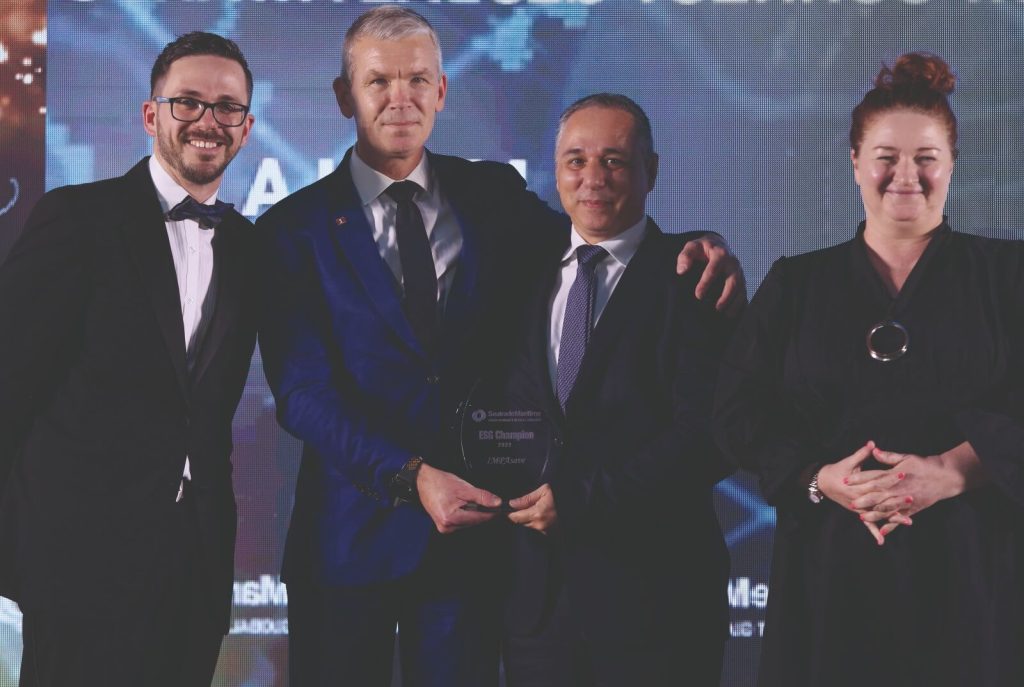
Significance of the ESG Champion Award: How significant was receiving the 2023 ESG Champion Award at CrewConnect for IMPA SAVE, and what does this recognition mean for your future endeavours?


I did not see that coming. I was invited to speak at CrewConnect in Manila, giving me a different audience, but afterward, I was approached by several people thanking IMPA SAVE for fronting this initiative, and had new pledgers come from the event. It was great to receive the award on behalf of my team, and also great to be acknowledged for doing this. (Mikael says)

Visibility and Impact: How has the visibility from awards and recognitions like the ESG Champion Award impacted IMPA SAVE’s ability to influence change in the maritime industry?


Difficult to say. When it was published on social media, I received many congratulations for the achievement. In reality, this achievement is for all the companies that have pledged to IMPA SAVE, and that have taken action to change, and likely influenced others to do the same. What started as a drop is now a small stream that I hope will become a river when all shipowners have applied their ships to do the right thing. (Mikael says)


Moving forward… we seek as much awareness as we can generate. By sharing ideas and gathering people together we can achieve more. (Stephen says)

Akerboom Yacht Equipment

Akerboom yacht equipment

Innovation and Craftsmanship: Steering Akerboom Yacht Equipment Into the Future


In the realm of luxury superyachts, where tradition meets innovation, Akerboom Yacht Equipment (AYE) stands as a testament to the enduring legacy of Dutch shipbuilding. In an exclusive interview with Mervyn van der Ploeg, Managing Director of Akerboom, we delve into the intricate world of custom-built yacht equipment, exploring the company’s craftsmanship, its lengthy history and its relentless dedication to quality, innovation, and finding solutions. These elements not only define AYE’s operational philosophy but also set the course for its future trajectory in the maritime domain of hydraulic equipment.


Click below to access the digital brochure version

Commitment to Craftsmanship: The Core of AYE’s Identity


Craftsmanship is the cornerstone of AYE’s philosophy, embodying a meticulous approach to quality and detail. Akerboom Yacht Equipment creates, designs, and maintains custom-built hydraulic equipment such as boarding ladders, gangways, swimlifts, platforms, doors, hatches, cranes, and various special solutions for superyachts. With Feadship as a major client, high quality by craftsmanship is a key for long term success.


Mervyn emphasises that craftsmanship is central to AYE’s identity, ensuring that each project reflects the company’s high standards. “Our focus is on delivering superior quality and attention to detail in every aspect of our work. This commitment is evident in the precision of our products and the satisfaction of our clients.” Craftsmanship extends far beyond the confines of its production facilities. It is woven into the fabric of every interaction, every innovation, and every solution delivered by Akerboom service engineers to clients worldwide.


With its 110 employees, Akerboom continuously implements improvements in all its products in new-built projects, drawing from insights gathered from service and AYE refit locations. This continuous improvement process is guaranteed by ISO-9001 certification and ensures that Akerboom’s offerings evolve to meet the changing needs. From the selection of premium materials to the precision engineering of intricate constructions and assemblies, every aspect of the manufacturing process is infused with a passion for perfection.


Akerboom commits to craftsmanship by training its employees from the moment they start working at AYE and all employees receive their Akerboom certified yearly training at their own AYE Tech campus. Every year minimum 3 new employees start while still in school, and 100% of these students stay at the company after graduation. After many years now, 40% of all craftsmen started this way directly out of school.

Pioneering Innovation: Leading with Solutions


The success of AYE is deeply rooted in its collaborative ethos, by engaging clients as partners from the outset. This partnership approach ensures that each solution is tailored to the client’s vision, resulting in bespoke hydraulic equipment that seamlessly blends with the yacht’s design and functionality. Akerboom assigns a dedicated project manager and project design engineer to work together with the client. This collaborative approach extends across every phase of the project lifecycle, from initial consultation to final delivery and service route. By engaging clients as active participants in the design and development process, Akerboom ensures that each solution is custom-tailored to their specific requirements, preferences, and aesthetic sensibilities.


Mervyn van der Ploeg emphasises the importance of this collaborative journey: “Any feedback we receive at our service and refit locations in Barcelona (Spain) and West Palm Beach (Florida, the US) is used as inspiration for our Akerboom product innovations.” Working with the best partners, such as VSE for motion control, ensures that Akerboom can always deliver the best products.


Innovation is the compass that guides AYE’s quest for excellence, driving the company to explore new horizons and redefine the boundaries of yacht equipment design solutions. AYE’s innovative spirit is vividly illustrated in the development of the pop-up gangway and the mobile control panel—two solutions that embody the company’s response to complex challenges with elegant and effective answers.

  • The Pop-up Gangway: Engineering Elegance

The genesis of the pop-up gangway is a compelling narrative of necessity and ingenuity. When a superyacht client realised the absence of boarding capabilities from the aft deck, AYE was called upon to devise a solution. The result was the automatic folding pop-up gangway in the aft-deck, a marvel of engineering that combines sleek modular design with practical functionality in a small technical space. “This innovation not only resolved the initial challenge but also set a new standard for yacht boarding solutions”, notes Mervyn, showcasing AYE’s ability to turn visionary ideas into reality.

  • The Mobile Control Panel: Efficiency and Safety

The mobile control panel exemplifies AYE’s commitment to enhancing operational efficiency and safety on board. Born from recurrent feedback about the limitations of the current control system, this innovation allows crew members to monitor and analyse the equipment’s systems remotely, providing a new level of flexibility and insight. While prioritising safety by restricting actual control to the usual remote to prevent unintended operations, the mobile control panel underscores AYE’s focus on simple yet impactful innovations.

A Global Network: Ensuring Excellence Everywhere

AYE’s dedication to service excellence is amplified by its global presence as OEM for its hydraulic equipment. With over 80 yachts equipped and serviced worldwide by committed craftsmen, AYE’s Global Service Network extends from its Dutch roots to strategic locations in West Palm Beach, Florida, and Barcelona, Spain. This expansive network facilitates unparalleled maintenance and support for AYE’s discerning clients and ensures that the same standards of excellence are upheld globally. “We aim to provide consistent, high-quality support to our clients, wherever they are. This global reach ensures that we can offer immediate assistance and maintain the high standards of our equipment,” Mervyn says, underscoring the importance of AYE’s international presence.

Akerboom’s Foundation: Anchored in Dutch Shipbuilding Excellence


The history of AYE is a remarkable story of evolution. In 1860 the company was founded to craft wooden vessels for bulb growers. Over generations, AYE evolved, adapting to changing times and markets, including a shift to luxury motorboats and later, to specialized hydraulic equipment for superyachts since 1983. This evolution was driven by a consistent focus on craftsmanship, innovation, and responding to industry needs. “The foundation of Akerboom is deeply rooted in the rich tradition of Dutch shipbuilding, reflecting a legacy of precision, durability, and reliability”, Mervyn explains. This heritage is not just a backdrop but a driving force that shapes the company’s ethos and practices, ensuring that AYE remains synonymous with quality in the luxury superyacht industry.

The Future: A Horizon of Innovation and Excellence


Looking ahead, AYE is poised to navigate the evolving landscapes of the luxury superyacht industry with its steadfast commitment to craftsmanship, innovation, and global service. The company’s rich heritage, combined with a forward-looking perspective, positions AYE to confront future challenges and to continue leading the way in maritime excellence.
In charting the journey of Akerboom Yacht Equipment, we uncover a narrative that transcends mere manufacturing. It is a story of passion, innovation, and unwavering dedication to quality—a legacy that AYE is set to carry into the future, steering the superyacht industry toward new horizons of luxury and craftsmanship.

In Association with:

VSE is the specialist in the field of Industrial Automation & Motion. Our years of experience and specialized knowledge make us a valuable partner for end users, but also for other organizations in the industrial chain, such as system suppliers and machine builders. Together with them we work on smart and optimal integration of mechanics, electronics and software. The aim is the perfect machine with an optimal balance between efficiency and sustainability. Together we do what we are good at.

www.vse.nl


Teakdecking Systems

Teakdecking Systems

Steering Towards Sustainability: Richard Strauss’s Vision for Teakdecking Systems


In this insightful Q&A, we sit down with Richard Strauss, the CEO of Teakdecking Systems, to discuss his leadership journey since 2019. Strauss shares how he navigated the company through the tumultuous times of the pandemic and strategically expanded its market presence. With a keen eye on sustainability and innovation, Strauss elaborates on Teakdecking Systems’ approach to environmentally responsible sourcing and product development, highlighting the company’s efforts in promoting alternative decking materials. Join us as we delve into the intricacies of steering a leading marine decking company towards a greener and more innovative future.


Click below to access the digital brochure version

Leadership and Growth: Since joining Teakdecking Systems in 2019 and being promoted to CEO, how have you guided the company through global challenges such as the pandemic, and what strategies have you employed to grow the company’s market share?


It’s been quite a roller coaster ride! The first order of business upon my return to TDS in August of 2019 was to solidify a commercial agreement with a prominent superyacht builder in Europe. This agreement enabled us to secure two significant contracts for new 100m+ builds. Following that, we issued a letter of intent to purchase the assets of a company in Spain, which ultimately became Teakdecking Systems Europe. Of course, closing this acquisition during a global pandemic presented its challenges.


Meanwhile, back at our headquarters in Sarasota, FL, our team did an exceptional job of navigating the pandemic. Despite being forced to close our operation, our team never stopped working. Each department met daily via Teams meetings, engineering continued digitising new jobs, sales pushed forward and closed deals, and operations were in the midst of implementing a new ERP system. It all kept moving forward, thanks to the sheer grit and determination of all team members. As soon as we were allowed to reopen the factory, it was all hands on deck (no pun intended!). Meanwhile, on the sidelines, we were working hard to finalise the deal on our new operation in Spain so we could begin organising and training our team (via Teams meetings) to manufacture the decks for the two 100m+ new builds.


As for our strategy for direction and growth, we hold an annual meeting with our executive team to develop a solid strategic plan for the upcoming year. We use this as a roadmap to guide us through the year ahead. Over the years, our team has become adept at developing the plan for the following year, which helps keep us focused.

Sustainability in the Teak Industry: With the marine industry evolving and growing concerns around the sustainability of teak, how is Teakdecking Systems addressing these challenges and ensuring responsible sourcing?


To ensure responsible sourcing, TDS adheres to strict Chain of Custody standards. We only work with legally sourced plantation teak and conduct on-site inspections to confirm compliance with these standards. We have a due diligence program in place, where we conduct ISOTOPE and DNA testing to verify the origin of our wood sources. By investing in these measures, we create trust among our partners and customers, fostering transparency and accountability throughout the supply chain.

Innovation and Product Development: Could you discuss any new products Teakdecking Systems has introduced under your leadership and how they contribute to the company’s portfolio?


Given that our customers include superyacht owners, custom yacht builders, major shipyards, boatyards, battleships, cruise ships, high-volume production boat builders, and DIY small boat owners, we need to tailor our product offerings to each segment accordingly.


We introduced our own composite decking, TDS Composite, 18 months ago. This durable, low-maintenance, and highly resilient deck surface has been very well received in the US, particularly among production boat builders and small boat owners seeking maximum comfort. Additionally, we are nearing the launch of another high-performing composite decking alternative designed for the same segment.


It is important for us to provide a diverse range of maintenance products catering to our clients’ specific decking needs. Last year, we introduced our composite deck sealer, and we are currently in the process of developing a composite deck cleaner, expected to go to market by year-end. With the growing demand for eco-friendly cleaners across all markets, we recently launched our new ECO-800 deck cleaner and are working on expanding our eco-products portfolio.

Employee Development: You’re known for your hands-on approach and passion for employee development. How do you foster a culture of growth and learning within Teakdecking Systems?


In our highly skilled environment, much of our training involves hands-on guidance by our skilled craftsmen. We recruit from the local community and trade schools; however, the precision required for building our decks is not taught in a 6-month program. It takes years of training and skill development to become one of the master carpenters on our team. Our skilled craftsmen take pride in the custom decks and inlays they produce and excel at sharing their knowledge with new carpenters who have the potential to become skilled craftsmen themselves.


We have recently developed an Accredited Apprenticeship Program, approved by the State of Florida’s Department of Commerce. Upon completion, participants receive a Nationally Accredited Apprenticeship Certification and credits towards an Associate’s degree in Manufacturing Engineering Technology.


We also offer a scholarship program for our employees and their children to pursue higher education goals. Since 2010, the Ann and Lars Lewander Scholarship Foundation has awarded approximately 100 scholarships totaling $500,000. Our program has enabled participants to earn various levels of certifications and degrees, from trade school to Master’s programs. Many of these graduates remain in our area and contribute to our local community.


Recently, I joined a newly formed committee committed to advancing the field of manufacturing by maintaining rigorous educational certification standards that align with industry best practices. Our purpose is to provide learners with recognized credentials that validate their expertise, promote professional growth, and meet the evolving needs of the industry. We aim to achieve this by working with local trade and technical schools to ensure curricula align with manufacturers’ needs.

European Expansion: The acquisition of Teak Solutions SL of Barcelona was a significant step for Teakdecking Systems. How has this expanded your presence in Europe and impacted the company’s operations?


The acquisition marked a major milestone for us. Our decision was driven by inquiries from our customers seeking recommendations for European decking companies. This strategic move has drastically improved our global service capabilities and has nearly doubled our production capacity. Ultimately, this translates to tangible benefits for our customers.


Many of our projects involve collaboration, where a deck may be digitised and engineered in the US, manufactured at our factory in Valencia, Spain, and installed by either our American or Spanish team, depending on the boat’s location. This collaborative approach ensures optimal efficiency and customer satisfaction.

Alternative Teak Sources and Materials: With the industry moving towards more sustainable practices, what alternatives to traditional Burmese teak are Teakdecking Systems exploring or using?


A decade ago, we recognized that the supply of 100-year-old Burmese teak was unsustainable. Over the past decade, we have been actively pursuing and testing the viability of alternative materials.


We work only with legally sourced plantation teak, aged between 20-25 years or 40-50 years, as well as thermally modified wood. We are currently building a new deck for a 100+m new build using plantation Green Teak from Thailand. This 35-year-old laminated teak, sliced into veneers and glued together, is both aesthetically pleasing and offers excellent durability. Cork is another sustainable product making a comeback as a viable alternative to traditional teak.


As pioneers in the decking industry, we were among the first to work with composite decks, and we are the distributors for Esthec and Herculan. While composite is still gaining traction within the superyacht industry, it has already become very popular for production and commercial boats. For superyachts not wanting to go down the composite route, we recommend its use in high-traffic areas, such as tender garages or other areas with high footfall.

Client Education and Industry Shifts: How are you working to educate clients and the industry about sustainable alternatives to teak and the importance of diverse material choices in yacht design?


The superyacht industry is undeniably at a tipping point concerning sustainability. Speaking candidly, this presents one of our most significant challenges. Much of the industry still holds the belief that viable teak for decking must be 100 years old. However, we have effectively debunked this myth. Despite this, we continue to face challenges in ensuring that intermediaries between us and the end customer are well-informed, enabling owners to make informed decisions.


We have had the privilege of participating in numerous panel discussions on deck alternatives at major yachting events, providing us with a platform to engage a broad audience. We have also contributed to various articles addressing teak and its alternatives in leading industry publications. Despite these efforts, there remains a considerable amount of work to be done.

Sustainable Practices: What initiatives has Teakdecking Systems implemented to reduce its environmental impact and promote sustainability within the industry?


I’m really proud to say that last year, we became a corporate partner of the Water Revolution Foundation. Currently, we’re working closely with them to assess and verify our level of sustainability, so they can provide us with feedback on how to improve it.


Another significant step we’ve taken is initiating the process of obtaining FSC certification for our factory in Valencia, Spain. Upon receiving this certification, we will proceed to start the certification process for our Sarasota factory.

Adapting to Market Trends: Considering the dynamic nature of the marine decking industry, how does Teakdecking Systems stay ahead of market trends and consumer preferences, particularly in the realm of sustainable and innovative decking solutions?


I think, at the end of the day, it boils down to truly tuning into the pulse of the industry and the global landscape. We explore every available opportunity in the market and have consistently trialed new products, including variations of composite decking, even amidst widespread scepticism. We are willing to invest time in thorough testing over an extended period to ensure that a product meets our rigorous standards of excellence before fully endorsing it. This commitment obviously takes time, but it’s precisely what has earned us our reputation for excellence within the market.

Future Vision for Teakdecking Systems: Looking forward, what is your vision for the future of Teakdecking Systems, particularly in terms of sustainability, innovation, and market expansion?


As my daughter aptly puts it, “adapt or die,” and I wholeheartedly agree with her sentiment! This mindset forms one of our core values, ingrained in the culture of TDS since 1983. We were the original inventors of pre-manufactured decking for vessels, a groundbreaking system that radically reduced installation time and cost.


Despite the changing perceptions of teak, many yachts worldwide will continue to demand it. Given that teak is grown all over the world, it falls upon us to source the most sustainable and legally grown teak available. Alongside other viable options such as high-quality modified woods, cork, and composites, it is our goal to be the trusted supplier of high-quality options. Subsequently, it is our duty and mission to educate our clients and customers about the advantages and disadvantages of each option in relation to their specific projects.


As for innovations, we continue to listen to our customers’ needs and concerns, which allows us to actively work on developing solutions. This approach has driven the development of several of our products in the past, as well as a new deck option soon to be released.


Market share and growth will come more organically. We’re not pursuing “world domination” but rather striving to offer an exceptional value proposition and service to our customers by building and installing the best decks, exceeding their expectations.


One of our decks, if well maintained, should last 20-25 years. While this may seem counterintuitive for business, we will always opt to repair a deck to extend its lifespan rather than building a new one. Creating a reputation of trust and quality craftsmanship drives word-of-mouth referrals, which are the highest form of praise for an employee-owned company. This is what drives us as a company and underscores our commitment to excellence in every deck we undertake.

Inchcape Shipping Services (ISS)

Inchcape Shipping Services

Procurement with Purpose: Simon Potter’s Strategic Vision at Inchcape Shipping Services


In this Q&A, we delve into the strategic mind of Simon Potter, Chief Procurement Officer at Inchcape Shipping Services. Potter discusses how Inchcape’s procurement strategy has evolved to adapt to the dynamic maritime industry, emphasising the introduction of their global ship-chandling solution. He highlights the company’s commitment to sustainability and the integration of responsible sourcing practices. Potter also sheds light on Inchcape’s innovative ‘procurement-as-a-service’ model, which offers comprehensive value beyond cost savings, and how the company manages its extensive global supply chain. Through team collaboration and navigating market trends, Inchcape remains at the forefront of sustainable and innovative decking solutions in the maritime sector.


Click below to access the digital brochure version

Strategic Procurement Evolution: How has Inchcape’s procurement strategy evolved to meet the dynamic needs of the maritime industry, particularly with the global ship-chandling solution?


Inchcape’s procurement strategy has significantly transformed from its traditional roots of merely onboarding vendors. Particularly from a port agency standpoint, our role has expanded to being the vital eyes and ears on the ground for our clients. This evolution is crucial because our customers, often absent from the ports, rely on us to manage the myriad of operations occurring there. Ensuring these operations are executed promptly, safely, and cost-effectively falls under our purview. Our group’s procurement function has increasingly become adept at meeting our customers’ needs, thanks to the seasoned professionals we have in place and the expansion of our teams to ensure coverage not only at our headquarters but also in the regions we serve.


Our approach to procurement is centre-led, with specialists integrated within the business units yet maintaining a central reporting line to ensure a balance between autonomy and alignment with both customer and internal needs. This strategic blend of local autonomy within our operations is pivotal.


The introduction of our global ship chandling solution, dubbed “procurement as a service,” marks a significant advancement in our procurement strategy. This evolution stems from recognising the additional needs our customers have when their vessels are docked. By adopting a procurement-centric viewpoint, we’ve moved beyond traditional services to address common challenges like table spending and the lack of transparency in the ‘Last Mile’ of supply chains. Our global presence, coupled with a professional procurement and supply chain team, allows us to add substantial value to our clients’ operations, offering transparency, efficacy, and cost advantages over our competitors.


Sustainability also plays a critical role in our procurement strategy. We work closely with our clients to identify local sourcing solutions, moving away from the conventional practice of consolidating consumables and spares in major hubs. Our commitment to authenticity means we only deal in OEM spares, ensuring quality and reliability. Furthermore, our “warehousing on demand” service exemplifies our forward-thinking approach, accommodating the unpredictable trading patterns of vessels by leveraging our global network for strategic spare part storage. This adaptability extends across various sectors, with many of our offshore customers particularly benefiting from our ability to strategically source and supply locally.

Sustainability Leadership: As VP of Sustainability at IMPA, how do you integrate sustainable practices within Inchcape’s procurement processes, and what impact does this have on the industry?


In my dual capacity as CPO at Inchcape and my role within the International Marine Purchasing Association (IMPA), the drive towards sustainability is a significant part of our ethos. Inchcape’s commitment to sustainability is evident as we were pioneers in signing up for the IMPA ACT and subsequently for its updated version, ACT 2.0. Our dedication to sustainable practices is not just about adherence to standards; it’s about leading by example within the maritime industry.


Utilising the IMPA ACT toolbox has been instrumental in refining our procurement processes, allowing us to thoroughly scrutinise every aspect of our supply chain from a sustainability standpoint. This scrutiny is not only limited to compliance with human rights and UN conventions but extends to environmental considerations, such as emissions tracking.


For our clients, this means that when they dock at a port serviced by an Inchcape agent, we offer comprehensive support in monitoring emissions related to the core services we provide. This initiative is crucial for our clients, providing them with a detailed understanding of their emissions footprint within the port, encompassing Scope 1, 2, and 3 emissions. Our aim is to ensure that they have a holistic view of their environmental impact, including emissions from auxiliary services like tugs, launches, taxis, and hotels.


However, our commitment goes beyond tracking; it extends to educating our suppliers. Our observations suggest that approximately 30% of port suppliers are genuinely aware of what sustainability entails, and a similar percentage have set targets towards achieving net zero. As a global port agent with sustainability at our core, we believe it’s our responsibility to enlighten our supply base on the importance of supporting our clients’ sustainability goals.


This educational role synergises with our activities at IMPA, where we work closely with colleagues to promote sustainability within the industry. Our efforts are not just about compliance or meeting standards; they’re about fostering a culture of sustainability and responsibility across the maritime sector.

Procurement-as-a-Service: Can you elaborate on the concept of ‘procurement-as-a-service’ at Inchcape and how it delivers value beyond cost savings to your customers?


The essence of ‘procurement-as-a-service’ at Inchcape modernises the traditional ‘one-stop shop’ concept, providing a more comprehensive solution. Our clients, especially those operating container vessels with regular routes and suppliers, have a core list of needs when it comes to supplies and services at the ports they frequent. However, challenges arise when they need items or services beyond this core list, whether it’s spare parts, consumables, provisions, or other services. Finding vendors that meet the desired quality and price point outside their usual list can be difficult.


This is where our ‘procurement-as-a-service’ shines. With a global supply list exceeding 10,000 vetted suppliers across 60 countries, we offer our customers a reliable and extensive network. This service allows clients to approach us with specific needs in any port, confident in our ability to provide a solution that adheres to stringent quality and governance standards. While we may not always promise the lowest price, we ensure value through our rigorous vendor selection process, managed by our local teams on the ground. This approach guarantees that our customers benefit from the same level of governance and ethical standards they would expect from any port agency service, even if they don’t use Inchcape as their port agent.


Interestingly, over half of our ‘procurement-as-a-service’ clients do not utilise our port agency services, underscoring the standalone value of this offering. Even those with preferred agents opt for Inchcape’s procurement and logistics services to leverage our comprehensive governance framework and ethical policies, highlighting the distinct advantages and added value we bring to the table beyond mere cost savings.

Global Supply Chain Management: Managing a global supply chain presents unique challenges. How does Inchcape ensure reliability and efficiency across its vast network of ports and services?


Ensuring reliability and efficiency across Inchcape’s extensive network hinges on our adherence to strict governance, standardised processes, and unified policies. We operate under a centralised framework accessible to all employees, promoting consistent practices throughout the organisation. Leadership commitment plays a crucial role, with alignment from the CEO down, ensuring that everyone, from the board to the front lines, understands and follows our operational directives. This clarity and lean organisational structure facilitate a unified approach to service delivery.


Despite the inherent challenges of operating in diverse cultural and linguistic landscapes, particularly in regions like Asia Pacific, our long-standing focus on maintaining high standards has honed our ability to provide consistent service quality worldwide. We recognise that local conditions may necessitate tailored service delivery, but the core standard remains unwavering.


A vital component of our strategy is the meticulous onboarding and continuous assessment of our vendors. We conduct annual audits to ensure they meet our stringent requirements, maintaining high service standards irrespective of location. This rigorous vetting process is especially crucial for services involving the movement of people, where risk management is paramount for the safety of both our personnel and clients.

Team Dynamics: With a growing global Procurement and Supply Chain team, how do you foster collaboration and knowledge sharing among team members with diverse expertise?


Fostering collaboration and knowledge sharing within Inchcape’s diverse and global Procurement and Supply Chain team hinges on our foundational philosophy of open knowledge exchange. Recognising that no single individual holds all the answers, we place great emphasis on drawing insights and ideas from the entire team. A recent example of our collaborative approach was a gathering in Mumbai, where a significant portion of our team is based. This meeting facilitated a vibrant exchange of ideas and best practices, especially from our procurement support team, who possess a unique global perspective due to their centralised role.


Training sessions are a regular feature, aimed not only at skill enhancement but also at brainstorming improvements in our processes and methodologies. This continuous learning environment is underscored by our commitment to professional development, with many team members pursuing or encouraged to pursue CIPS qualifications, Six Sigma certifications, or advanced degrees.


Diversity in expertise is another pillar of our strategy. Our team in Mumbai, for example, benefits from the inclusion of individuals with backgrounds in mathematics and data analytics, enhancing our capability to deliver insightful data analysis and feedback to other departments. This analytical approach not only advances our procurement and risk management strategies but also propels sustainability initiatives, providing substantial non-price value to our clients.


Transparency with our customers is paramount, reflected in our practice of sharing original vendor invoices, ensuring they have clear visibility into the costs incurred. Our pursuit of competitive rates, balanced with a commitment to quality, underpins our promise of value. Moreover, our involvement in innovative projects, like the launch of the first purely electric launch in Singapore, exemplifies our dedication to sustainability and innovation. These initiatives not only reduce carbon footprints but also align with our customers’ sustainability goals, illustrating our role in driving the industry forward through innovative and sustainable solutions.

Chandling Service Expansion: The expansion of Inchcape’s chandling operations into strategic ports is a significant development. What criteria do you use to select these locations, and how do you tailor services to meet local demands?


The selection of strategic ports for the expansion of Inchcape’s chandling operations often begins with customer inquiries. Having an approved vendor list in various locations allows us to swiftly provide solutions, but the challenge lies in effectively communicating our capabilities to customers, ensuring they understand the breadth of services we offer.


Traditionally, port agents have provided chandling services on an ad-hoc basis, responding to last-minute requests from ships as they arrive. Our approach with the chandling solution, or ‘procurement as a service’, is to make this process more systematic, involving ourselves in the planned ordering of spares and stores rather than solely catering to emergency needs. This not only assists ships in port but also aids in preemptive planning, especially when vessels change course unexpectedly and require support in unfamiliar locations.


The selection of ports and tailoring of services hinge on understanding the diverse challenges our customers face. These challenges can vary widely, influenced by factors such as the size of the customer’s purchasing team, the number of contracts they manage, and the regularity with which they visit certain ports. We have identified around 60 ports that see regular activity from our clients, which have become focal points for our services. While sourcing a chandler in major ports like Singapore, Houston, or Rotterdam might be straightforward, our strength lies in providing reliable services outside these hubs, where finding quality support can be more challenging. Despite this, we’re also seeing increased demand in these major ports, highlighting our comprehensive capabilities and the trust clients place in our services.

Global Sustainability Strategy: Inchcape’s commitment to sustainability is commendable. How do you measure the effectiveness of your sustainability initiatives, and what are the key performance indicators?


At Inchcape, the foundation of our sustainability strategy is encapsulated in our code of conduct and, more specifically, our Supplier Code of Conduct. This sets the minimum standards we expect not only from our vendors but also from our partner agents globally. Given that we don’t operate in every location directly, it’s imperative that our representatives uphold the same sustainability standards as we do.


Measuring the effectiveness of these initiatives often presents challenges, as mere compliance on paper doesn’t necessarily equate to real-world application. To address this, we invest considerable effort in auditing and assessing our key vendors worldwide, ensuring they not only commit to our standards but actively embody them in their operations.


One of our primary Key Performance Indicators (KPIs) is the adherence to our business and supply codes of conduct, which reflect our sustainability and procurement expectations. Regular visits to our key vendors form another crucial part of our strategy, enabling us to conduct toolbox talks and demonstrate visible, felt leadership. These interactions are instrumental in conveying our values and ensuring that our sustainability standards are more than just a checklist, but a lived experience across our supply chain.

IMPA Act 2.0 and Industry Collaboration: How does IMPA Act 2.0 facilitate collaboration within the maritime industry, and what role does Inchcape play in promoting industry-wide sustainability through this initiative?


IMPA Act 2.0 primarily fosters collaboration between customers and their supplier networks within the maritime industry. While its direct influence on customer-to-customer collaboration may be less apparent, the initiative serves as a crucial bridge in aligning ship owners, managers, and their vendors on sustainability practices. Many industry stakeholders, often uncertain about how to approach sustainability, have found IMPA Act 2.0 to be an invaluable resource. The Act provides a comprehensive toolbox designed to navigate the complexities of sustainability in an industry traditionally characterised by analog processes.


This toolbox has become a pivotal platform for dialogue, enabling suppliers and customers to ensure mutual understanding and alignment, especially as regulatory pressures on sustainability intensify. For example, the focus on maintaining an inventory of hazardous materials is one of the many areas where IMPA Act 2.0 has raised awareness and facilitated industry-wide compliance and best practices.


Inchcape, aligning with the principles of IMPA Act 2.0, plays a significant role in promoting sustainability within the maritime sector. Our involvement goes beyond compliance; we actively engage with both our suppliers and customers to ensure a cohesive approach to sustainability. By advocating for and adhering to the guidelines and frameworks provided by initiatives like IMPA Act 2.0, Inchcape aims to lead by example, encouraging a more sustainable and environmentally responsible maritime industry.

Procurement Disruption and Innovation: You mentioned the maritime industry’s need for disruption and change in procurement. What innovative approaches is Inchcape implementing to lead this transformation?


While I must be cautious about divulging too much, I can share that Inchcape is actively engaging with technology disruptors to explore innovative procurement solutions. Our focus isn’t just on adopting new technologies for the sake of innovation; it’s about critically evaluating these advancements to enhance our procurement and purchasing strategies fundamentally.


A key area of innovation for us lies in managing costs and logistics beyond the major ports. It’s relatively straightforward to find chandling services in hubs like Rotterdam, Houston, or Singapore. However, the real challenge—and our differentiator—comes in providing cost-effective, efficient services in smaller or less frequented ports. Here, Inchcape stands out by not only offering procurement services but also overseeing the crucial ‘last mile’ delivery directly to the vessel, eliminating the need for intermediaries.


My background in chandling and subsequent experience with shipping owners like Maersk has highlighted the importance of transparency and efficiency in the procurement process. Traditionally, the visibility of an order diminishes once it reaches a local agent or airport, leaving purchasers in the dark until the goods are received on board. Inchcape aims to revolutionise this aspect by ensuring continuous transparency about the costs and status of orders, from procurement to delivery. Our approach provides a clear picture of the total cost of acquisition, including all logistics expenses, to the purchasing team ashore. This level of transparency and efficiency in managing the procurement and delivery process is central to our innovative strategy in transforming maritime procurement.

Personal Inspiration and Industry Passion: Having transitioned from various roles within the maritime sector to your current position at Inchcape, what aspects of your job inspire you the most, and how do you maintain your passion for the industry?


The greatest source of inspiration for me is the opportunity to work for a global entity like Inchcape, which allows me to engage with diverse cultures and people from different parts of the world. The chance to visit and interact with colleagues and customers globally is genuinely one of the job’s highlights. This exposure to varied cultures and business practices enriches my understanding and appreciation of the maritime sector.


Another aspect that fuels my passion is the emphasis Inchcape places on ethical governance and standards. It’s one thing to profess a commitment to strict ethics and codes, but at Inchcape, we truly embody these principles. The role of a Chief Procurement Officer (CPO) is rare in the supplier side of our industry, highlighting the value Inchcape places on procurement as a critical function. This contrasts with many sectors where procurement is undervalued.


My role at Inchcape transcends traditional procurement functions like contract management and cost-saving. It encompasses driving value through maximising supplier relationships, maintaining service standards, fostering innovation, and spearheading sustainability and ESG initiatives. Our procurement department operates with a commercial mindset, actively engaging with customers to manage risks and enhance the supply chain they depend on through us.


I find that customers appreciate engaging with procurement professionals who understand their challenges. Being able to sit down with a counterpart and discuss solutions beyond the usual sales pitch not only breaks down barriers but also adds substantial value. This direct approach allows us to address their needs more effectively, showcasing Inchcape’s commitment to driving change and delivering results in the maritime industry.

In Association with:

Marina Offshore Pte Ltd, holding a prestigious Public Licence from the Maritime Port Authority of Singapore since 1998, has been at the forefront of providing top-notch towage services within the bustling Port of Singapore. With over 25 years of expertise in owning, managing, and operating tug boats, Marina Offshore has carved a niche for itself by offering marine and offshore support services characterised by reliability and excellence.

www.marinaebox.com   

SMS Towage, a leader in maritime excellence, delivers unparalleled harbour, offshore, and specialised towage services. Their fleet, highlighted by the powerful ASD tug Superman and the adept Marksman, guarantees unmatched precision and efficiency in vessel management. With strategic locations across key UK ports, including the Humber, Bristol Channel, Belfast, and Portsmouth, SMS Towage offers unwavering 24/7 support, embodying their commitment to client satisfaction, crew welfare, and environmental preservation.

www.smstowage.com

PSA Marine, a wholly owned subsidiary of PSA International, is a leading marine services provider with flagship operations in Singapore and Peru. Combining operational excellence with a forward-looking approach, PSA Marine’s business portfolio extends beyond its core businesses of towage and pilotage, to marine advisory, navigational audit, water supply to vessels, crew transfer in the offshore wind industry, and training and consultancy services.

www.psamarine.com

NavalHEAD International

Portfolio NavalHEAD

Navigating Innovation: NavalHEAD International’s Voyage in Luxury Yachting


In the dynamic world of luxury yachting, where elegance meets engineering, NavalHEAD International emerges as a vanguard of innovation and sustainable design. At the helm of this pioneering journey is Andrea Agrusta, whose vision and expertise have propelled NavalHEAD International to the forefront of yacht design and engineering. This feature delves into the core mission, innovative solutions, and future prospects that define NavalHEAD International’s distinguished presence in the maritime industry.


Click below to access the digital brochure version

Visionary Beginnings


From its inception, NavalHEAD International was envisioned to redefine the parameters of luxury yachting, intertwining innovation with unparalleled design aesthetics. Andrea Agrusta reflects on the foundational principles that guide the company’s path.

“Our aim has always been to set a new benchmark in design and engineering within the luxury yachting market, with innovation guiding every design task we undertake.”

Pioneering Innovative Solutions


NavalHEAD International distinguishes itself through its commitment to efficiency, comfort, and environmental consciousness. The company’s approach to yacht design is a testament to its innovative spirit, striving for excellence in every project.


“We are dedicated to the development of high-efficiency hulls and innovative structural layouts that not only enhance seakeeping and reduce fuel consumption but also elevate the onboard experience for guests.”

Addressing Maritime Challenges


In an industry undergoing rapid transformation, NavalHEAD International stands at the forefront of addressing the pressing challenges of sustainability and green technology. Agrusta highlights the company’s proactive stance in integrating alternative propulsion systems and sustainable materials into their designs.


“The transition to green technologies is imperative. We are constantly exploring alternative propulsions and materials to enhance the efficiency and environmental footprint of our vessels throughout their lifecycle.”

Sustainability at the Helm


Sustainability is more than a buzzword for NavalHEAD International; it’s a core principle that permeates every aspect of their design and engineering processes. Agrusta speaks to the company’s enduring commitment to eco-friendly practices.


“Our focus on hydrodynamic efficiency and pioneering the use of full electrical propulsion since 2012 underscores our dedication to reducing emissions and advancing sustainable maritime solutions.”

Harnessing Technological Advancements


At NavalHEAD International, cutting-edge technology and software are pivotal in optimising yacht performance and design. Agrusta emphasises the role of advanced fluid dynamics techniques in their design process.


“We leverage the latest fluid dynamics software and hardware to simulate and optimise yacht hull performance, ensuring each vessel achieves the best possible marine performance.”

Embracing Global Diversity


Serving an international clientele brings unique challenges and opportunities. Agrusta discusses how NavalHEAD International’s global operations enrich their design philosophy and market understanding.


“Our diverse clientele helps us cultivate a more open-minded vision, allowing us to understand and cater to the eclectic requests of shipowners from various cultures.”

Collaborative Design Excellence


Client collaboration is integral to NavalHEAD International’s design philosophy, ensuring that each project reflects the client’s vision while achieving the highest standards of comfort, safety, and performance.


“We treat every client as our most important guest, guiding them to solutions that best meet their needs, and ensuring that the final product reflects the pinnacle of design, comfort, and performance.”

Charting Future Horizons


With several exciting projects in the pipeline, including collaborations with renowned designers and expansions into new yacht ranges, NavalHEAD International is poised for continued growth and innovation.


“The development of custom yachts globally and the technical design of the new Ocean Alexander range are just a few examples of the exciting projects that lie ahead for us.”

Industry Insights and Advice


In an industry characterised by rapid growth and fluctuating trends, Agrusta shares insights on adapting to market demands and offers advice to aspiring maritime professionals.


“The maritime industry offers immense opportunities, but it requires resilience and a willingness to adapt. For those aspiring to make their mark, perseverance and hard work are key.”


NavalHEAD International, under the visionary leadership of Andrea Agrusta, continues to chart a course of innovation and excellence in the luxury yachting industry. With a steadfast commitment to sustainability, technological advancement, and client collaboration, NavalHEAD International is not just navigating the currents of change but is also setting new standards for what luxury yachting can be in the modern era.

In Association with:

Founded in 1978 in Marsala (TP) by Francesco De Vita, it quickly became a leading company in the design and construction of reverse osmosis watermakers and water treatment systems in the nautical, offshore, oil & gas and industrial fields and residential.

www.tecnicomar.it 


With great pride, we present our new “San Rocco International Shipyard” project in Muggia, a picturesque village in the province of Trieste along the Adriatic coast. The idea behind this project stems from our love of the sea, the boats and ship building, combined with our experience in business, our passion for innovation and our confidence in the future.

www.sanroccoshipyard.com

ELNA Gmbh

Portfolio ELNA

Innovating Maritime Technology: A Deep Dive with ELNA GmbH’s Leif Schick

Explore maritime innovation with Leif Schick, Managing Director of ELNA GmbH. Schick discusses ELNA’s diverse product development, from military to recreational boating, highlighting their advanced MF/HF antennas and innovative lightning protection systems. He delves into ELNA’s commitment to sustainability, responses to emerging maritime trends, and the challenges and opportunities facing the industry today.


Click below to access the digital version

How does ELNA GmbH strategically approach product development to meet the diverse needs of sectors ranging from military to recreational boating?

We maintain close partnerships with our customers. Product developments are often the result of customer requests or new application requirements. For our wholesaler business in the recreational marine market we are always looking for new innovative products and brands. The successful products are often problem solvers for something.

Could you elaborate on the technological advancements in ELNA’s MF/HF antennas that distinguish them in the maritime market?

Our MF/HF antennas are characterised by their robustness and durability. This is the basis of our success. It’s all about reliability, which we have been supplying for decades.

Bright branched lightning bolts strike down near the dutch coast

Why is lightning protection becoming increasingly important for yachts?


There are two main reasons for this. The frequency and intensity of storms and lightning is increasing due to climate change. The warmer and humid the climate, the more thunderstorms occur.

The second reason is the increase in electronics on board. The value of navigation equipment, entertainment, and other electrical devices installed on yachts continues to rise. It therefore stands to reason that more frequent thunderstorms mean that more and more yachts are being struck by lightning, causing ever greater damage. Yacht insurance companies report an increase in claims from year to year.


What are the unique challenges and innovations in developing lightning protection systems for various maritime vessels?


First, you have to understand why protecting a yacht from lightning damage is a particular challenge. The lightning protection concepts that have been more or less successful for buildings do not work on yachts. The main reason is that yachts are simply built too narrowly to provide safe conventional lightning protection. Even if you manage to effectively drain the lightning strike into the water, and possibly save the mast, the probability of damage to the electronics from the inductive energy of the lightning strike is very high.

Another form of protection is needed. We found this in the DDCE Marine Lightning Protection System from the company Dinnteco. The DDCE is a lightning protection system against direct lightning strikes. The patented system performs continuous potential equalisation to prevent a positively charged upward streamer from the protected structure and thus prevents the formation of a flash channel and avoids the main discharge/lightning strike into the yacht.

Can you discuss how the FERROPILOT brand is tailored to meet the specific needs of the recreational maritime sector?


With the FERROPILOT brand, we are focusing on the recreational market, particularly on electronics. Technical expertise and good customer service are key to selling increasingly complex devices in a sensible way.

Our guiding principle is focusing on quality instead of quantity. Additionally, product availability has become more important than ever.


How does ELNA GmbH integrate sustainability and environmental protection into its product designs and operational processes?


We are gradually analysing how we can save resources. Where possible, we are switching to more sustainable raw materials and saving energy during the production process. We want to do our part for a more sustainable world.


What future trends and developments do you foresee in maritime communication and safety technology, and how is ELNA preparing for these changes?


We can see that green products are becoming increasingly important in our industry. Electromobility, in particular, will be a major topic in the coming years. We have been focusing on battery management, solar energy, and self-sufficiency for years. The growing importance of electric motors in this area means we will and must focus even more on it.

Leif Schick Managing Director, ELNA GmbH

How does ELNA GmbH’s approach to customer service and support contribute to an enhanced user experience for your diverse clientele?


As already mentioned, our strength lies in technical support. Online trading is making business increasingly anonymous, and good consultation has become almost non-existent. Our dealers also often lack the necessary expertise due to a shortage of skilled labour. We compensate for this by constantly striving to pass on our knowledge to our customers.


What are the key challenges and opportunities you currently see in the maritime industry, and how is ELNA GmbH positioned to address them?


The most significant challenge currently facing the maritime industry is the increasing shortage of skilled labor. Good staff will be essential if we are to continue leveraging our strengths. Therefore, we are focusing heavily on improving working conditions to ensure that we remain an attractive employer. This challenge also presents an opportunity for ELNA.

In terms of the recreational boating market, ongoing challenges include weak consumer confidence and high interest rates. To counter these, we will continue to focus on developing new products and innovations, aiming to grow against the market trend.