ELNA Gmbh

Portfolio ELNA

Innovating Maritime Technology: A Deep Dive with ELNA GmbH’s Leif Schick

Explore maritime innovation with Leif Schick, Managing Director of ELNA GmbH. Schick discusses ELNA’s diverse product development, from military to recreational boating, highlighting their advanced MF/HF antennas and innovative lightning protection systems. He delves into ELNA’s commitment to sustainability, responses to emerging maritime trends, and the challenges and opportunities facing the industry today.


Click below to access the digital version

How does ELNA GmbH strategically approach product development to meet the diverse needs of sectors ranging from military to recreational boating?

We maintain close partnerships with our customers. Product developments are often the result of customer requests or new application requirements. For our wholesaler business in the recreational marine market we are always looking for new innovative products and brands. The successful products are often problem solvers for something.

Could you elaborate on the technological advancements in ELNA’s MF/HF antennas that distinguish them in the maritime market?

Our MF/HF antennas are characterised by their robustness and durability. This is the basis of our success. It’s all about reliability, which we have been supplying for decades.
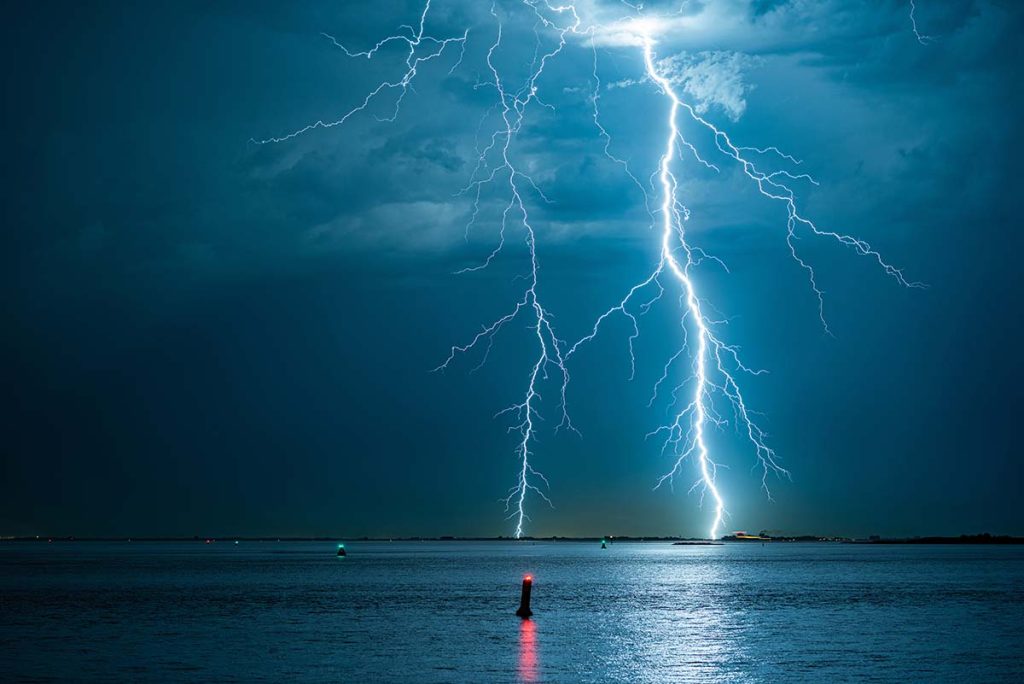
Bright branched lightning bolts strike down near the dutch coast

Why is lightning protection becoming increasingly important for yachts?


There are two main reasons for this. The frequency and intensity of storms and lightning is increasing due to climate change. The warmer and humid the climate, the more thunderstorms occur.

The second reason is the increase in electronics on board. The value of navigation equipment, entertainment, and other electrical devices installed on yachts continues to rise. It therefore stands to reason that more frequent thunderstorms mean that more and more yachts are being struck by lightning, causing ever greater damage. Yacht insurance companies report an increase in claims from year to year.


What are the unique challenges and innovations in developing lightning protection systems for various maritime vessels?


First, you have to understand why protecting a yacht from lightning damage is a particular challenge. The lightning protection concepts that have been more or less successful for buildings do not work on yachts. The main reason is that yachts are simply built too narrowly to provide safe conventional lightning protection. Even if you manage to effectively drain the lightning strike into the water, and possibly save the mast, the probability of damage to the electronics from the inductive energy of the lightning strike is very high.

Another form of protection is needed. We found this in the DDCE Marine Lightning Protection System from the company Dinnteco. The DDCE is a lightning protection system against direct lightning strikes. The patented system performs continuous potential equalisation to prevent a positively charged upward streamer from the protected structure and thus prevents the formation of a flash channel and avoids the main discharge/lightning strike into the yacht.

Can you discuss how the FERROPILOT brand is tailored to meet the specific needs of the recreational maritime sector?


With the FERROPILOT brand, we are focusing on the recreational market, particularly on electronics. Technical expertise and good customer service are key to selling increasingly complex devices in a sensible way.

Our guiding principle is focusing on quality instead of quantity. Additionally, product availability has become more important than ever.


How does ELNA GmbH integrate sustainability and environmental protection into its product designs and operational processes?


We are gradually analysing how we can save resources. Where possible, we are switching to more sustainable raw materials and saving energy during the production process. We want to do our part for a more sustainable world.


What future trends and developments do you foresee in maritime communication and safety technology, and how is ELNA preparing for these changes?


We can see that green products are becoming increasingly important in our industry. Electromobility, in particular, will be a major topic in the coming years. We have been focusing on battery management, solar energy, and self-sufficiency for years. The growing importance of electric motors in this area means we will and must focus even more on it.

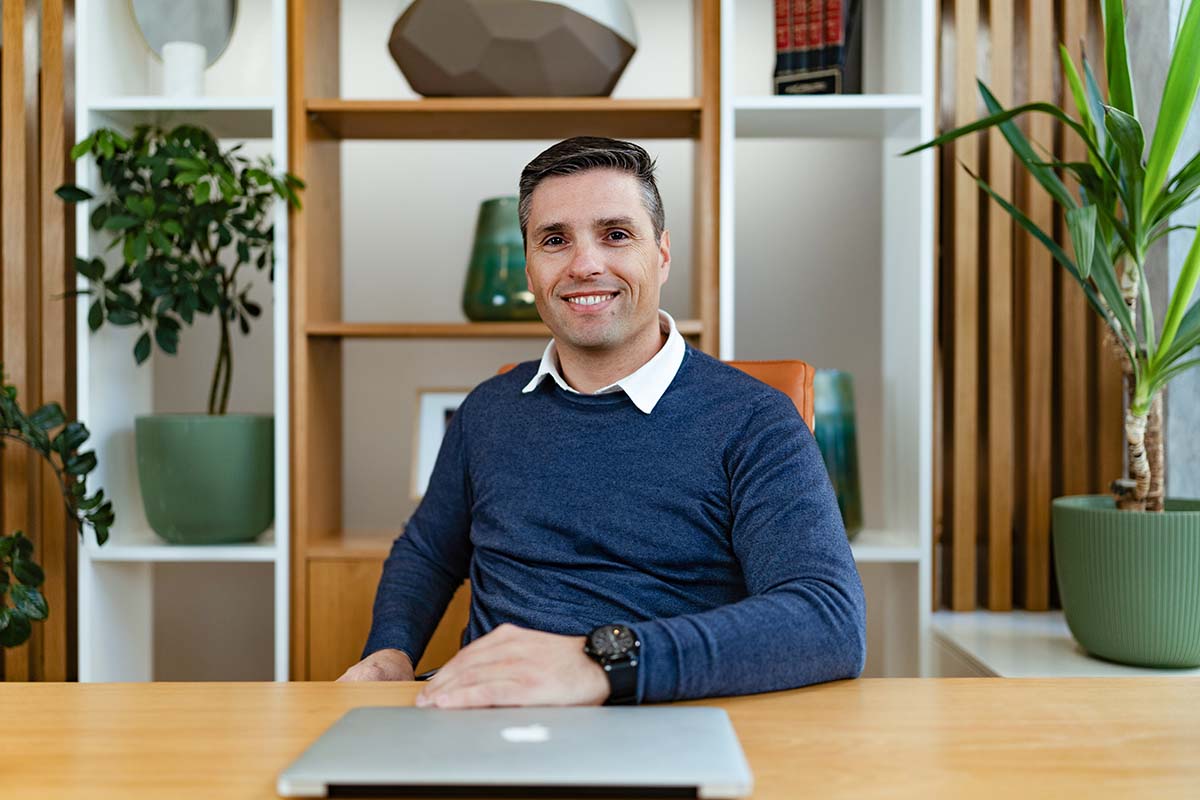
Leif Schick Managing Director, ELNA GmbH

How does ELNA GmbH’s approach to customer service and support contribute to an enhanced user experience for your diverse clientele?


As already mentioned, our strength lies in technical support. Online trading is making business increasingly anonymous, and good consultation has become almost non-existent. Our dealers also often lack the necessary expertise due to a shortage of skilled labour. We compensate for this by constantly striving to pass on our knowledge to our customers.


What are the key challenges and opportunities you currently see in the maritime industry, and how is ELNA GmbH positioned to address them?


The most significant challenge currently facing the maritime industry is the increasing shortage of skilled labor. Good staff will be essential if we are to continue leveraging our strengths. Therefore, we are focusing heavily on improving working conditions to ensure that we remain an attractive employer. This challenge also presents an opportunity for ELNA.

In terms of the recreational boating market, ongoing challenges include weak consumer confidence and high interest rates. To counter these, we will continue to focus on developing new products and innovations, aiming to grow against the market trend.

Crew Pages

Portfolio Crew Pages

Crew Pages: Revolutionising Maritime Recruitment


Imagine having one place to connect with maritime recruiters worldwide, being visible to all job opportunities, and having access to all maritime jobs in one place. Furthermore, picture connecting with other crew members, exchanging experiences, seeking advice, meeting crew before joining a boat, educating yourself about maritime matters, staying updated on news, finding career mentors, and much more.

We are excited to introduce Crew Pages, the ultimate platform that offers all of the above. Its primary goal is to liberate crew members from the hassle of creating profiles on multiple websites in pursuit of new professional opportunities. The promise of this emerging startup is simple: all maritime jobs in one place and your CV visible to recruiters worldwide.


Click below to access the digital version

Gracija Matijevic Crew Pages

Founder’s Vision: A Solution Born from Experience


Crew Pages is an all-maritime social network and job board founded by former superyacht crew member Gracija Matijevic. Gracija identified the challenges faced by newcomers trying to find jobs onboard and conceived a solution. We sat down with Gracija to discuss how he came up with this idea and how both crew members and recruiters can benefit from it.


“For most of my career onboard, I worked on a single yacht with an excellent crew, delightful owners, and an itinerary that suited my family plans. Personally, I didn’t encounter many issues when seeking new opportunities,” Gracija begins his story.


“However, during this time, I observed many of my friends and colleagues spending an excessive amount of time submitting applications on numerous websites, often with little to no response. Knowing people in the industry myself, I would always offer to help by making recommendations or introducing individuals to captains. Then, I realised how challenging it can be to land an opportunity.”


The Crew Pages Solution: Streamlining the Process


The challenge exists on both ends of the spectrum – crew members are inundated with websites requiring their data and applications, while recruiters must sift through numerous unsuitable applications to find the perfect candidate. Crew Pages was developed with this issue in mind – how can crew and recruiters save time in the process while still achieving their goals?


“The primary purpose of the platform is to enable crew members to create profiles for free and access all global job listings. We are continually working on adding new recruiters and jobs online with one mission in mind: one profile, one login, and access to all jobs for crew members. I believe this will help crew members focus on what truly matters – the application process itself,” says Gracija.


“We spent a lot of time working with developers to create a robust search filter option so that recruiters can easily find crew members who match their search criteria and reach out to them,” he adds. “Furthermore, the platform is equally advantageous for recruiters. It’s completely free for them to use, allowing the addition of an unlimited number of maritime jobs. This approach not only broadens the opportunities for crew members but also simplifies the recruitment process for maritime companies.”


Crew Pages 1

For Crew, by Crew: A Free Platform


Crew Pages is free for all crew members to use. By creating profiles, crew members can input vital data about their professional skills and certifications, apply for jobs, or share their experiences on the “Main Deck,” a social media-like platform.


The ultimate goal is to have a platform with all crew members and all industry jobs in one place. A single location to maintain a profile with all documents stored and communicate with all recruiters and employers.


“Our industry is incredible, but there is still much work to be done in terms of crew working conditions and opportunities offered. Having one joint platform where people can educate themselves, connect with colleagues, and discuss important topics is a fantastic step forward,” explains the founder.


Join the Revolution: Explore Crew Pages Today


If you’re curious about this emerging Maritime Professional Network, feel free to create a new profile and test it out yourself. All information is available on crewpages.com.


Contact Crew Pages

Email: info@crewpages.com

Website: www.crewpages.com

Tysers Insurance

Portfolio Tysers

The Evolution of Yacht Insurance: Steering Ahead with Aaron Jago at Tysers


Tysers Divisional Director, Aaron’s journey is a testament to the dynamic and exciting nature of the insurance industry. His focus on yacht hull business has not only shaped his career but also contributed significantly to the growth and success of Tysers Insurance. In this conversation, Aaron shares his experiences, insights, and aspirations, providing a unique perspective on the insurance needs of yacht owners and the evolving landscape of the maritime insurance industry.


Click below to access the digital version

Can you take us through your career journey in the insurance industry, starting from your early days as a placing broker at RFIB (now Tysers)? How did your focus on yacht hull business shape your path to where you are today?


I was fresh out of University and had no idea what I wanted to do, although I had spent the summer working for an insurance company in Kent. I landed a role at RFIB (Now Tysers) in 2008, initially working across several classes of marine business, including Commercial Hull and Cargo. I loved the buzz of working at a city-based Lloyd’s brokerage, travelling and meeting new people, which is a big part of the job and something I still enjoy to this day. Within a few months of my time at Tysers, I was asked to assist the yacht team during some holiday absence. Back then, we were a small team of 4 people; now, we are over 10. I enjoyed my time with the yacht team, and when asked if I wanted a permanent role, I jumped at the chance. Initially, I was desk broking insurance Hull and Machinery contracts with overseas markets, but shortly after, I was also spending most of my day in Lloyd’s of London for face-to-face negotiations. The yachts we were insuring were getting bigger and bigger, and the rest they say is history!


With extensive experience handling yacht hull and machinery, professional crew and P&I risks, and new build superyacht construction, you’ve worked on insurance products for many of the world’s largest superyachts. Can you share a memorable project or client engagement that stands out to you?


We were recently recommended to an Owner’s Representative and Build Captain of a 50m+ construction project. We arranged all of the insurances, including the Builder’s risk, pre-delivery liabilities, crew coverages, and the in-commission use following her launch. Halfway through the construction, they had to close the shipyard and move the hull to a new facility. So, we arranged some cargo coverage and towing too, along with assisting our client with surveyors. It was all a bit touch and go! I remember running around Lloyd’s of London getting the insurance lined up, as the Captain was on the phone chasing for the confirmation that they were going to be covered. The client was very happy when we completed under a very strict deadline. This experience certainly enhanced my capabilities in handling superyacht construction insurance, and on many occasions since, we have been able to identify additional exposures to an owner and offer them products that would not usually be covered under a standard builder’s risk policy.

Tysers Yacht Insurance

As a leader within Tysers, how does your role as part of the Marine Superyacht practice contribute to the company’s commitment to serving yacht owners and the industry? What unique expertise or insights do you bring to the team?


Service is key. We have a large and experienced superyacht team at Tysers, which enables us to act quickly in the event of a claim and turn around urgent mid-term changes and new quotes. I understand that insurance is often the last thing on everyone’s agenda, so quite often, our deadlines are tight. Our team now has well over 200 years of experience in handling superyacht insurance business, so we have one of the largest service propositions in the market. At Tysers, we take great pride in our client service, and we are fortunate to enjoy very strong client retention. We are quite often asked to assist yacht owners with other insurances that fall outside of our yacht market, such as Property, Helicopters, Business Jets, Fine Art, etc., and are fortunate to have highly experienced teams within Tysers who can service a demanding and multi-class client base.

In terms of my own expertise, I have spent a lot of time onboard superyachts with owners and crew and visited some of the largest yacht shipyards and repair facilities in the world. So, being on the frontline has allowed me to see the yachting industry from many different perspectives. I have also handled a variety of claims, ranging from crew incidents, collision, fire, engine failure, grounding, and windstorm losses. This experience has certainly shaped the way in which we would advise clients on risk mitigation.


Tysers has a strong reputation in the insurance market for its specialised services. How do you and your team ensure a personalised and comprehensive approach to meeting the insurance needs of yacht owners? Can you share an example of a challenging client case that you successfully handled?


We are extremely responsive to clients’ needs and specialise in providing innovative and creative products tailored to individual requirements. Not all yacht owners want a typical “off the shelf” policy. Also, as risk evolves, we need to ensure that our clients have low exposure to an uninsured loss. So, we listen carefully to a client’s requirements and always act in their best interests. We have worked with owners who have several yachts within their fleet, so we have been able to package these up under one policy with one or multiple insurers at their request.

A common challenge is pricing, and we always advise our clients that what may appear to be a cheaper solution often isn’t the best option. For example, an owner with a clean claims history might find that an insurer will refuse to renew their policy if they suffer a claim, or at a much higher premium, or that the claims service was slow to respond.

In your role, you bring international business into London, with a focus on locations such as the USA and Europe, particularly Florida and Monaco. How do you navigate the complexities of international markets and build relationships with clients and (re)insurance partners across different regions?


We have worked with some of our yacht clients for 20+ years, and key to that retention is our service and the strong relationships and partnerships that we have with our underwriters. Having a large portfolio and substantial premium placed in the market works to the advantage of our clients, especially when having complex discussions with underwriters and leveraging a competitive policy. We aim for the highest levels of transparency with our markets (both in London and Overseas) and respect the underwriting capacity available to us. By building trusting relationships, we ensure that underwriters want to deploy their capacity with us, which fundamentally benefits our clients. Tysers also has offices and representatives in locations around the world to provide risk management solutions at a global level. In terms of Florida and Monaco, these are huge superyacht hubs, so yes, we get plenty of competition from local markets. However, our underwriters have significant expertise and capabilities in these regions, which is attractive to our overseas client base.


Looking ahead, what are your goals and aspirations as a maritime insurance professional at Tysers? How do you see Tysers’ Marine Superyacht practice evolving to meet the changing needs of the industry, and how do you plan to contribute to its success?


Tysers has gone through a really exciting transition in the last 12 months following our acquisition by the AUB Group. AUB is one of the fastest-growing insurance brokers in the world right now, and as an Australian firm, we are seeing new yacht opportunities open up for us in this region and beyond. Our Yacht team has experienced significant growth over the last few years, and this is something we aim to continue by creating new products for a fast-changing yacht industry. In terms of my own goals and aspirations, I am working on some really interesting projects right now which I hope will raise our profile further in the yachting industry.


https://tysers.com

World League of Agents

Portfolio World League of Agents

Navigating the Global Network: Belen Martin on Leading the World League of Agents


In the world of maritime services, where efficiency and reliability are paramount, the World League of Agents (WLoA) has emerged as a symbol of excellence. Belen Martin, the founder of WLoA, shares her insights into the organisation’s formation and its remarkable journey of providing services in thousands of ports and marinas worldwide. Discover how this unique network of well-established agencies prioritises customer service and cultivates lasting partnerships to ensure a consistent, high-quality experience for clients across the globe. Join us as we explore the vision and dedication driving the World League of Agents in this exclusive interview.


Click below to access the digital brochure version

What inspired the formation of the World League of Agents, and what is the core vision driving your coalition?


The inspiration came from our clients right from the start. We were constantly getting requests from our clients about companies similar to Evolution in other areas of the globe, equally our clients were talking to us about great experiences they were having and recommending agencies in Croatia, the Caribbean, Italy, etc. We started hearing the same names from our clients and understood that the clients in Spain who liked what Evolution was offering were recommending the same companies in other cruising areas so it was just a matter of connecting with these agencies. In terms of our core vision, we are all 300% client focused, so it’s as simple as providing excellent customer service and keeping the client at the forefront of our businesses.


Can you elaborate on how the World League of Agents manages to provide services in thousands of ports and marinas worldwide?


There is only one member of The League per country, each agency is well-established – operating already for at least 10 years – and offers comprehensive services to support all departments onboard in all ports. This means that each time a new member comes onboard (so to speak) The World League of Agents is expanding its services by a whole nation!

World League of Agents Portada LATEST 6

What sets your yacht services apart from others in the industry, especially in terms of tailoring to individual needs?


The fact that the people driving the agency services are all local and 100% committed to providing the best service, in all member agencies you will find the founders of the company present and available. All companies have grown with the market so have been through the trials and tribulations of understanding what the client needs and what/who the best resources and service providers are. We all value the personal touch, so view every captain, every vessel, every guest as unique in their wants and needs.


What are some of the biggest challenges you face in coordinating such a vast network of services, and how do you overcome them?


That is the best thing about the World League of Agents, there is very little “co-ordination” as such, we are all independent companies working and thriving and our aim is to just keep it that way! The power of this network is based on the power of its members individually. We don ́t need help from each other when in our own territory but we need each other when our clients request help in foreign countries.

How do you ensure a consistent and high-quality experience for your clients across different global locations?


Again, this high-quality service and experience is the priority for all the companies so now we are accountable to each other to keep this up but the reason each member is here is because this is exactly what they offer. They don ́t depend on the success of this network, but our own success makes this network stronger. Let ́s say that we go the other way around to what the industry is used to in terms of agency.


Could you share insights into your in-house concierge and VIP services and how they enhance the yachting experience?


We are all service companies, even if we are providing spare parts or caviar, at the end of the day the client is looking for optimum service so we don’t look at concierge and VIP services as “enhancing” the yachting experience, they ARE the yachting experience. The most valuable insight I guess is that we always answer the client directly and promptly, the client needs to know they are tended to so they can move on with all the other thousands of things they have going on. Everyone can deliver a tomato, but not many people can deliver that type of tomato, at that exact time and at that specific location.

How significant is the role of legal and customs support in your service offerings, and what unique challenges do they address?


Legal and customs departments are becoming more and more relevant year after year and, yes, they bring lots of challenges. Vessels nowadays are more capable and sophisticated so are their support systems and needs. Cruising international borders at a moment’s notice and on a regular basis means that you need to have a good contact in every corner! If we have a client asking for help at the other side of the planet, thanks to the connections and high standards of the WLoA, we can ensure today that we can help at all levels.


How does the World League of Agents plan to expand or enhance its services in the near future?


We receive enquiries from all over the globe about new companies that want to join the WLoA but we take this selection very seriously. It ́s all about strategy and priorities. We tend to observe the industry first, and then decide where we should go and where we should be. Inviting a new member is the easiest part of this League. The strength of each member makes other countries want to be part of it. We just must hit the nail on the head.

In an industry that is closely tied to marine environments, what measures does the World League of Agents take to promote sustainability?


As an organisation we don’t dictate what each member does, we are all leaders in our field and so yes the questions of sustainability is familiar to us all, along other very relevant issues such as waste management, crew well-being, professional development, transparency, etc. To maintain our leading position in the market we each have to confront the challenges of today in our area as well as on the global front.


As the owner, what has been your most rewarding experience in leading the World League of Agents, and what future goals do you have for the coalition?


The most rewarding experience has been getting to know all the members in person. This
reinforced my conviction that they are indeed the ones to be part of this network. We all have a good story behind us and we still have at least one hand on the helm! Although we all have different personalities, we all share the same goals. For futures goals of the network, please stay tunned.

https://www.wleagueagents.com/

Eyesea

Portfolio Eyesea

Turning the Tide: Graeme Somerville-Ryan’s Mission Against Maritime Pollution with Eyesea


Graeme Somerville-Ryan’s journey in founding Eyesea is a vivid testament to the power of combining professional expertise with a personal commitment to environmental stewardship. With his unique background in maritime sector communications and archaeology, Graeme has turned a moment of realisation on a Greek beach into a global initiative against maritime pollution. In this interview, he discusses Eyesea’s innovative approach to leveraging technology and community involvement in tackling oceanic and coastal pollution, shedding light on both the challenges and triumphs of driving environmental change.


Click below to access the digital brochure version

What inspired you to establish Eyesea, and how did your background in marketing and archaeology influence your approach to addressing maritime pollution?


The idea of Eyesea started on a beach in Greece, where I truly saw the straws, bottles, and bits of plastic that now litter every beach, river, and coastline worldwide. I had never been an environmentalist, but the realisation that this situation was unacceptable – that something needed to change – kicked in.


Professionally, I’ve been in maritime sector communications for the last 13 years, and over that time, I’d met a few people and had numerous discussions with owners and managers on CSR, MARPOL, and the proposed regulation of single-use plastics onboard ships. Maritime pollution was now clearly on the agenda, and we saw that it was going to be part of much wider, environmentally focused, regulation.


But I wasn’t sure if this regulation was going to work, or just make the lives of seafarers harder. We asked what could the shipping industry do around the topic that went beyond compliance and following more and more regulation?


The archaeologist in me (my MA was in geoarchaeology), kicked in when we looked at the discussion around ocean and coastal pollution. It became clear that while there was a lot of emotion around the topic, there was actually very little data, evidence, and truly comprehensive research to chart a way forward. Without data, it’s very hard to assess the nature of the pollution problem or develop cost-effective and efficient solutions.


We took a step back and looked at what assets the industry had – 1.8m seafarers, staff, and around 70,000 commercial ships – in literally every corner of the world. This was when Eyesea was born – a maritime pollution version of Waze/Instagram that would allow the maritime industry to provide crowdsourced data on maritime pollution and possible hazards.


Phase one was about building tech to test this hypothesis, could we collect data? The answer was yes. Phase two is now about building out this tech to help communities report, analyse, organise, and recover pollution as efficiently as possible. The job has gotten bigger.


You emphasise the importance of a single photo in driving change. Can you share a specific instance where an image made a significant impact on Eyesea’s initiatives or the broader maritime community?


I believe the world is overrun with negative imagery; the shock value gets clicks but achieves little else. We have plenty of terrible images, but shaming a community, expressing outrage, and quickly moving on to the next hotspot is not valuable. Changing things is a gradual process that requires collaboration with communities, companies, and authorities.


Imagery – geolocated and timestamped – is actual evidence. Imagery and image analysis allow us to consider what actions need to be taken where: to assess where resources need to be applied and where we can make the biggest difference.


Images remove the excuses for inaction…the ‘we didn’t know it was there’ or the ‘it’s not our responsibility’ responses that people and organisations tend to give when more work is on the horizon. Imagery and other data layers (think wind, tide, currents, and the time/location of local community events) also allows us to look at the origin and the cause of pollution – there’s a lot of information that we now have access to.


But imagery alone (the data) can just blend into ‘doom scrolling’ (as the kids call it). Once we had our first 100,000 pictures, we started to reassess what was needed. First, it became clear we needed to highlight the great clean-up work that is going on, and second, we needed to use the quite incredible tech tool we’d been offered to develop insights and solutions to the problem…the ‘so what’ part of data collection.


If there’s one ‘wow’ example we have, I think it’s from rural Canada (rural like only Canada can do) where a crew recorded the collection of a single plastic bag on an isolated beach. We were able to also cross-reference/confirm the presence of this single plastic bag using satellite image spectrometry. We can now see a single plastic bag from space.


The implications of this tech are just stunning.

Eyesea wide waves

How do you envision the maritime industry, mariners, and recreational sailors playing a pivotal role in Eyesea’s mission to combat maritime pollution?


I feel the maritime industry seems somewhat lost or hesitant when it comes to engaging in environmental discussions. People who don’t know or understand the industry use the environmental costs of terrible accidents to make sweeping proclamations (and regulations) that ships and seafarers are the ‘bad guys’.


We now have data that shows commercial ships and cruise vessels are far less polluting than the support boats and recreational vessels that motor alongside them, or the cities and ports they call into. The reality is that commercial ships work to much higher environmental standards than the buildings that house the regulators overseeing the industry.


The oceans, harbours, and ports of the world are the maritime industry’s domain. Seafarers and sailors see things no one else does. No one else has regular access, at scale, to the oceans of the world.


Most – not all – but certainly most of the seafarers and industry people I talk to are horrified by what is happening to our oceans. They want change as much as anyone. Combined we have the skills, domain knowledge, and resources to make an enormous difference – while running global trade as well.


What have been some of the most significant challenges Eyesea has faced since its inception, and how have you overcome them?


This job is simultaneously fun, frustrating, complicated, rewarding, and, for lack of a better word, crappy. None of the people involved in Eyesea had any background in this sort of work or had done anything like this previously. In some ways that was good, but it has been a steep learning curve.


Like any volunteer-driven non-profit, the challenges are many – money, time, organisation, setting priorities, trying to give other volunteers as much of your time as you can, and realising you can’t be everywhere at once.


Like any tech development company, the challenges are many – scoping and building tech is hard, testing and refining tech is harder, building (and rebuilding) user numbers is hard, working with developers is hard – I am sure the feeling is mutual.


Our hardest/lowest point was probably the realisation that we had to rebuild our reporting app and data management system at the end of year one. But, on the flip side of this, the Eyesea membership stepped up in ways I never thought possible. ChartWorld fought in our corner hard to recover the usable data from version one, and Bernhard Schulte Ship Management and MariApps offered to cover the cost of rebuilding the reporting app. It really was unbelievable to see the industry deliver expertise, support, and patience.


I think everyone involved in a start-up type or non-profit organisation needs a degree of steel-of-purpose and resilience, but 99.9% of Eyesea data is really bad news. I treat every photo as evidence of someone trying to help, someone not accepting the status quo or the trend towards a much bleaker future. Or, being male, I bottle up my emotions and don’t talk or think about it too much. Both strategies have a place.

How important are partnerships and collaborations to Eyesea’s mission? Are there any notable partnerships that have been particularly impactful?


Diverse perspectives are essential because our current methods of addressing both maritime and terrestrial pollution simply aren’t working. And it’s not working at the regulatory, community, government, or NGO levels. If pollution is now an industrial-size problem (it is), that means we need industrial-sized solutions. We need to think differently about this and the only people with experience in industrial-sized solutions and thinking are…industry. Companies, and those who know the coasts and oceans need a place at the big kids’ table.


It is also fair to ask if the institutions and regulators who got us to this point are fit-for-purpose to now play the lead role in determining workable solutions? Policy doesn’t clean beaches or pick up rubbish. Volunteers and rubbish collectors do. Different voices are needed, and we need workable, realistic, cost-effective, and pragmatic solutions.


What are your aspirations for Eyesea in the next five years? How do you see the organisation evolving and expanding its impact on maritime pollution?


On the technology front, we are advancing towards developing a comprehensive platform for pollution reporting, analysis, modelling, alerts, and clean-up support. This will be made available to anyone that wants to do good with it – ports, local governments, communities, and clean-up groups. A workable solution must involve everyone – not just those who have made this their raison d’être.


As an organisation, Eyesea needs to move beyond being a group of enthusiastic volunteers at some point. The tech potential and the size of the job mean the sky really is the limit in terms of solution delivery and action…but we cannot lose the clear focus of where we can make a difference and what role we can play that is different from others. And that’s not easy to do.


But, perhaps most importantly, this has to remain fun and it needs to channel the good things the maritime industry can deliver.

Finnboat

Portfolio FINNBOAT

Finnboat: Navigating the Finnish Boat Industry’s Success


The world of boating is a way of life in Finland, with Finnboat at its heart. We spoke with Jarkko Pajusalo, CEO of Finnboat, to uncover the association’s pivotal role in Finland’s boating industry. Discover Finnboat’s strategies for sustainability, growth, and innovation in this Q&A. Pajusalo also highlights their initiatives in the digital era and their commitment to environmental stewardship. Explore how Finnboat steers the Finnish boat industry towards excellence and responsible boating in this insightful conversation.


Click below to access the digital version

Finnboat plays a central role in Finland’s boat industry. Can you elaborate on the key responsibilities and initiatives undertaken by Finnboat to support and promote the industry?


Finnboat is the marine industry association representing recreational marine industries in Finland. Hence, our main task is to ensure the boating industry’s voice gets heard when the powers that be are making big decisions. We are also the voice to promote safe and responsible boating, and we cooperate closely with other associations and NGOs to find solutions that drive boating forward in a sustainable way. We have two boat shows in Finland – Helsinki International boat show opens the boating business season already in February, and Helsinki Boat-Afloat show is our in-water show in August. Boat shows are great for new product launches, but also a platform to bring the industry’s message to the general public, as quite often boating can be seen mostly in a negative light – either as a hobby for only the rich or as a hobby that is dangerous due to the few, but highly visible boating accidents each year. Both perceptions are misleading. We have over 20 boats per 100 people in Finland, which proves that boating is for everyone regardless of the size of the bank account. 99% of the boats made each year are below 9m, and the long lifespan of boats makes pre-owned boats reachable for everyone regardless of income level. Boating accidents in Finland are at their lowest ever – in 2023, only 22 people lost their lives while boating. Every life lost is a tragedy, but the number has to be put into perspective – during the eighties, the figure was over 100. Zero lives lost at sea or inland waters is a good goal, but we cannot change the behaviour of all people. The deadly accidents take place while using very small craft around the summer houses, of which we have hundreds of thousands in Finland.


As Finland is also home to internationally oriented boat manufacturers, we keep evaluating various boat shows outside Finland, and in some selected ones, we organise areas that group the Finnish manufacturers into a visibly “Finnish” boat show area. This promotes the Finnish boating industry brand awareness among boat enthusiasts in our key markets. We also organise the legendary Finnboat Floating Show, which has had a misleading name since the 70s. Contrary to the name, it is not a show, and the tens of boats participating in the event are not just floating – they are driven and tested hard in the gorgeous Finnish archipelago by tens of journalists from all over the world. As far as we know, this is the only multi-brand and multi-company boat test driving event in the world, so we are very proud of it.


With Finnboat’s membership accounting for nearly 100% of the domestic turnover in the boat industry, what strategies do you employ to ensure the growth and sustainability of the industry in Finland?


It all boils down to the value we offer our members. Our media channels, training programs, boat show activity at home and abroad, boat testing days for the public and media, and the lobbying work we do together with our partners – everything is for the benefit of our members. We succeed only if our members succeed.

Jarkko Pajusalo MD Finnboat

Your website, www.suomiveneilee.fi, serves as a comprehensive platform for boat enthusiasts. How do you ensure that the platform remains up-to-date and relevant for your audience?


Our Finnish consumer-oriented website, www.suomiveneilee.fi, is a platform that has served us well over the years, and it is time to renew it. During recent years, we have put much more emphasis on social media by developing the suomiveneilee.fi Facebook and Instagram channels to help our member companies gain a wider audience.


How do you decide on the content and themes for “Finnboat News”? Can you share some insights into the process behind its creation and distribution?


Finnboat News is our B2B channel to reach our members and stakeholders. We have staff meetings several times a year to decide on the ideas for the articles as well as for the columns. We have standing columns, like EBI’s Philip Easthill reporting the latest from Brussels, and we also have a rotating column, which is meant for personal views by key people from the industry or close to the industry. As the only B2B magazine of this industry in Finland, we like to reserve some space for our member companies by writing articles about our member companies and giving them room for industry news.

With active engagement on platforms like podcasts and social media, what are Finnboat’s primary objectives in reaching out to its audience in these ways?

Our raison d’être is to serve our members. Our social media channels offer several tools for our members already, and our target is to develop this toolbox further to the next level. We use both in-house and external resources, which is a must since we have a very limited staff. With good long-term partnerships, one doesn’t have to do everything in-house.


Given the increasing global emphasis on environmental conservation, what steps is Finnboat taking towards environmental stewardship in the boat industry?


Sustainability of the industry is key to its survival in the long run. In the past few years, our focus has been on the recycling of GRP. We knew that there were ways to recycle the material, and we had our first recycling initiatives already around ten years ago, but they didn’t fly due to a very simple reason – there aren’t enough boats to be recycled. Lifecycle estimates have underestimated time after time the lifespan of a modern well-made recreational boat. We are now talking about a lifespan of 100 years instead of 30 years, which changes the game completely. This is the reason why we joined forces with other composite industries and, as a result, we have today a functioning route to recycle GRP boat materials into cement clinker. It is the only industrial-scale way to recycle today, but in the future, there will be more as the upcoming technologies develop into industrial-scale processes.

Finnboat Floating Show 2018 Nauvo web

Are there any upcoming projects, events, or initiatives that Finnboat is particularly excited about? How do these align with the organisation’s long-term vision?


We are currently renewing our Finnboat Quality Certificate, which is a program we have offered to our member companies for over 10 years. Being a member of an industry association is already a sign that the company is trustworthy and in the boating business for the long run, but achieving the quality certificate is proof that the company management takes its business and customer service seriously. Personally, I am very excited about our Finnboat Quality Certificate 2.0 and believe that it is one of the best tools to promote responsible boating business in Finland.


How does Finnboat emphasise the importance of training and skill development within the industry? Are there any specific programs or partnerships in place to aid this?


We group all our skills training under the umbrella of “Finnboat Academy”. For example, we have one-day sessions throughout the year tailored to develop the skills of management and employees. Today we have two forums for company management and two forums for employees. We also cooperate with the vocational schools offering boating industry schooling in Finland, as they offer the right resources to keep the factories and the boat yards running also in the future.

Lomond Yachts

Portfolio Lomond Yachts

Charting New Waters: Douglas McFarlane’s Digital Odyssey in the Yachting Industry


Discover the fascinating maritime journey of Douglas McFarlane, CEO of Lomond Yachts, as he shares insights into the yachting world. From his roots in Scotland’s shipbuilding legacy to his innovative digital ventures with SuperYachters.TV, Douglas reveals the driving force behind Lomond Yachts and the future of the industry. Explore his unique perspective and advice for those venturing into the world of superyachts.


Click below to access the digital version

Can you share the inspiration behind Lomond Yachts, especially considering your personal maritime heritage through your father?


Well, Scotland, and in particular Clydebank where I was born and brought up, was the world’s best shipbuilder with around 50% of the market in the 1950s. My father was at the core of that, spending most of his career at the infamous John Brown Shipyard and was a shop steward on the QE2. Sadly, it all went downhill, and when I was looking to follow in my father’s footsteps, he told me in no uncertain terms that no son of his was going into the yards. It was possibly a great decision because instead, I entered the world of computers and technology at a time when the world didn’t know much about them. Fast forward, and my time in the West Coast of Scotland sailing weekends with the Royal Bank Sailing Club led to me buying a Bayliner motor yacht to play with on Loch Lomond. The bug had crept into my life. I decided to use my technology skills to build a website and understand the process of being a SuperYacht broker. My father passed away 4 months into the journey while I was just getting off the ground and had been keeping it a secret. I decided there and then that I had to continue the journey come what may, and here I am today.


How does SuperYachters.TV complement the services and vision of Lomond Yachts? What was the motivation behind its inception?


I’ve worked hard over the years to bring the experience and enjoyment of a yacht to life in digital form to encourage potential buyers, all year round, instead of only when a boat show comes to their town. I had always created my own videos and photos, and over the years, I had Nikon and Canon DSLRs and a variety of Sony video cameras, and even made an award-winning documentary. So I used that experience to start creating my own yacht videos, and with the latest smartphones, the quality and features have just about caught up with DSLRs. This year, I took almost all the footage on the new iPhone 15 Pro Max. So all of this led to setting up a partnership with streaming sites like Amazon Fire and Roku TV where you can now watch a lot of my videos. However, I didn’t want it to become just my footage, and I now encourage a lot of industry partners to showcase their yachts, tenders, slides, and other toys and submarines. The TV channel has grown, and there’s a growing community of interest, some of whom become clients.

Monaco Yacht Show

With exclusive interviews and behind-the-scenes footage on SuperYachters.TV, how do you curate content that resonates with both industry insiders and enthusiasts?


Well, over the years, I’ve had community sites and connected with people I’ve met at the Monaco Yacht Show or online on social media. So when it came to starting up and looking for content, I reached out to those who I knew were also keen content creators to promote their product. I reached out, told them it was all free, and the proposition made sense to collaborate and get a wider reach and more eyeballs on their own content. They continue to do that, and I’m hoping to continue to grow that. As new technology options come along, I’m able to make decisions quicker and try new technology with the aim to both promote the industry as well as partners. By doing so, the Lomond Yachts brand gets visibility too.


In a competitive yachting market, what sets Lomond Yachts apart, especially in terms of client experience and yacht offerings?


Well, boat shows can be rather intimidating affairs. Wealthy clients often have to hustle to get on a yacht if they don’t have a broker. The demand is high, and everyone wants to be on these beautiful yachts, even though only a few can afford them. So my job is to ensure I talk to the selling agents and shipyards in advance and organise a viewing schedule that suits the client’s requirements but also fits in with the timeline it takes to view and then get across the marina to see the next one. Often if you miss a time, that slot has been taken up and the appointments fill up fast. Additionally, there’s the element of security and having to prove your net worth isn’t something that clients like to do, so I pick up that task for them ahead of the game. This personal touch brings me closer to the client, and we end up becoming good friends, which makes the buying process more pleasurable without the hustle and bustle. Additionally, as I’m an independent yacht broker, I can offer every yacht on the market and work with every yard without having to commit to selling any one specific yacht. This way,
I’m able to keep the focus on the client’s requirements. I’m also able to offer financial, legal, insurance and other services in partnership with my SuperYachters community of professionals.

How do platforms like SuperYachters.Net and SuperYachters.Pro enhance the yachting community’s experience, and why are these online communities crucial for the industry?


When you’re at a yacht show, you meet so many people from the industry, and it’s just a pleasant experience being among others who also love the yacht lifestyle. So to continue that beyond the boat show, connect and share articles, stories, and videos, I created these platforms, which were similar to mainstream social media but had an absolute focus on yachts, nothing else. No distractions from all the adverts and sponsored stuff you get on social media, and no spammers, hackers, and cons. This allows us all to operate in a safe social space and get on with our connections and collaborations outside of a yacht show. The Pro version is for those at the top end of the industry, like Captains, Crew, Surveyors, lawyers, and all the specialist product providers that become content providers on the streaming platform.


Throughout your journey with Lomond Yachts and SuperYachters, what have been the most significant challenges you’ve faced, and conversely, the moments you’re most proud of?


Well, every year is different; there’s always some surprises around the corner. I think I’ve got through some of the early challenges of dealing with time-wasters and tyre-kickers, and those showing interest in Lomond Yachts nowadays tend not to need too much due diligence and background checking. This makes it more of a pleasure when you’ve got genuine clients looking for a fantastic product. The time I get proud is every year at the Lurssen End Of Summer Party. It marks the end of the yacht show, a time when you’ve worked solidly all week talking to clients, showing them yachts, walking across the marina and back many times, and it’s time to have a bit of a party and relax. It’s also a privilege to be among the owners, buyers, brokers, who have all equally worked hard to get to this point in their life. The Lurssen team is also the best in this business, a few months ago it was good to party with Peter Lurssen and his sales director Michael Bremen.

Douglas McFarlane CEO Lomond Yachts

As the yachting industry continues to evolve, where do you see Lomond Yachts and SuperYachters in the next five years?


Five years, wow. That’s a long time. Each year I look back and think that last year’s Monaco Yacht Show was such a long time ago. Each year is a different experience and energy. So I suspect that I’ll still be much the same. For Lomond Yachts, I’ll continue providing my bespoke and personal services to clients. Enjoying each time I’m helping a partner with some business. Loving each time I get a win, and sitting onboard the latest incredible yacht having a glass of champagne to celebrate a new owner’s success. With Superyachters, I’m already starting to use AI technology and I created some fantastic images of some Superyachts on Loch Lomond when I was playing around earlier this year. I also had fun having a go at creating the first AI Broker, where I scripted what he was saying and created it in a Scottish accent. There’s so much evolution to be done on that front, and I think it will save a lot of time and help me to grow my digital footprint and reach around the world, while minimising the resources needed to do that.


How have your personal maritime experiences, from helming yachts to spending time on Loch Lomond, influenced your approach to both Lomond Yachts and SuperYachters?


Those experiences I still talk about. I overheard some young guys encouraging each other to go on their first sailing experience, and I jumped in and shared my first experience going through a force 6 wind through the Kyles Of Bute in Scotland and being told by the skipper to get harnessed in, with the yacht at almost right angles, and being both terrified and exhilarated. Everyone who loves yachts shares that passion of adventure, where the unknown is part of the experience. That’s what I like about the industry. The future is often uncertain, but you know it’s going to be an adventure. I’ll take each year as it comes. I don’t think of having competition. What I do is unique in the industry, and I’ll continue to do my thing, and others will continue to do theirs.

For someone looking to invest in a superyacht or engage with the yachting community, what advice would you offer based on your extensive experience?


Contact me first. I can save them years of hassle. I can make it a smooth journey and enjoyable without the drama of dealing with the sharks in the industry and hitting the pitfalls and paying over the odds. A trusted broker, a personal guide, someone who has been at the sharp end and is still going strong. That’s who you need to engage with. Well connected with not just the buying process but the ongoing management, maintenance, and the enjoyable experience of bringing your family and friends on board your new yacht.


Are there any strategic collaborations or partnerships, either for Lomond Yachts or SuperYachters, that have been particularly impactful or that you’re excited about for the future?


Digital streaming and AI are taking some interesting turns, and I see that opening up a lot of exciting things for the future. I’m also looking closely at some partnerships which may provide savings for the customer in their financial transactions and also useful for the ongoing management. I’ve also got some key colleagues in the legal and insurance side who have become best friends over the years and we are due a catchup to start planning our 2024. The future is bright; I’ll make sure I wear shades.

Ankaa

Portfolio Ankaa

Digital Transformation Revolutionises Maritime Recruitment: The Ankaa Success Story

In an era of digital innovation, the maritime recruitment industry faced a significant challenge: outdated systems ill-suited to its unique demands. Traditional applicant tracking systems struggled to handle the extensive vocational certifications required in the marine sector, while crew management systems were primarily focused on managing crew rather than the recruitment process. Recognising this gap, Clyde Marine Recruitment (CMR) undertook a mission to bridge it. We spoke with Ian Livingstone, Managing Director of CMR, to explore how the introduction of their proprietary system, Ankaa, has transformed marine recruitment processes and garnered positive feedback from seafarers and clients alike.


“Ankaa was born and delivered to fill a gap in the maritime recruitment space as there were no suitable ‘off-the-shelf products’. High street applicant tracking systems could not cope with the quantity of vocational certifications we require, and crew management systems were focused on managing crew, not recruitment.” says Ian.


Click below to access the digital brochure version

Challenges Addressed and Overcome


Ankaa’s development journey was marked by several challenges. CMR had to streamline time-consuming administrative processes, eliminate paper contracts, ensure fiduciary and KYC compliance, adapt to emerging GDPR legislation, and create a comprehensive system with an intuitive user experience. However, with determination and expertise, they overcame these hurdles.


“In 2020, as the COVID-19 pandemic emerged, CMR made a swift transition to a fully digital recruitment process. This transition was accompanied by the shredding of our legacy database of around 20,000 registered candidates, marking a pivotal moment.” Ian explains.


Clients and candidates warmly embraced the digital process, which was not only efficient but also GDPR compliant. CMR’s commitment to excellence was recognised at the Annual MLC audit, where auditors commended the ease of the audit process, thanks to Ankaa’s features, such as checklists, expiry alerts, real-time information, and a full audit trail.


Substantial Time Savings and Enhanced Efficiency


One of the standout achievements brought about by Ankaa is the remarkable 67% time savings on the preparation of joining paperwork. This equates to over 2,500 man-hours saved per year, allowing CMR to optimise its workforce and serve more clients effectively.


“In 2021, Ankaa introduced an employer module, revolutionising the review and issuance of Seafarer Employment Agreements. Company Directors can now make informed decisions based on vocational and experience data presented at the point of recommendation to employ. This module also integrates identity checks using biometric selfies, along with PEP, sanction, and watchlist screening.” Ian adds.

Ankaa Devices

Environmental Impact: Reducing Paper Consumption


The implementation of Ankaa had a substantial positive impact on CMR’s environmental footprint. The company reduced its paper usage within the office by an impressive 86% since the system’s launch. The recruitment team no longer relies on paper files, reducing the need for printing and toner. Moreover, CMR’s decision to stop accepting unsolicited paper CVs was primarily driven by GDPR compliance, as it required candidates to accept the data privacy policy.


“The ability to have remote access to the entire database significantly improved our out-of-hours service to clients. Staff had full resources at their fingertips, no matter where they were, and were no longer required to carry lists of available personnel at weekends or evenings. These files required constant updating and printing, creating a real administrative and security burden. The system has been pivotal in reducing the carbon footprint and improving our service delivery.” Ian explains


Security and Compliance: Protecting Seafarer Data


Ensuring the security of seafarer data is a top priority for Ankaa, especially in the context of GDPR and other global compliance requirements. The system employs the highest level of security on its servers, akin to the measures used by major banking institutions. Candidate profiles are shielded by two-factor authentication, providing an added layer of security. Data sharing, such as sending shortlisted candidates to clients, is conducted via secure, password-protected URLs that expire after a set time. Ankaa’s use of ID verification through biometric selfies adds an extra level of security, cross-referencing candidates against global sanction lists.


“The use of ID verification using a biometric selfie ensures that we have verified that this candidate is who they say they are, and can be cross-referenced across global sanction lists adding an extra layer of security for our clients too.” Ian states.

Future Enhancements: Streamlining the Recruitment and Crew Management Process


Ankaa is constantly evolving to meet the changing needs of the marine recruitment industry. One notable upcoming feature is the development of a single digital profile within a community app. This innovation will streamline applications with different agents and employers, simplifying the process for seafarers. Additionally, Ankaa plans to offer services beneficial to seafarers within the community app, such as health and fitness resources, medical centres, training providers, and social partner connections.


“Ankaa has been listening to the challenges posed to seafarers of having to make multiple applications with different agents or possible employers. The requirement to have multiple profiles is time-consuming and complicated and as such a single digital profile is being developed within a community app to interface with any company using an Ankaa solution.” Ian elaborates.


Challenges Faced and Overcome


CMR encountered several challenges in the marine recruitment industry before adopting Ankaa. Maintaining accurate candidate details, dealing with paper CVs that quickly expired, and handling extensive administrative tasks were some of the hurdles. Ankaa’s digital profiles have transformed this landscape. Candidates can now update their information directly on the app, ensuring that recruiters always have access to the most current data. This has significantly reduced administrative hours in CMR’s offices.


“As the data is managed by the candidate, there has been a significant decrease in administration hours in the offices.” Ian explains.

Personal Insights: Witnessing the Impact


For Ian Livingstone, the Managing Director of Ankaa and Clyde Marine Recruitment, witnessing the growth and success of both companies since Ankaa’s launch has been immensely rewarding. CMR’s streamlined administration has allowed staff to focus on more productive tasks, ultimately improving the company’s bottom line.


“Watching Ankaa continue to develop has been a highlight. The system, as it stands now, is leaps and bounds beyond where we started in 2016. It’s a pleasure to offer time-saving, more efficient systems to companies in the industry facing the same recruitment and crew management challenges we’ve experienced.” Ian emphasises,


Envisioning the Future of Marine Recruitment


As Ankaa integrates further with larger crew management systems via API, the maritime recruitment landscape is set to transform. The Community App will become a versatile platform, offering secure digital profiles for seafarers, job advertisements, and a range of seafarer-focused services and social partner interactions. Ankaa’s straightforward crewing solution will cater to smaller owners and managers, complementing the recruitment solution.


Ankaa’s vision extends to partnerships with technology specialists to enhance its capabilities and services further, reinforcing its commitment to excellence in the maritime recruitment industry.


Ankaa has become a leader in revolutionising marine recruitment for the digital age. With dedication to innovation, efficiency, and sustainability, Ankaa empowers seafarers, streamlines recruitment processes, and leads the industry into a more connected future.


https://ankaa.com/

Monjasa

Portfolio Monjasa

Harbouring Innovation: Monjasa’s App Journey with Michael Bruun Østergaard


Join us in a conversation with Michael Bruun Østergaard, Group IT Director of Monjasa, as he unveils the journey behind Monjasa’s innovative app. Integrating real-time data from their global tanker fleet, the app marks a significant leap in maritime technology. Michael discusses overcoming development challenges, enhancing industry transparency, and the app’s role in Monjasa’s commitment to sustainability and efficiency.


Click below to access the digital version

Can you describe the journey and challenges involved in developing the Monjasa App, especially in terms of integrating real-time data flows from your global tanker fleet?


Challenging the status quo has been an integral part of Monjasa since our establishment in 2002 as a newcomer in the industry. In the early years mostly in a commercial sense, but later on also across maritime operations, introduction of ISO management systems and IT developments. And when we initially started envisioning a complete digitalisation of the process surrounding bunkering, it seemed far-fetched for many in the industry and in Monjasa.


Back then, vessels were not online like they are today. Many vessels in our fleet were running on slow satellite connections, which would offer the performance of a typical internet connection onshore back in the 1990s. This was not uncommon, and as such, it was hard to imagine a world where we could bring real-time insight of what was going on during a bunker operation into the hands of those involved onshore.


It was not that companies did not want this level of transparency, but it was tough to imagine strong data flows from the vessels.


A lot has happened to the connectedness of the world since then – not only technological advances like Starlink, but the expansion of 4G networks and the development in availability and lower costs of traditional satellite communication also play a big part.


Because of this, we began the journey of transparency through technology by focusing on structure and access to bunker price indications, as this does not rely on fleet internet performance. The first release of Monjasa’s fuel price indications went live in late 2020 and was an internal tool only that allowed our trading community to share and update price indications in a more structured manner.


Building on this successful platform adoption, we opened this data to also include our customers in 2022. This allowed our traders to invite their customers into the same ecosystem where they can now self-service price indications and initiate the actual inquiry process from our app. We launched a pre-release of the app during a customer event in Copenhagen in early 2022, and building on customer feedback at this event, we managed to secure a partnership with OMJ to provide customers with real-time market updates in addition to our price indications.


In early 2023 we then launched the current version of the Monjasa app and started onboarding ship owners to the platform.


How do you see the Monjasa App transforming the oil and shipping industries, particularly regarding transparency and efficiency?


The Monjasa app is a window into the heart of our operations. We are pushing digitalisation to the limit and our ultimate ambition is to provide complete end-to-end transparency across our operations as fast as the satellite technologies allow us to do it. We know for a fact that many other parties across the marine fuels industry have been following our developments closely since this transformation truly supports more efficient shipping operations. And that is something that all ship owners are looking for.

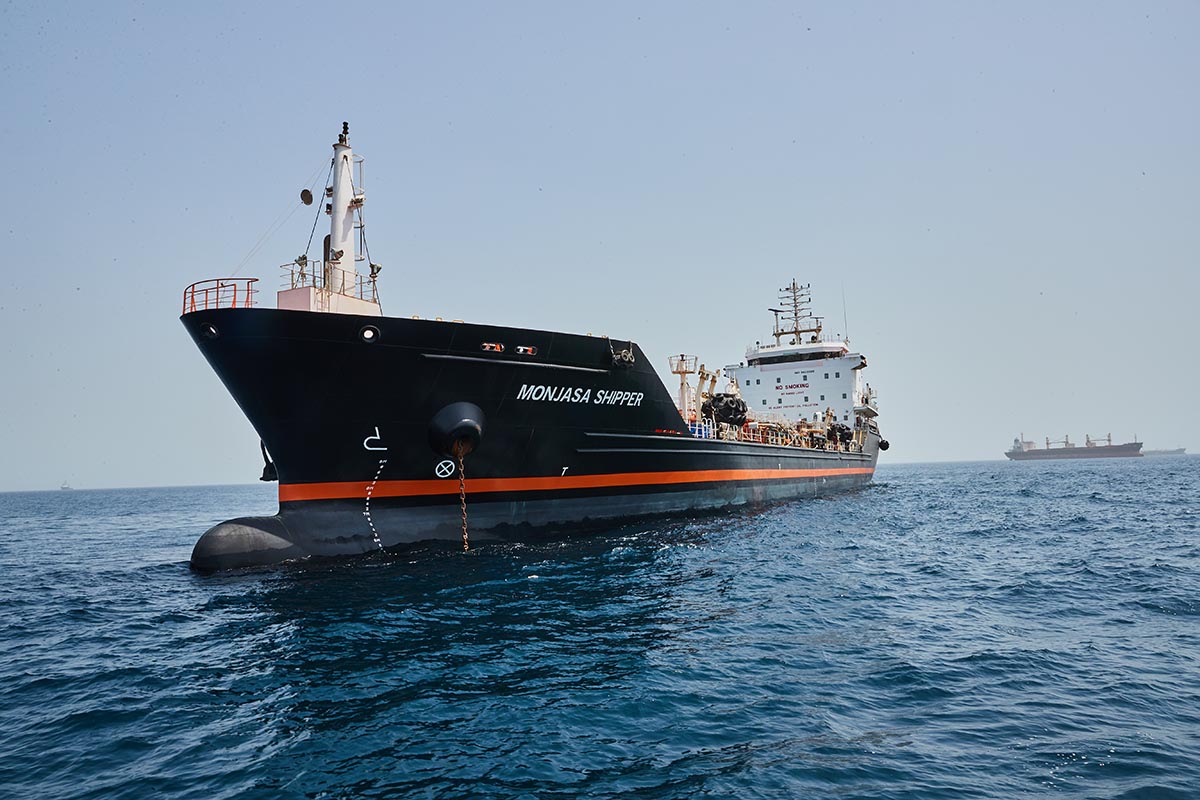
Monjasa Shipper in the UAE Copy right Monjasa

What has been the feedback from ship owners and charterers on the Monjasa App, and how has it influenced their decision-making process?


We have received very positive feedback from some of the ship owners who have been using the app for more than a year now. For instance, Royal Caribbean Cruise Line highlighted that instead of exchanging multiple messages about individual fuel orders, the app provides them with full transparency across all the transaction and logistic details related to the deliveries.


The app provides accurate CO2 emissions data. How does this feature align with Monjasa’s commitment to sustainability and environmental responsibility?


Running a responsible business and ensuring thorough ESG reporting is an opportunity to make a difference in a carbon-heavy industry like ours – and our individual and joint carbon footprints are critical metrics needed. We already have CO2 reporting available on our platform, but we will be making it even stronger and more accessible for integration. This involves allowing customers to pull information directly from our platform into their own ESG reporting by offering customer-facing APIs for system-to-system integration. In other words, Monjasa’s customers will find it natural to receive accurate emission numbers related to a single fuel supply and integrate it into their own Scope 1 reporting.

Could you elaborate on how the real-time supply notifications work and the benefits they bring to your clients?


For most of 2023, we have been busy preparing for the next significant leg of the journey, aiming to make the world smaller by bridging the gap between onshore and offshore workplaces. This is achieved by connecting our fleet with our customers through what we call real-time deliveries.


This initiative allows customers real-time insight into the progress of their fuel delivery as we bring statements of facts directly to the customer’s mobile phone. Real-time deliveries also provide live onboard camera feeds from the vessel during delivery, as well as access to the official documents of the delivery as soon as both parties have signed them. This approach elevates personal business to a new level and shortens the processing time of all the details that come after the actual delivery.


These steps will help prepare our fleet and our customers for a fully digital process, eliminating the need to print, sign, and scan documents in the near future.


Coupled with access to all the customers’ trading history with Monjasa, the app offers the customer a ‘one-stop’ platform and strengthens collaboration across operation, crew, customer, and trader.


Are there any upcoming features or enhancements planned for the Monjasa App that you can share with us?


We will continue to live our value of curiosity by listening closely to customer feedback and adapting the platform to their requirements without compromising our vision of transparency and personal business. And while not making any promises, I can disclose a couple of initiatives we are currently investigating.


Firstly, we are exploring customer fleet management through integration with AIS providers. This would bring the location of a customer’s entire fleet into the customer cockpit, allowing for a better overview and easier bunker procurement planning.


Secondly, data democratisation is a significant aspect of transparency. We are currently investing in how we can open access to crucial information for everyone. This involves moving parts of our platform outside the fence of authentication to simply offer insight to everyone through our public website.

As the Group IT Director, how do you see the role of IT evolving in the bunkering industry, especially with the increasing demand for real-time data and digital solutions?


None of this is possible without our IT department understanding the world of bunkering. The more insight we have into every step of our process – whether that is the importance of the relations we have with our customers, the challenge of multitasking a bunker operation, or the details that go into an actual bunker delivery onboard a chemical tanker – the better equipped we are to design, develop, and deploy a system that caters to our customers’ specific needs.


Finally, what advice would you give to aspiring IT professionals who are interested in entering the maritime and energy sectors?


Observe and navigate, stay curious and ambitious, and also remember to respect the traditions of our industry, as most of these are there for good reasons.


Overall, I believe we are in for a change in the expectations of information flows, connectedness, and transparency – just like we have seen other industries undergo similar changes, such as the taxi industry disruption by companies like Uber and Careem, the commercial flight industry disruption by companies like Expedia, and the hospitality industry disruption by companies like Airbnb and Hotels.com.


With the advancements of our digital platform, we are trying to stay ahead of the curve – adapting to our customers’ expectations and requirements as fast as we can by building a tool that will complement the bunker industry without demanding radical changes in operation or commercial model.


Our platform will be a solid foundation for new ideas on how to work even closer to prepare the bunkering industry for the significant changes we currently see on the horizon as the industry prepares for a future that is less reliant on fossil fuels.


We welcome the challenge and believe Monjasa is in an excellent position to help the industry navigate these changes; curiosity and ambition are in our DNA, and with our 20 years of experience in the industry, we have the knowledge and respect needed to drive digital transformation in a global and complex industry.


https://monjasa.com/

ptw Shipyard

Portfolio PTW

Refining the Seas: Xavier Mercado’s Visionary Leadership at ptw Shipyard

Xavier Mercado, CEO of ptw Shipyard, combines decades of yachting passion with astute business acumen, transforming the superyacht refit and repair sector. At the helm of ptw Shipyard, Xavier has crafted a unique vision that resonates with the evolving demands of the industry. In this interview, he delves into the sustainable innovations at ptw Shipyard, the importance of skilled project management, and his insights on the future of yachting, revealing how personal passion can drive professional excellence.


Click below to access the digital brochure version

With over two decades of experience in the yachting industry, what inspired you to establish ptw Shipyard, and how does your vision for the company reflect the evolving needs of the superyacht Industry?


I founded ptw Shipyard, driven by my love for the yachting industry, a passion that has spanned over three decades. This journey began in my teenage years, spending summers on a small boat with my family. Those formative experiences cultivated a deep-seated passion for the sea and boating.


Over the years, I managed to blend this passion with my professional life and various business ventures in different fields. In 2014, a pivotal moment came when I decided to undertake a full refit of a motor yacht for personal use.


It was during this project that my partner, Josep Torrell, and I identified a unique opportunity in Tarragona. We saw the need for a specialised technical service for yachts and their crews, a place where owners can trust the skilled labour and technical knowledge required by these superyachts, covering all the major disciplines they demand.


Our mission at ptw Shipyard is to provide such a haven, ensuring every vessel receives the utmost care and professionalism.


As someone committed to reducing the carbon footprint in the Superyacht industry, could you share some of the sustainable practices and innovations ptw Shipyard has implemented or plans to implement?


Deeply committed to reducing the carbon footprint in the superyacht industry, I am proud to share the sustainable practices and innovations ptw Shipyard has implemented and our plans for the future. Our journey towards sustainability is not just a business strategy; it’s a commitment to preserving the environment we all cherish.


Firstly, our focus on safety and compliance plays a crucial role in our sustainable approach. Through our online documentation management platform, we ensure that all companies, contractors, and subcontractors fulfil their obligations regarding risk prevention in line with the Labour Risk Prevention Law. By insisting on full compliance, we promote safe and environmentally responsible working methods. Additionally, to safeguard our environment, we have implemented a comprehensive drainage system throughout our facility. This system leads to a WasteWater Treatment Plant (WWTP), ensuring efficient waste management and environmental preservation. We have also established numerous waste collecting and sorting centres, underlining our commitment to effective waste management and overall environmental care.


Most notably, ptw Shipyard has recently completed the installation of 174 solar panels, a significant step towards sustainable energy use. With a total output of 98kW, using PERC technology, these panels are set to reduce our carbon footprint substantially. The projected annual reduction of about 26K kilograms in CO2 emissions aligns with our goal to contribute to a cleaner and greener environment. This initiative is not just about harnessing renewable energy; it’s a testament to our dedication to environmental stewardship and our role as a leader in the maritime industry’s shift towards renewable energy.


By integrating these sustainable practices, ptw Shipyard is not only reducing its impact on the environment but also setting a standard in the industry. We are excited to continue this journey, constantly seeking new ways to innovate and contribute to a more sustainable future for our oceans and the planet.

PTW ADVICE FOR ASIRING PROS

Can you elaborate on the role and importance of your in-house Project Managers in ensuring projects are delivered on time, on spec, and budget?


I recall a challenging project from a few years ago that faced unexpected challenges. Our in-house Project Manager, Miquel Salazar, showcased exceptional leadership and skill. He worked in close collaboration with the client, seamlessly coordinating with our specialised teams.


This project highlighted the vital importance of our Project Managers at ptw Shipyard. They are not only responsible for efficient coordination and clear communication with all parties involved but also play a crucial role in budget control and the precise scheduling of tasks to prevent delays.


Their technical knowledge and ability to harmonise different teams and cultures ensure each refit project is completed successfully, meeting deadlines, budgets, and nonetheless specifications. The meticulous documentation management is fundamental to the project’s success and client satisfaction.


I truly believe PMs are invaluable team players. They are essential in maintaining quality and efficiency at ptw Shipyard, ensuring peace of mind and confidence for the yacht owners.


What do you believe sets ptw Shipyard apart from other refit and repair facilities, especially in terms of your in-house capabilities and the strategic location in Tarragona?


Let me share a story that encapsulates what sets us apart. A client once expressed their appreciation for working with our dedicated in-house teams at ptw Shipyard, rather than dealing with external contractors.


We offer a one-stop shop. Our nearly 100-strong team covers all major disciplines, ensuring that we can tackle a wide range of projects, from routine maintenance to complex refits and repairs.


From Yard Services, Engineering and Metalwork to Electrics, Systems, AV/IT Networks, Yacht paint, and Carpentry & Interiors, we have all the necessary expertise under one roof, streamlining the process and ensuring consistency and quality throughout.


Our specialisation in CAT® Marine Power sets us apart in the industry. We have the knowledge and experience to handle CAT® engines and propulsion systems, ensuring that vessels receive the servicing and upgrades when it comes to these critical components.


These comprehensive capabilities, combined with our strategic location in Tarragona, uniquely position us in the industry. Additionally, Tarragona’s mild climate allows us to provide year-round service, minimising weather-related delays.

ptw Shipyard Port Tarraco Works

How does ptw Shipyard ensure a transparent and honest collaboration with clients throughout their projects, and could you share an example of how this approach has benefited a recent project?


Ensuring transparent and honest collaboration with our clients throughout their projects is our top priority, and this approach has significantly benefited recent projects.


One prime example was on a classic 80-metre yacht, where we faced unexpected delays due to late deliveries. We immediately informed the client about this issue, and our honesty not only prevented any potential problems but also led the client to entrust us with additional tasks during the downtime.


In another instance, during a top overhaul of CAT® C18 generators on a 70-metre yacht, we discovered engine block damage that required extensive repairs. We provided the client with a detailed report and a repair estimate. Our communication in this complex situation was greatly appreciated, leading to the client’s approval of all the proposed work.


Both of these cases have led to ongoing relationships with the respective clients. In one of the projects, we currently have more than 15 professionals working on extensive carpentry tasks, while four others are performing detailed electrical and plumbing work. This level of involvement and the scale of our commitment reflect the deep trust and confidence our clients have in ptw Shipyard which results in strengthening our ongoing client relationships.


What are some of the biggest challenges you’ve faced in the superyacht refit and repair sector, and how has ptw Shipyard adapted to overcome these challenges?


Addressing the challenges in the superyacht refit and repair sector at ptw Shipyard, our initial and significant hurdle was establishing specialised work teams adept at handling the specific demands of superyachts. Understanding our clients’ unique needs, which encompass high standards of quality, efficiency, and agility, was a complex task. Constructing these teams from scratch was a substantial effort that took years, but it has resulted in a strong foundation for our operations, as mentioned in the previous question.


The process of building these teams was critical, as it involved not only gathering the right skills but also cultivating an understanding of the intricacies and high standards expected in the superyacht industry. Our success in this endeavour has been a key factor in our ability to deliver.


Additionally, while our location has provided certain advantages, our focus has been more on the internal development of our mastery. This emphasis on in-house development and the nurturing of specialised skills has been pivotal in transforming the challenges we faced into opportunities for growth in the superyacht refit and repair sector.

Could you explain more about the benefits of being an Authorised TPA facility, particularly for non-European yachts, and how this impacts your international clientele?


Being an Authorised TPA facility, we offer significant benefits to non-European yachts through the TPA customs inward process. This allows yachts with non-EU flags and ownership to be exempt from VAT payments. Activating this process requires some paperwork and a specific invoicing procedure, which we efficiently manage for our clients, especially for major projects. This facility is a key advantage for our international clientele, reducing costs and simplifying the refit and repair process.


You’ve mentioned that sailing with your family is your favourite pastime. How has this personal passion influenced your professional approach to the yachting industry?


As mentioned before, my passion for sailing has persisted despite venturing into various businesses across different sectors. This persistent interest has had a profound impact on my professional approach to the yachting industry. It has given me a deeper appreciation for the joy and freedom that yachting can bring to people’s lives. It’s about creating lasting experiences and memories for individuals and families.


My personal experiences on the water have made me acutely aware of the crucial importance of safety, mastery, and attention to detail in yacht design and refit. I want to think I understand firsthand how essential it is for a boat to be reliable and comfortable for extended trips, providing all the necessary amenities for a memorable voyage.


Moreover, my passion for sailing has allowed me to connect with fellow enthusiasts and understand their needs and desires. This has driven me to strive for excellence, translating into a professional commitment to delivering refits that enhance water travelling for those who share my love for the open sea.

Where do you see the future of the superyacht industry heading, particularly in terms of technological advancements and sustainable practices?


The superyacht industry is poised to embark on a transformative journey, heavily influenced by technological advancements and a strong commitment to sustainable practices. In the realm of technology, we anticipate a surge in the use of Artificial Intelligence and smart technologies, designed to enhance operational efficiency, safety, and personalization. These innovations will redefine the yachting experience, offering a blend of luxury and high-tech convenience.


Sustainability will take centre stage, transitioning from a choice to an imperative. The industry is expected to increasingly adopt eco-friendly materials, renewable energy sources, and advanced waste management systems. This shift is not only in response to growing environmental concerns but also aligns with the global movement towards reducing carbon footprints and preserving marine ecosystems. Ultimately, the industry will evolve to meet the expectations of a new generation of environmentally conscious clients, ensuring its long-term viability and relevance. The synthesis of technology and sustainability will chart a course for a more responsible, innovative, and future-oriented superyacht industry.


Finally, what advice would you give to young professionals aspiring to enter the yachting industry, especially in the specialised field of superyacht refit and repair?


Drive is key. Over the past 20-25 years, the sector has evolved, now demanding high levels
of expertise. The trend of mergers and acquisitions is reshaping the landscape, increasing the concentration of shipyards and specialty groups.


The future will see more M&A activity, further consolidating the industry. While larger entities are becoming predominant, there’s still room for smaller specialists. I would say to balance their enthusiasm with a commitment to adaptability and continuous learning, and to never forget that, like every unique yacht story, their journey should combine passion with professional growth.