Port of London Authority

Steering Towards Innovation: Insights from Steven Clapperton on Marine Operations and Sustainability at the Port of London

Join us as we engage in an insightful conversation with Steven Clapperton, Director of Marine Operations at the Port of London Authority (PLA). With an extensive background in marine operations, Steven shares his vision for the future of the UK’s largest port by tonnage, exploring key initiatives like the Marine Centre Transformation Programme and workforce development strategies. Additionally, Grace Rawnsley, Director of Sustainability, provides her perspective on the PLA’s robust approach to sustainability, highlighting their efforts to decarbonise operations and promote environmental stewardship within the maritime community. Discover how the PLA is navigating the complex waters of modern maritime challenges and driving forward a sustainable future for the Thames.


Click below to access the digital brochure version

Role and Experience: With your extensive background in marine operations, how do you see your experience shaping the future direction of the Port of London?


As the largest port (by tonnage) in the UK, the Port of London Authority (PLA) has a strong vision for the future, neatly summed up in our strategy Thames Vision 2050, which we launched in 2022. Being the busiest inland waterway, with both growing trade and sporting activity on the river, we are a stakeholder-led organisation and work to keep the commercial and leisure users safe, to protect and enhance the environment, and to promote the use of the river for trade and travel.


Coming from a sea-going background (with experience in marine consultancy, pilotage, VTS, and managing operations, both directly in the shipping sector and in the oil and gas sector), there is a direct link to what I’ve done previously to our future ambitions at the PLA.


One of the fantastic things about the PLA is that it’s an organisation with employee development and lifelong learning at its heart. I’m now in a position where I can influence employee development at the PLA and start to create opportunities for the next generation of port employees, whatever they look like. For example, for those who would like a career afloat, we’ve got a very clear career path, from entry right through to Master on workboats, and this has been well-received by Trade Union representatives as well as colleagues.

Marine Centre Transformation Programme: How does the Marine Centre Transformation Programme, which includes the Vessel Traffic Services Upgrade, align with Thames Vision 2050, and what impacts do you anticipate on PLA’s operations?


We’ve got an incredibly strong growth path at the PLA and by 2050, we anticipate our cargo movements growing from 55 million tonnes to approximately 75-80 million tonnes. Passengers on the Thames and light freight activities will also double. Yet the size of the waterway will remain static. So, it’s a constrained waterway, with competing demands, and it is only going to get busier.


Therefore, a recent and ongoing upgrade of our Vessel Traffic Services (VTS) system is very much focused on the safety of navigation; we’re looking to the future of VTS to how we manage increasing constraints and competing demands on the waterways.


We did an extensive procurement process; one of the key inputs into our decision-making was to select a VTS system provider that had a strong technology roadmap, which was aligned with our long-term vision for VTS and vessel operations. We know that remote vessel operations and greater use of technology, such as Artificial Intelligence (AI), are coming, and we knew if we couldn’t be future-proofed right now, we needed to work with a provider with a similar long-term vision to ours.


Our £10 million Marine Centre Transformation Programme is the largest investment in our safety of navigation services in over a decade. Our approach to the programme has been with safety of navigation as the forefront focus. We recognized our VTS needed replacing, that our Port Control Centre building was nearing the end of its life, and the operating model, although perfectly acceptable in the ‘here and now,’ wasn’t going to be suitable to support the future growth plans that our customers have. That’s what led to the development.


The outcomes that we are looking for are focused on one port, one river. With a continued emphasis on safety in navigation, we want to build a model that can respond to continued growth of trade on the river, aligned with our Thames Vision, as well as cope with the increased passenger and cargo vessel requirements in this constrained waterway.

Challenges and Workforce Development: What are the biggest challenges currently facing marine operations at PLA, and how are you addressing them, particularly in terms of workforce development and team leadership?


One of the biggest challenges is in adopting alternative fuels. In 2023, we transitioned our extensive vessel fleet from diesel to Hydrotreated Vegetable Oil (HVO). We’re conscious that HVO is very much a transition fuel, and the supply chain will come under increasing amounts of pressure and so the cost will rise. We’re happy to absorb that cost in the short term because we recognize the importance of decarbonising our own operations. However, to maintain our fleet into the 2030s and 2040s, we are going to have to transition to something completely different.


We’ve always taken the position that we don’t plan to offset carbon emissions, so we effectively need zero-carbon propulsion fuel systems: perhaps hydrogen-based or some mix of alternative fuels. In preparation for this, between 2025 and 2028, we will operate the first Zero Emissions, hydrogen-powered, remotely operated surveying vessel, and we expect to learn a lot from that.


Another challenge is the skills and workforce we need for the future. Historically, our marine employees came from marine backgrounds, and from the communities they served. However, the world has changed quite significantly in the last 20 years, and so the marine and port sector is no longer as consistently as an attractive place as we’d like it to be. That together with the changing place of technology means that we are not entirely sure what the employees of the future will look like, or the skills that they are expected to have.


However, we are putting mechanisms in place just now to identify those individuals and create partnerships to develop skills, promoting the port sector as a great place to work. We have a graduate scheme (marine engineering, civil engineering, harbour master and hydro), and we have long had an apprenticeship scheme. This year, we’re going to be adding to our roll of apprentices.


Collaborations and Partnerships: Can you discuss any significant collaborations or partnerships PLA is currently involved in or exploring?


We have a strong and very well-established academic partnership with University College London, which works very well for both parties. Businesses partnering with academia gives rigour, strength, and, for us, we get access to some incredible people, who can then trial academic work on real-world conditions. Our latest project is a four-year PhD to develop a Port of London digital twin.

Advice for Maritime Professionals: What advice would you offer to professionals looking to advance in the maritime industry based on your experience?


I’ve been lucky enough to work with some fantastic senior leaders throughout my career, and one piece of advice that someone gave me early on was never to turn down a development opportunity, regardless of how relevant it seems to where you are now. I’m a great advocate of lifelong learning and have taken every piece of training and development opportunity that has been offered to me, and I’d encourage everyone to do the same.


Sustainability Initiatives: As a finalist/winner for the maritime UK’s Clean Maritime Operator award, how do you describe the PLA’s approach to sustainability?

Answered by Director of Sustainability, Grace Rawnsley


We approach it in three ways. Firstly, we consider it in terms of our own internal operations, making those as sustainable as they can be. That covers everything from being impeccable on our carbon footprint, to measuring all our emissions, and having a robust plan to reduce those emissions (including Scope 1, 2, and 3), to ensuring our operations don’t create negative impacts within the river. It is an internal focus in the first instance as it is an important value for our organisation: it keeps us current, future-proofed, and demonstrates that we lead by example.


The second way we approach sustainability is by looking at our wider reach; the community that is the Port of London. There are 70 different terminal operators across our 95-mile stretch of the tidal Thames, and hundreds of individual vessel operators as well. As the port authority for this community, we look at how we effectively use our influence, our relationships, and convening power to progress sustainability and drive forward positive change. We do that across a range of subject areas, including decarbonisation, biodiversity, conservation, water quality, and air quality. It is a really positive element of what we do.


The community understands that sustainability is here to stay, and they are making impactful strides on sustainability. For example, Cory has a Carbon Capture and Storage project, creating the UK’s largest single-site energy-from-waste (EfW) operation, with the potential to create the world’s largest single-site EfW decarbonisation project; London Gateway’s berth 4 is due to be operational by the end of the year and will be its first zero emissions berth; some vessel operators already have electric-powered vessels; and we’re receiving more requests from owners of river walls who are looking at implementing biodiversity projects. We’re seeing it take off, and we’re doing as much as possible with our coalition to make it as real as possible.


At the Port of London, we’re looking at how best we can help reduce the obstacles to make the decarbonisation journey faster and easier for those individual companies, such as data gathering exercises, like our Maritime Emissions Portal (MEP portal), lobbying government for changes in regulation, or hard thinking about the solutions that are needed.


Then the third way is how the port supports the sustainability transition on a wider scale for the UK. As the largest port, we’re able to take a leading role in terms of sustainability, such as how to meet the demand for future fuels, the import routes, and how we manage large-scale biodiversity initiatives. We’re looking at how we can support decarbonisation in general, such as our Hydrogen Highway, leading a new consortium aiming to develop a UK hydrogen highway network which consists of land, sea and ports. Electric Thames is another innovative project that we’re involved in; not only looking at what grid capacity is required to support the electrification of vessels, but also what can vessels do from a battery storage perspective, feeding back into the grid.


As a Trust port, we are determined to hand the tidal Thames on in a better condition to future generations, and we’re focussed on our vision for the Thames (Thames Vision 2050), supporting sustainable development and accelerating decarbonisation.


https://pla.co.uk/

American Bureau of Shipping (ABS)

ABS

Shaping the future on the front line of shipping’s technology transformation


Technology is advancing more rapidly than any other time in maritime history, with digital technologies moving fastest of all.

Understanding what the impacts of digital technologies will be, what investments ought to be made, when and why, are the daily concerns of Patrick Ryan, Senior Vice President, Global Technology & Digital Products, and Chief Technology Officer, ABS.

A qualified Naval Architect, Patrick brings decades of experience in technology development within the shipbuilding industry to ABS with a mission to share that information with the shipping community.

He focusses on innovation surrounding digital engineering technologies – computer-aided engineering, computer-aided design and digital twin technology – and is the author of seven patents in the area of industrial augmented reality for ship construction.

With the recent release of the commercial product, the Apple Vision Pro in mind, we asked Patrick to address opportunities for visualisation technologies to impact shipping.


Click below to access the digital brochure version

Visual technologies – augmented reality and virtual reality – are reshaping the approach to operations, training, and maintenance… tell us about them, and what opportunities do they present?


Augmented reality (AR) enhances real world environments, overlaying digital information such as schematics or navigational information onto physical objects. To achieve this, cameras, accelerometers, gyroscopes, and depth sensors continuously monitor the environment to answer questions like: Where am I? What is around me? And how far away is it?


The data collection and processing happen nearly simultaneously as a digital overlay is projected to the user. Augmented reality headsets are providing constant real time information to crewmembers freeing them from computer screens and mobile devices.


Virtual reality (VR), on the other hand, immerses users completely into a virtual world. Computer games in VR are common today. This is ideal to provide a scalable, low-cost solution simulating environments for training purposes. ABS calls these environments “Meta-Ships” and their ability to be reconfigured digitally make them great training tools.


Today, advances in spatial information capture with tools like 3D scanning or 360 cameras enhance the more traditional CAD or gaming object libraries to build even more realistic VR experiences. This allows for more realistic training scenarios than navigating 3D models, though perhaps with less ability to customise them.


VR and AR are well-developed technologies, though they have room to grow. They both can be used with wearables like head-mounted displays or standard hand-held devices like tablets, laptops, or smartphones.


AR, VR and mixed reality (MR) can enhance decision-making by allowing users to interact with and relate to an asset they are viewing. These technologies have the potential to help reduce cognitive load by providing users with visuals that support understanding and provide context. There are also great examples of using visualisation technologies being used both on and away from the asset or vessel in a collaborative fashion – giving operation teams an ability to communicate and collaborate in ways previously impossible.

How important is safety to the process of introducing new technologies like AR and VR and how is ABS working to mitigate risk?


As with introducing all new technology, safety needs to remain at the forefront to mitigate unintended risks. To this end, ABS is funding research at Texas A&M to better understand the safety implications of utilising wearable devices in a field environment. These features include analysing various AR hardware devices, fitness for purpose, UI design, hazard perception capabilities, and maintaining situational awareness.


In 2023, ABS joined Crowley’s new service network using augmented reality onboard their vessels. This joint mission enabled crew members to present technicians with real-time visuals. This collaboration will lead to quicker maintenance and upgrades. The focus of ABS is to explore what is possible for future survey operations as well as safety.

What is 3D model-based engineering, how does it fit within the evolution of digitalisation in the maritime industry, and what is its role relative to visualisation?


3D model-based systems engineering (MBSE) is an end-to-end 3D design process which applies 3D models instead of traditional 2D drawings to improve collaboration across the asset lifecycle, saving time and resources. 3D models provide an improved view of a design, helping to identify potential problems at an early stage. While this practice broadly benefits new designs, 3D models can also be developed to help with retrofitting new systems for older vessels.


Improved integration of 3D design tools like computer-aided design (CAD) and computer-aided engineering (CAE) tools will contribute to Model Based Systems Engineering and set-based design. They typically also allow engineers to bring richer design tools like modelling and simulation into the process. This synthesis design model can improve feedback cycles between design, engineering and construction teams.


Visualisation in the design process helps mitigate the risk of late-stage changes. Such changes can have escalating costs in time and resources the longer they go unnoticed. Of course, these same models can be used later in the lifecycle of the vessel for training, operations, and other opportunities after the design work is complete.

With so much data to manage, how can a design office or shipyard keep control of a project?


Bringing all data of an asset into the 3D workspace can help mitigate data fragmentation and issues with information retrieval. While the key benefits of 3D models are rooted in the design and build stages, such models and CAE simulation capabilities can later support operational digital twins.


Thus, a technology to manage this lifecycle data emerged in the late 1990’s called Product Lifecycle Management (PLM). PLM technology is only more recently entering into the shipping industry since the design cycles had been traditionally slower than automotive for example – early industry adopters of PLM. The green energy transition is driving faster design cycles in shipping, which is making PLM more important.


3D models and advanced CAE software, modelling and simulation, and ultimately streaming data all merged together within PLM will deeply impact stakeholders in the design and build stages, and beyond.

How is ABS working with the industry to help develop best practices and standardisation of the application of modelling and simulation to tackle technology challenges?


Modelling and simulation involve creating and using a mathematical representation of a system to analyse its behaviour under different conditions. The mathematical models are created with multiple physical and software attributes, which allows users to quickly evaluate different solutions and determine their performance, identify software vulnerability, and cost-effectiveness.


Model development depends on the complexity of the system, the data available – and its accuracy – and the intended use case. Physics-based models characterise a real-world system’s behaviour using physics or first principles. These models are consistent and not limited to the range of data collected. Data-driven models use data collected to predict the system’s state.


As shipboard systems become more interconnected and software driven, modelling and simulation tools will allow designers to understand the interoperability issues from multiple systems.

What are the different simulation techniques that can be applied and what do they deliver to users?


It enables users to shift their focus and dive deeper into the understanding of inputs and objectives in addition to being a valuable design tool. Different simulation techniques can be applied based on the objectives. For example, a continuous simulation provides insights into variables such as temperature, power, or fluid flow, which change continuously over time. A discrete-event simulation can be used to model processes that change at discrete points in time.


Both techniques give the user a bird’s eye view, identifying bottlenecks that build up over time. An agent-based simulation can help predict outcomes by predicting the interaction of two entities and revealing patterns and insights in complex systems to users.


In this role, ABS has supported studies using simulation tools to optimise various areas of maritime operations. In one study, ABS used advanced modelling and simulation technologies to develop emergency response methods to assist ports and crew in responding to ammonia leaks or spills, taking the first step towards a comprehensive and fast ammonia release response system.


ABS has also launched a pioneering Green Shipping Corridors Simulation service to support international design and development of clean energy initiatives. The service offers a simulation of the complex network of stakeholders involved in corridor development.

How do you see the connection between simulation and visualisation technologies helping shipping?


Physics based multi-physics models certainly need a variety of visualisation solutions for the engineer to really understand the behaviour of the design or operation. The model and simulation technology are really about the mathematics and understanding of the constraints of the design or situation.


Communicating this design intent, whether a product design like a ship or a process design like emergency response, needs great visualisation technology to be effective. So now we are getting beyond static images from CAD or laser scans, and understanding dynamic situations with high degrees of complexity. VR is very well suited to help human understanding of all that math.

As systems become increasingly complex and software driven, how does ABS ensure more robust virtual testing is delivered to ensure the safety of new systems?


Virtual testing is the practice of using simulations to verify and validate the performance and functionality of a system. This practice can speed up development and implementation time by reducing the need for physical testing. Physical testing of unproven systems can be an impractical and slow process, consuming finite resources. Virtual testing, alternatively, allows a wide range of testing options that can be performed simultaneously without impacting real-world assets or prototypes.


Thousands of specific requirements in new software are not practical to perform manual testing. Ensuring software is tested in different conditions, scenarios and parameters reduces risk and cost in the hardware testing phases.


The development of highly detailed and accurate virtual models of complex maritime systems is key to technology’s journey. Access to more high-quality data will help inform more accurate models. This data will come from the growing number of sensors on board modern and future assets.

How is better modelling the key to more reliable, safer systems?


Better models can support more reliable simulations, both improving output and driving broader adoption. The models can live with a vessel throughout its life cycle, supporting future testing and other applications, such as digital twins. In this way virtual testing can save time and resources for all stages of the industry.


Virtual testing and commissioning can impact all stakeholders in a vessel’s life cycle. A model-based systems engineering (MBSE) approach enables engineers to explore many arrangements at an early stage. Validating designs and configurations before the asset is built can help save time in the shipyard and beyond. Issues such as interoperability can be fixed long before they become a problem, as the systems can be tested virtually for new or retrofit systems.

https://ww2.eagle.org/


ELNA Gmbh

Portfolio ELNA

Innovating Maritime Technology: A Deep Dive with ELNA GmbH’s Leif Schick

Explore maritime innovation with Leif Schick, Managing Director of ELNA GmbH. Schick discusses ELNA’s diverse product development, from military to recreational boating, highlighting their advanced MF/HF antennas and innovative lightning protection systems. He delves into ELNA’s commitment to sustainability, responses to emerging maritime trends, and the challenges and opportunities facing the industry today.


Click below to access the digital version

How does ELNA GmbH strategically approach product development to meet the diverse needs of sectors ranging from military to recreational boating?

We maintain close partnerships with our customers. Product developments are often the result of customer requests or new application requirements. For our wholesaler business in the recreational marine market we are always looking for new innovative products and brands. The successful products are often problem solvers for something.

Could you elaborate on the technological advancements in ELNA’s MF/HF antennas that distinguish them in the maritime market?

Our MF/HF antennas are characterised by their robustness and durability. This is the basis of our success. It’s all about reliability, which we have been supplying for decades.

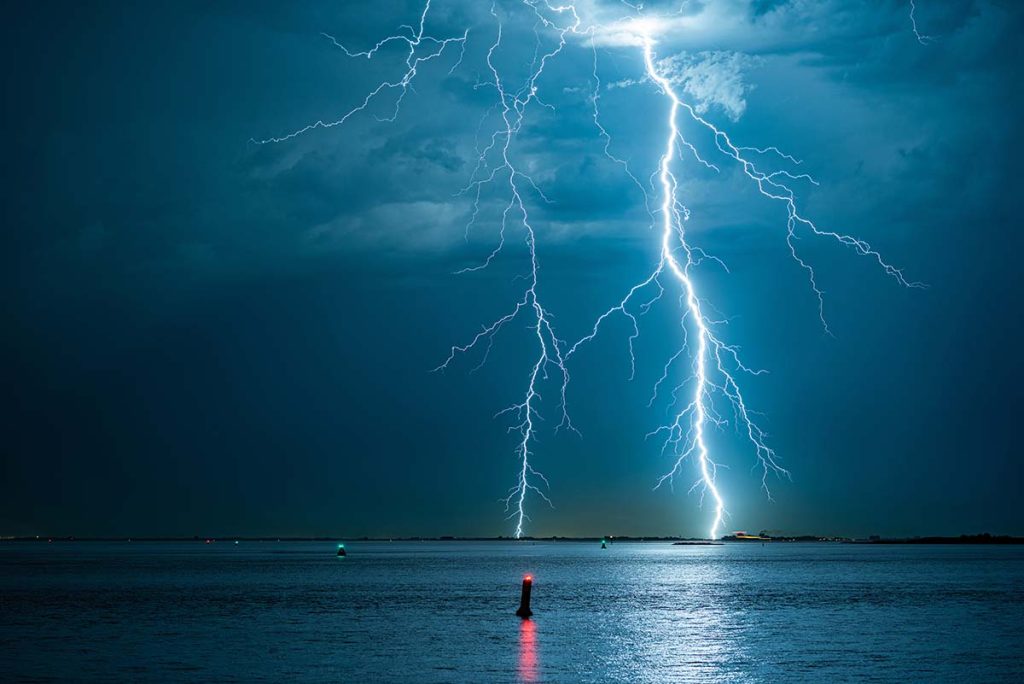
Bright branched lightning bolts strike down near the dutch coast

Why is lightning protection becoming increasingly important for yachts?


There are two main reasons for this. The frequency and intensity of storms and lightning is increasing due to climate change. The warmer and humid the climate, the more thunderstorms occur.

The second reason is the increase in electronics on board. The value of navigation equipment, entertainment, and other electrical devices installed on yachts continues to rise. It therefore stands to reason that more frequent thunderstorms mean that more and more yachts are being struck by lightning, causing ever greater damage. Yacht insurance companies report an increase in claims from year to year.


What are the unique challenges and innovations in developing lightning protection systems for various maritime vessels?


First, you have to understand why protecting a yacht from lightning damage is a particular challenge. The lightning protection concepts that have been more or less successful for buildings do not work on yachts. The main reason is that yachts are simply built too narrowly to provide safe conventional lightning protection. Even if you manage to effectively drain the lightning strike into the water, and possibly save the mast, the probability of damage to the electronics from the inductive energy of the lightning strike is very high.

Another form of protection is needed. We found this in the DDCE Marine Lightning Protection System from the company Dinnteco. The DDCE is a lightning protection system against direct lightning strikes. The patented system performs continuous potential equalisation to prevent a positively charged upward streamer from the protected structure and thus prevents the formation of a flash channel and avoids the main discharge/lightning strike into the yacht.

Can you discuss how the FERROPILOT brand is tailored to meet the specific needs of the recreational maritime sector?


With the FERROPILOT brand, we are focusing on the recreational market, particularly on electronics. Technical expertise and good customer service are key to selling increasingly complex devices in a sensible way.

Our guiding principle is focusing on quality instead of quantity. Additionally, product availability has become more important than ever.


How does ELNA GmbH integrate sustainability and environmental protection into its product designs and operational processes?


We are gradually analysing how we can save resources. Where possible, we are switching to more sustainable raw materials and saving energy during the production process. We want to do our part for a more sustainable world.


What future trends and developments do you foresee in maritime communication and safety technology, and how is ELNA preparing for these changes?


We can see that green products are becoming increasingly important in our industry. Electromobility, in particular, will be a major topic in the coming years. We have been focusing on battery management, solar energy, and self-sufficiency for years. The growing importance of electric motors in this area means we will and must focus even more on it.

Leif Schick Managing Director, ELNA GmbH

How does ELNA GmbH’s approach to customer service and support contribute to an enhanced user experience for your diverse clientele?


As already mentioned, our strength lies in technical support. Online trading is making business increasingly anonymous, and good consultation has become almost non-existent. Our dealers also often lack the necessary expertise due to a shortage of skilled labour. We compensate for this by constantly striving to pass on our knowledge to our customers.


What are the key challenges and opportunities you currently see in the maritime industry, and how is ELNA GmbH positioned to address them?


The most significant challenge currently facing the maritime industry is the increasing shortage of skilled labor. Good staff will be essential if we are to continue leveraging our strengths. Therefore, we are focusing heavily on improving working conditions to ensure that we remain an attractive employer. This challenge also presents an opportunity for ELNA.

In terms of the recreational boating market, ongoing challenges include weak consumer confidence and high interest rates. To counter these, we will continue to focus on developing new products and innovations, aiming to grow against the market trend.

Monjasa

Portfolio Monjasa

Harbouring Innovation: Monjasa’s App Journey with Michael Bruun Østergaard


Join us in a conversation with Michael Bruun Østergaard, Group IT Director of Monjasa, as he unveils the journey behind Monjasa’s innovative app. Integrating real-time data from their global tanker fleet, the app marks a significant leap in maritime technology. Michael discusses overcoming development challenges, enhancing industry transparency, and the app’s role in Monjasa’s commitment to sustainability and efficiency.


Click below to access the digital version

Can you describe the journey and challenges involved in developing the Monjasa App, especially in terms of integrating real-time data flows from your global tanker fleet?


Challenging the status quo has been an integral part of Monjasa since our establishment in 2002 as a newcomer in the industry. In the early years mostly in a commercial sense, but later on also across maritime operations, introduction of ISO management systems and IT developments. And when we initially started envisioning a complete digitalisation of the process surrounding bunkering, it seemed far-fetched for many in the industry and in Monjasa.


Back then, vessels were not online like they are today. Many vessels in our fleet were running on slow satellite connections, which would offer the performance of a typical internet connection onshore back in the 1990s. This was not uncommon, and as such, it was hard to imagine a world where we could bring real-time insight of what was going on during a bunker operation into the hands of those involved onshore.


It was not that companies did not want this level of transparency, but it was tough to imagine strong data flows from the vessels.


A lot has happened to the connectedness of the world since then – not only technological advances like Starlink, but the expansion of 4G networks and the development in availability and lower costs of traditional satellite communication also play a big part.


Because of this, we began the journey of transparency through technology by focusing on structure and access to bunker price indications, as this does not rely on fleet internet performance. The first release of Monjasa’s fuel price indications went live in late 2020 and was an internal tool only that allowed our trading community to share and update price indications in a more structured manner.


Building on this successful platform adoption, we opened this data to also include our customers in 2022. This allowed our traders to invite their customers into the same ecosystem where they can now self-service price indications and initiate the actual inquiry process from our app. We launched a pre-release of the app during a customer event in Copenhagen in early 2022, and building on customer feedback at this event, we managed to secure a partnership with OMJ to provide customers with real-time market updates in addition to our price indications.


In early 2023 we then launched the current version of the Monjasa app and started onboarding ship owners to the platform.


How do you see the Monjasa App transforming the oil and shipping industries, particularly regarding transparency and efficiency?


The Monjasa app is a window into the heart of our operations. We are pushing digitalisation to the limit and our ultimate ambition is to provide complete end-to-end transparency across our operations as fast as the satellite technologies allow us to do it. We know for a fact that many other parties across the marine fuels industry have been following our developments closely since this transformation truly supports more efficient shipping operations. And that is something that all ship owners are looking for.

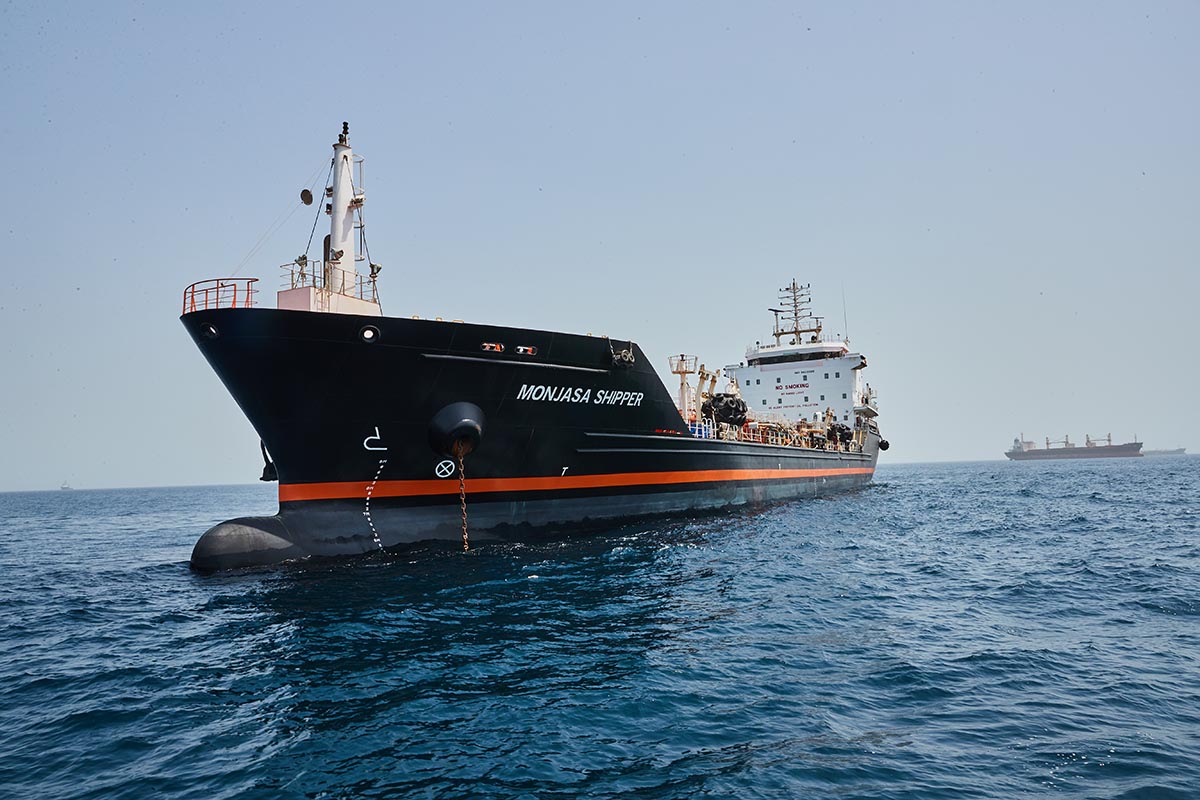
Monjasa Shipper in the UAE Copy right Monjasa

What has been the feedback from ship owners and charterers on the Monjasa App, and how has it influenced their decision-making process?


We have received very positive feedback from some of the ship owners who have been using the app for more than a year now. For instance, Royal Caribbean Cruise Line highlighted that instead of exchanging multiple messages about individual fuel orders, the app provides them with full transparency across all the transaction and logistic details related to the deliveries.


The app provides accurate CO2 emissions data. How does this feature align with Monjasa’s commitment to sustainability and environmental responsibility?


Running a responsible business and ensuring thorough ESG reporting is an opportunity to make a difference in a carbon-heavy industry like ours – and our individual and joint carbon footprints are critical metrics needed. We already have CO2 reporting available on our platform, but we will be making it even stronger and more accessible for integration. This involves allowing customers to pull information directly from our platform into their own ESG reporting by offering customer-facing APIs for system-to-system integration. In other words, Monjasa’s customers will find it natural to receive accurate emission numbers related to a single fuel supply and integrate it into their own Scope 1 reporting.

Could you elaborate on how the real-time supply notifications work and the benefits they bring to your clients?


For most of 2023, we have been busy preparing for the next significant leg of the journey, aiming to make the world smaller by bridging the gap between onshore and offshore workplaces. This is achieved by connecting our fleet with our customers through what we call real-time deliveries.


This initiative allows customers real-time insight into the progress of their fuel delivery as we bring statements of facts directly to the customer’s mobile phone. Real-time deliveries also provide live onboard camera feeds from the vessel during delivery, as well as access to the official documents of the delivery as soon as both parties have signed them. This approach elevates personal business to a new level and shortens the processing time of all the details that come after the actual delivery.


These steps will help prepare our fleet and our customers for a fully digital process, eliminating the need to print, sign, and scan documents in the near future.


Coupled with access to all the customers’ trading history with Monjasa, the app offers the customer a ‘one-stop’ platform and strengthens collaboration across operation, crew, customer, and trader.


Are there any upcoming features or enhancements planned for the Monjasa App that you can share with us?


We will continue to live our value of curiosity by listening closely to customer feedback and adapting the platform to their requirements without compromising our vision of transparency and personal business. And while not making any promises, I can disclose a couple of initiatives we are currently investigating.


Firstly, we are exploring customer fleet management through integration with AIS providers. This would bring the location of a customer’s entire fleet into the customer cockpit, allowing for a better overview and easier bunker procurement planning.


Secondly, data democratisation is a significant aspect of transparency. We are currently investing in how we can open access to crucial information for everyone. This involves moving parts of our platform outside the fence of authentication to simply offer insight to everyone through our public website.

As the Group IT Director, how do you see the role of IT evolving in the bunkering industry, especially with the increasing demand for real-time data and digital solutions?


None of this is possible without our IT department understanding the world of bunkering. The more insight we have into every step of our process – whether that is the importance of the relations we have with our customers, the challenge of multitasking a bunker operation, or the details that go into an actual bunker delivery onboard a chemical tanker – the better equipped we are to design, develop, and deploy a system that caters to our customers’ specific needs.


Finally, what advice would you give to aspiring IT professionals who are interested in entering the maritime and energy sectors?


Observe and navigate, stay curious and ambitious, and also remember to respect the traditions of our industry, as most of these are there for good reasons.


Overall, I believe we are in for a change in the expectations of information flows, connectedness, and transparency – just like we have seen other industries undergo similar changes, such as the taxi industry disruption by companies like Uber and Careem, the commercial flight industry disruption by companies like Expedia, and the hospitality industry disruption by companies like Airbnb and Hotels.com.


With the advancements of our digital platform, we are trying to stay ahead of the curve – adapting to our customers’ expectations and requirements as fast as we can by building a tool that will complement the bunker industry without demanding radical changes in operation or commercial model.


Our platform will be a solid foundation for new ideas on how to work even closer to prepare the bunkering industry for the significant changes we currently see on the horizon as the industry prepares for a future that is less reliant on fossil fuels.


We welcome the challenge and believe Monjasa is in an excellent position to help the industry navigate these changes; curiosity and ambition are in our DNA, and with our 20 years of experience in the industry, we have the knowledge and respect needed to drive digital transformation in a global and complex industry.


https://monjasa.com/

YOT LTD

Portfolio YOT

Empowering the Maritime Industry with Cutting-Edge Technology: The YOT Ltd Revolution

Welcome to YOT Ltd (Your Onboard Technologies), a reputable and innovative supplier in the maritime industry. Founded by Ryan Porter and Kris Cardona, YOT Ltd is driven by a passion for technology and a customer-centric approach. With a strong commitment to excellence, they have established themselves as a trusted partner, delivering cutting-edge solutions to meet the evolving needs of their clients in the maritime IT sector. Join us as we dive into their journey and the remarkable impact they’ve made in the industry.


Click below to access the digital brochure version

Sailing Towards Success: The Evolution of YOT Ltd


YOT Ltd’s story started with a clear vision and a commitment to excellence. From its modest beginnings, the company grew and evolved, swiftly becoming a trusted and dependable supplier in the maritime industry. YOT Ltd’s dedication to customer satisfaction, trust, and reliability distinguished them from other suppliers in the market. While YOT Ltd initially focused on catering to the yachting technology world, the company expanded its reach to new markets that showed great interest in their offerings. Recognising the demand for innovative technology solutions across various industries, they decided to extend their support to integrators and supply companies.


“We could have chosen the conventional path and become another technical integrator in the maritime industry. But our vision was broader – we wanted to work alongside as many integrators as possible. We didn’t want to compete; instead, we aimed to collaborate with them. That’s why we serve integrators and supply companies, extending our support to a wider audience.” says Kris.


Their commitment to serving a broader audience paid off, and YOT Ltd soon found itself collaborating with clients from shipping companies, offshore oil and gas industries, commercial vessels, and more. The company’s ability to adapt to different needs and provide tailored solutions further solidified their reputation as a go-to technology partner.


Serving as an Asset: Delivering Value to Clients


YOT Ltd, the ethos of providing value goes beyond just being a product supplier; they aim to be an indispensable asset to businesses. This dedication to delivering value is reflected in their customer-centric approach and responsiveness to clients’ needs. When clients partner with YOT Ltd, they can trust in the company’s technical knowledge and dedication to supporting them every step of the way.


“We go above and beyond to be a solid partner our clients can rely on.” Kris affirms.


This commitment to their clients’ success has resulted in strong and lasting relationships, where YOT Ltd is seen as an extension of their clients’ own teams.


Standing Out in a Sea of Suppliers


In the fiercely competitive IT supply industry, YOT Ltd distinguishes itself by being a high-end IT concierge service, placing great emphasis on reactivity and speed. Their team’s collective skills and alignment towards the same goal enable them to stand out as a supplier that consistently delivers results.


“What sets us apart is our deep understanding of our clients’ needs and our availability to assist them. Whether it’s during regular business hours or on a Sunday night at 11 pm, we’ll be there for our clients because many of our team members have sat in our clients’ shoes and know what is needed.” Kris adds.

YOT LTD team at work

Mission: Speed and Simplicity


YOT Ltd’s mission statement encapsulates two core pillars of their service: speed and simplicity. In a rapidly moving technology landscape, they deliver complex solutions with a focus on simplifying the process for their clients, ensuring smooth procurement and timely delivery.


“Technology never sleeps, and we recognise the time constraints our clients face. We’re committed to being fast and efficient, ensuring that products ordered before 4 pm are delivered the next day across the EU. Our mission is to clear the fog and make technology solutions simple for our clients.” Kris states.


Building Strong Partnerships: The Backbone of YOT Ltd


For YOT Ltd, building lasting partnerships with their clients is of paramount importance. They recognise the unique needs of each business and take a flexible and customer-centric approach to cater to those needs. This dedication to building trust and delivering exceptional value ensures long-term satisfaction and success.


“Every business is unique, and we tailor our offerings to meet their specific goals. We prioritise building trust and delivering exceptional value to our clients, empowering them to thrive in an ever-changing digital landscape.” says Kris.


The company’s commitment to building strong relationships extends beyond just their clients; they also nurture a sense of camaraderie with their suppliers. By maintaining strong partnerships with leading technology brands, YOT Ltd ensures that they provide top-of-the-line products and support to their clients.


YOT Ltd’s Powerful Platform: Enhancing the Customer Experience


YOT Ltd’s website, www.yotstore.com, serves as a one-stop destination for a wide array of products from leading technology brands. Beyond the website, they offer a robust customer portal known as YOT Portal, which provides clients with easy access to essential services and information. YOT Portal is the one-stop system for all things hardware, licences, accounting, and a game-changer for their clients, empowering them with an abundance of tools at their fingertips, accessible anytime they please. This powerful platform enhances the overall customer experience, offering convenience, efficiency, and seamless communication with YOT Ltd’s team.


“Our customer portal is a powerful tool that includes everything our clients could need. It enhances communication and collaboration, offers access to self-service resources, and provides timely updates on inquiries. It empowers our clients with greater control and transparency over their interactions.” Kris highlights.


Certified Expertise: A Key to Superior Service


As an official partner to renowned brands, YOT Ltd is fully accredited to support their equipment. This certification ensures they possess the latest knowledge to effectively support their customers, optimising equipment within clients’ solutions for the best results.


“Certifications are essential for maintaining up-to-date expertise, enabling us to offer the latest features and product lines. It reflects our commitment to excellence and professionalism, allowing us to provide comprehensive and high-level support.” Kris elaborates.


The Pursuit of Innovation: Staying Ahead of the Curve


At YOT Ltd, innovation is at the core of everything they do. The company thrives on continually exploring new technologies and trends to provide forward-thinking solutions to their clients. Their passionate team of tech enthusiasts invests time in research and development, creating a dynamic environment that benefits both the company and its clients.


“Innovation is at the core of what we do. We stay ahead by investing in research, exploring new ideas, and embracing emerging technologies. Our dedication to innovation ensures our clients receive cutting-edge solutions that keep them competitive. “Kris emphasises.


Charting the Course Ahead: YOT Ltd’s Vision for the Future


As YOT Ltd sails ahead in the maritime and IT industries, their vision remains steadfast – to be the leading technology supplier and a trusted partner for businesses across various sectors. The company aims to further expand its reach and deliver innovative solutions that solve complex challenges faced by their clients.


“We want to be at the forefront of technology advancements, constantly evolving to meet the changing needs of our clients. Our mission is to be a reliable and innovative partner that helps businesses thrive in an increasingly interconnected world.” says Kris.


With their dedication to excellence, a customer-centric approach, and a passionate team driving their success, YOT Ltd is poised to leave an indelible mark in the maritime and IT industries, navigating the waters of technology with confidence and purpose.

https://www.yotltd.com/

Global Marine Tech Services

Portfolio GMTS

Getting You Connected: GMTS’s Innovative Solutions in Marine Technology


At the forefront of technology solutions in the Marine, Defence, and Superyacht sectors stands Global Marine Technology Services (GMTS). Renowned for its innovative approach and commitment to quality, GMTS has earned its place as a leading provider of state-of-the-art solutions. In this exclusive feature, we delve into the insights of Nik Roné Thullesen, the Managing Director & Owner of GMTS, to explore the company’s unique offerings, the significance of bespoke solutions, and the future of technology in the maritime industry.


Click below to access the digital brochure version


An Unparalleled Offering of State-of-the-Art Solutions


GMTS takes pride in delivering a diverse range of cutting-edge solutions across all the verticals it operates in. From advanced Cellular Communication systems, incorporating technology from Peplink and Poynting Antennas, to World-leading Marine Training Solutions in partnership with Virtual Marine, the company’s portfolio is a testament to its expertise as IT professionals. GMTS particularly excels in developing innovative solutions for Marine and Off-Grid environments, solidifying its position as a technology leader in the maritime domain.


“Our core strength lies in our expertise as IT professionals, with a special focus on developing innovative solutions for Marine and Off-Grid environments.” – says Nik.


Setting the Bar High: Differentiation and Unique Approach


What sets GMTS apart is its holistic approach to solutions both onboard and ashore, attention to detail, comprehensive documentation, and delivery of high quality solutions are paramount. GMTS goes the extra mile to ensure that every project is completed to perfection, providing the highest levels of stability, functionality, and longevity.


“Our expectation is that when we step onboard a vessel, they leave the next day. Our comprehensive documentation and extra attention to installations ensure the highest levels of stability and functionality.” – Nik affirms.

The Power of Experience: Decades of Expertise in Action


With GMTS’s team boasting decades of experience in technology, defence, maritime, and Superyacht domains, their expertise is a cornerstone of the high-quality, consultative service they offer to clients. Their accumulated knowledge of risks, faults, and challenges enables them to get the job done right the first time, saving clients valuable time and resources.


“With experience comes knowledge of risks, faults, and culprits. When we step onboard a project or vessel, we know how to get the job done right the first time, wasting minimal time.” – Nik adds.


The Art of Bespoke Solutions: Tailoring to Specific Needs


GMTS’s commitment to providing bespoke solutions is evident in their ability to create unique technical marvels for clients. For instance, they were one of the first companies globally to offer a remarkable combination of Peplink Products, pushing the boundaries of their engineered purpose. In one instance, GMTS ingeniously retrofitted two 5G modems along with Starlink Maritime on a 70m Motor Yacht and an 82m Sailing Yacht without significant signal loss, achieving a total throughput of almost 1.5Gbps in 2022

.

“We were one of the first companies globally to offer a unique combination of Peplink Products that linked them together and extended functionality beyond their originally engineered purpose.” – Nik elaborates.

Addressing the Connectivity Needs: Extensive Solutions and Global Reach


With the growing demand for connectivity, GMTS leaves no stone unturned in finding the best solutions for their clients. They partner with companies globally, offering almost endless data and roaming capabilities in the APAC region. Whether SIM-based, Starlink, or VSAT solutions, GMTS ensures clients are seamlessly connected, no matter where they venture.


“We are always on the hunt for new and better deals for our clients, partnering with companies globally. In APAC, we can offer almost endless data and roaming capabilities, and if the service isn’t SIM-based, we can support it via Starlink or VSAT solutions.” – Nik states.


Staying Ahead in the AV World: Embracing Technological Advancements


In the fast-evolving AV industry, GMTS remains at the cutting edge by actively staying up-to-date with the latest technologies. They attend trade shows, engage with leading partners in the AV world, and collaborate with specialised AV companies to deliver industry-leading solutions. GMTS’s dedication to staying current ensures they can deliver high-end equipment and control methods that enhance the onboard experience for vessel owners.


“We are a technology company through and through. Our partnerships with a series of AV-specialised companies enable us to deliver industry-leading solutions. We attend trade shows annually and stay current with technology through online platforms.” – Nik emphasises.

Empowering the Future: Bespoke IT Solutions and Beyond


The ever-increasing reliance on IT systems requires innovative solutions that address present and future challenges. GMTS prides itself on understanding clients’ needs, building systems that are prepared to tackle not only current obstacles but also unforeseen problems. Their bespoke, tried and tested solutions ensure that customers are well-equipped for the evolving technology landscape.


“Continued reliance on technology and exceeding requirements presents a challenge for everyone. We aim to put ourselves in the client’s shoes to build systems that are futureproof.” – Nik explains.


LINKing Vessels: Monitoring and Control at Its Finest


GMTS’s LINK remote monitoring platform has revolutionised vessel data, devices, and control systems’ monitoring and control. This industry-renowned equipment allows clients to have full control, both locally and remotely, through an intuitive interface. GMTS’s partnership with Smartyachts Limited in the UK and other leading entities enables the implementation of limitless monitoring and control capabilities for vessels, from NMEA2000 to Modbus systems.


“From the very birth of GMTS, we aimed to make it easier for people to not only be connected but also control their assets remotely and with ease.” – Nik shares.

Empowering Training Through Simulation Solutions


As consultants in the marine and defence sector, GMTS harnesses the power of simulation to address specific challenges and requirements. Through fully simulated environments, GMTS delivers cost-effective, efficient, and safe training experiences. Their collaboration with Virtual Marine to deliver STCW training for lifeboats in a fully simulated environment and portable simulator initiatives showcases GMTS’s commitment to innovative training methodologies.


“We’ve been using simulation for several decades across various fields of training. This technology allows us to expand scenarios to include undesirable locations, situations, environments, or disasters while maintaining safety, control, and valuable learning objectives.” – Nik elaborates.


Smart Port Solutions: The Future of Port Control and Monitoring


GMTS’s collaborative efforts with leading brands like Vissim drive the development of smart port solutions. Combining products from Axis and Peplink, GMTS offers cost-effective port monitoring, remote alarm systems, vessel tracking, and online VTS systems that are truly world-leading. Their forward-looking approach seeks to break into the smart port market in 2023 and 2024, revolutionising the landscape of port control and monitoring.


“We’ve partnered with Vissim to deliver smart port solutions for the future. Together with product suppliers like Axis and Peplink, we can provide cost-effective port monitoring, remote alarm systems, vessel tracking, and online VTS systems that are world-leading.” – Nik highlights.

Real-Time Data: Powering Safe Operations and Maintenance


As the reliance on real-time data increases worldwide, GMTS provides robust solutions that enable remote monitoring and IoT capabilities on a global scale. Access to real-time data empowers clients with timely insights, driving safe operations, environmental monitoring, improved navigation, and better compliance. GMTS’s initiatives in real-time data for container tracking, predictive maintenance, and insurance risk management have set a new standard in the maritime industry.


“Having access to real-time data in the marine industry can bring numerous advantages for safe operations and maintenance.” – Nik points out.


Forging the Future: GMTS – Leading the Way in Maritime Technology


Global Marine Technology Services (GMTS) is a driving force behind technological advancements in the maritime industry. As pioneers of innovation and bespoke solutions, GMTS’s commitment to excellence, industry-leading partnerships, and unparalleled expertise propel the company to the forefront of the Marine, Defence, and Superyacht sectors.


With a proactive approach to technology adoption, GMTS stands ready to navigate the seas of change in the ever-evolving maritime landscape. As technology continues to shape the industry, GMTS remains steadfast in its dedication to delivering the best-in-class solutions that empower vessel owners, enhance safety, and embrace the limitless potential of maritime technology. As clients embark on their maritime journey, GMTS will undoubtedly remain the trusted companion, leading the way to a brighter, more connected future in the world of maritime technology.

https://gmts.io